Tag: Economy
Articles
 Analysis
The Price America Will Pay for Higher Interest Rates
The Fed has raised rates to 3.75–4%. U.S. budget interest expenses will exceed $1 trillion in 2026. An analysis of the impact on government debt refinancing.
Alexander Belov4 min read
 Analysis
To Borrow or to Print: Why Did the Finance Ministry Exit the OFZ Market?
On July 20, the Finance Ministry announced it was suspending OFZ bond auctions "to help stabilize the market situation." Behind this dry formulation lies a rare occurrence: a government that needs to borrow more than 5 trillion rubles from the market in a year has voluntarily withdrawn from that very market. We examine why the government debt market has shut down and what this means for the budget, the ruble, and the population.
Kirill Netkachev6 min read
 Analysis
Will the US and Other Countries Profit from the 2026 World Cup?
The day after tomorrow, on July 19, Spain will face Argentina in the final of the first-ever 48-team FIFA World Cup at MetLife Stadium in New Jersey, with Donald Trump in attendance. Over 39 days, the tournament has drawn 6.5 million spectators, and FIFA has promised the host countries a $40.9 billion boost to global GDP. That's the official figure. The question is: who will actually pocket what from this money?
Kirill Netkachev7 min read
 Analysis
22% VAT on Foreign Parcels: Quiet Protectionism Against China
The Ministry of Industry and Trade has backed the introduction of a 22% VAT on foreign online orders starting January 1, 2027—with no phase-in period. Officially, the measure aims to create a "level playing field" for Russian and foreign sellers. In reality, it amounts to hidden protectionism.
Kirill Netkachev5 min read
 Analysis
Major MFOs Post Record Profits: How Online Lending Boom Is Reshaping the Microcredit Market
The microfinance market generated a record 67 billion rubles in profit, yet half of all MFOs are operating at a loss. An analysis of market polarization, the surge in online lending through marketplaces, and regulatory risks looming in 2026.
Yulia Ignatova3 min read
 Analysis
Central Bank Posts Loss in 2025: Analyzing Causes, Trends and Key Drivers
In 2025, the Central Bank recorded a loss of 184.8 billion rubles, compared to record profits of 199.5 billion rubles the previous year. We examine the reasons behind this reversal.
Yulia Ignatova5 min read
 Analysis
Nearly a Third of Russian Companies in the Red: Corporate Losses Hit 7.5 Trillion Rubles
Why 29% of Russian companies slipped into negative territory: an analysis of corporate losses surging to 7.5 trillion rubles, driven by high Central Bank rates, falling oil prices, and shrinking business margins in 2025.
Yulia Ignatova5 min read
 Analysis
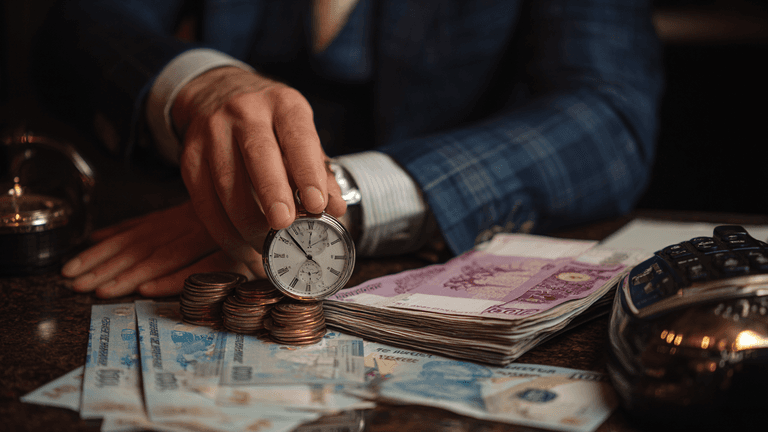
The End of 'Easy Money': Microloan Market Reaches Plateau
Analysis of the microfinance market: MFO portfolios have shrunk 5%, biometric verification and 'cooling-off periods' introduced, up to 40% of companies may exit the market. Central Bank data and forecasts through 2026.
Yulia Ignatova4 min read
 Analysis
Infrastructure Budget Loans and Treasury Loans: How They Work and Their Economic Impact
How IBL and TIL work for regions: preferential terms at 3% per annum, financing volumes up to 1 trillion rubles, issues with deadlines and rising project costs according to the Accounts Chamber. Analysis of economic effects and risks of growing regional debt.
Yulia Ignatova4 min read
 Analysis
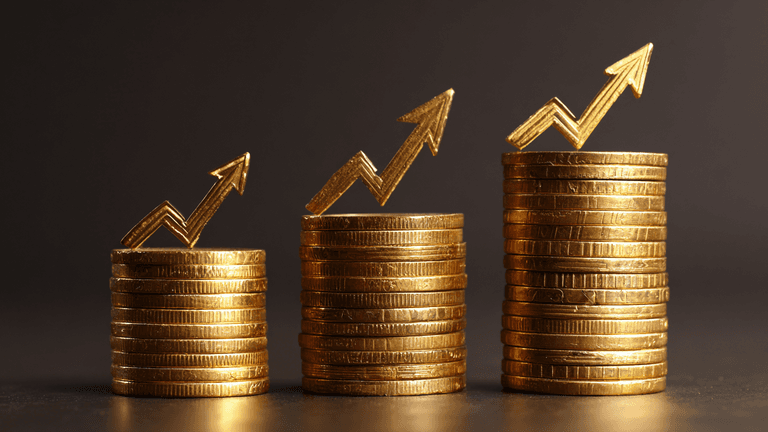
Pensions, Benefits, and Maternity Capital: How Social Payments Will Change in 2026
How social payments will change in 2026: state pensions rose 7.6%, maternity capital reached 737,000 rubles, disability benefits increased 6.8%. Complete information on indexation.
Yulia Ignatova3 min read
 Analysis
January Price Surge: What Got Indexed on January 1, 2026, and How Much It Will Add to Inflation
What's going up from January 1, 2026: VAT to 22%, utility tariffs by 1.7%, recycling fees by 10-25%. Economists and the Central Bank estimate the contribution to inflation at 1.2 to 2.5 percentage points. A breakdown of the impact on consumer prices.
Yulia Ignatova4 min read
 Analysis
Jewelry Goes Cross-Border: Why Russians Are Switching from Store Windows to Foreign Online Services
Analysis of Russia's jewelry market in 2025: cross-border trade surges fourfold amid slowing offline sales, impact of high credit rates, and a 6% decline in store numbers. Trends and forecasts.
Yulia Ignatova4 min read
 Analysis
Budget 2026 Takeaways: Government and Business Find Common Ground
Analysis of Budget 2026 amendments: preserving tax breaks for the IT sector, phased reduction of the VAT threshold for small businesses, and striking a balance between the state's fiscal objectives and entrepreneurial interests.
Valeria Novoselova6 min read
 Longreads
Social Policy Takes Center Stage in the Economy
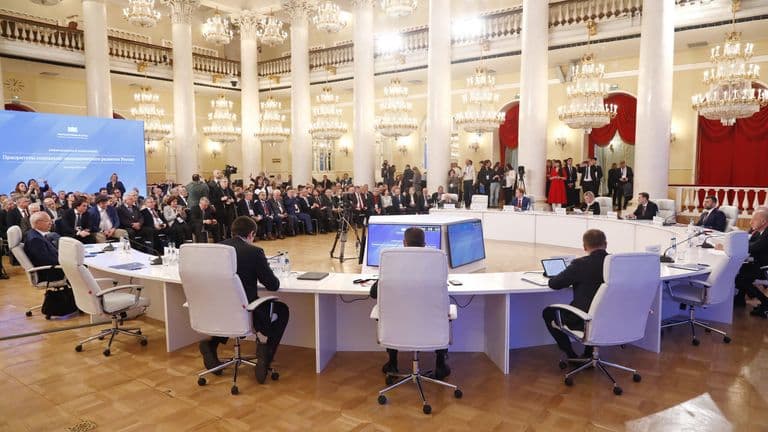
Highlights from the conference on Russia's socio-economic development on November 24, 2025: debates on the Central Bank's monetary policy, GDP growth slowing to 1%, regional development, and the role of major corporations under new conditions.
Yulia Ignatova6 min read
 Analysis
Climate and Capital: How Natural Disasters and Environmental Concerns Are Reshaping Financial Markets
Natural disasters cause $2.3 trillion in annual damage. How catastrophe bonds and green bonds work, why their market is expanding, and what's happening with these instruments in Russia—a deep dive into emerging climate finance mechanisms.
Valeria Novoselova8 min read
 Analysis
Chain Reaction: Payment Defaults Paralyze Russian Business
Payment defaults have become the primary challenge for 39% of Russian companies in Q3 2025. We examine the causes behind rising debt levels, the role of budget financing, and business survival strategies amid a liquidity crisis.
Yulia Ignatova3 min read
 Analysis
Financial Hunting Season: How Banks Are Holding Onto Depositors
Why banks have returned to raising deposit rates after their rate-cutting strategy failed. How the new law insuring deposits up to 2.8 million rubles will reshape the market. Where Russians are moving their money in search of better terms.
Yulia Ignatova3 min read
 Analysis
A Cautious Budget-2026: Stabilizing Borrowing
Analysis of the 2026 budget draft: how reducing the deficit from 2.6% to 1.6% of GDP and stabilizing borrowing creates conditions for lowering the key rate and economic growth while maintaining low public debt.
Kirill Netkachev7 min read
 Opinions
Academician Aganbeyan on the Economy: Focus on Growth and Russia's Global Standing
Why Russia's economy has grown by just 37% over 34 years while China has increased its GDP thirteenfold. Academician Aganbeyan analyzes the innovation gap, investment challenges, and prescribes remedies for an economic breakthrough.
Kirill Netkachev2 min read
 Analysis
Alaska Talks: Global Markets React as Sanctions Future Hangs in Balance
How global markets are responding to the upcoming Alaska summit. Expert forecasts on oil and gas prices, prospects for sanctions relief, and what it means for U.S.-Russia energy relations.
Valeria Novoselova3 min read
Columns
 Opinion
Russia's Financial System Under Pressure: Its Place in the Global Economy
An analysis of the Russian economy's current state: the Central Bank's key rate cut to 14%, GDP growth slowing to 1%, a record budget deficit of 5.65 trillion rubles, and shrinking reserves. Data from the Central Bank, IMF, and World Bank for 2025-2026.
7 min read