This text is an automatic translation from Русский. It was generated by AI and may contain inaccuracies.
Read original →The Price America Will Pay for Higher Interest Rates
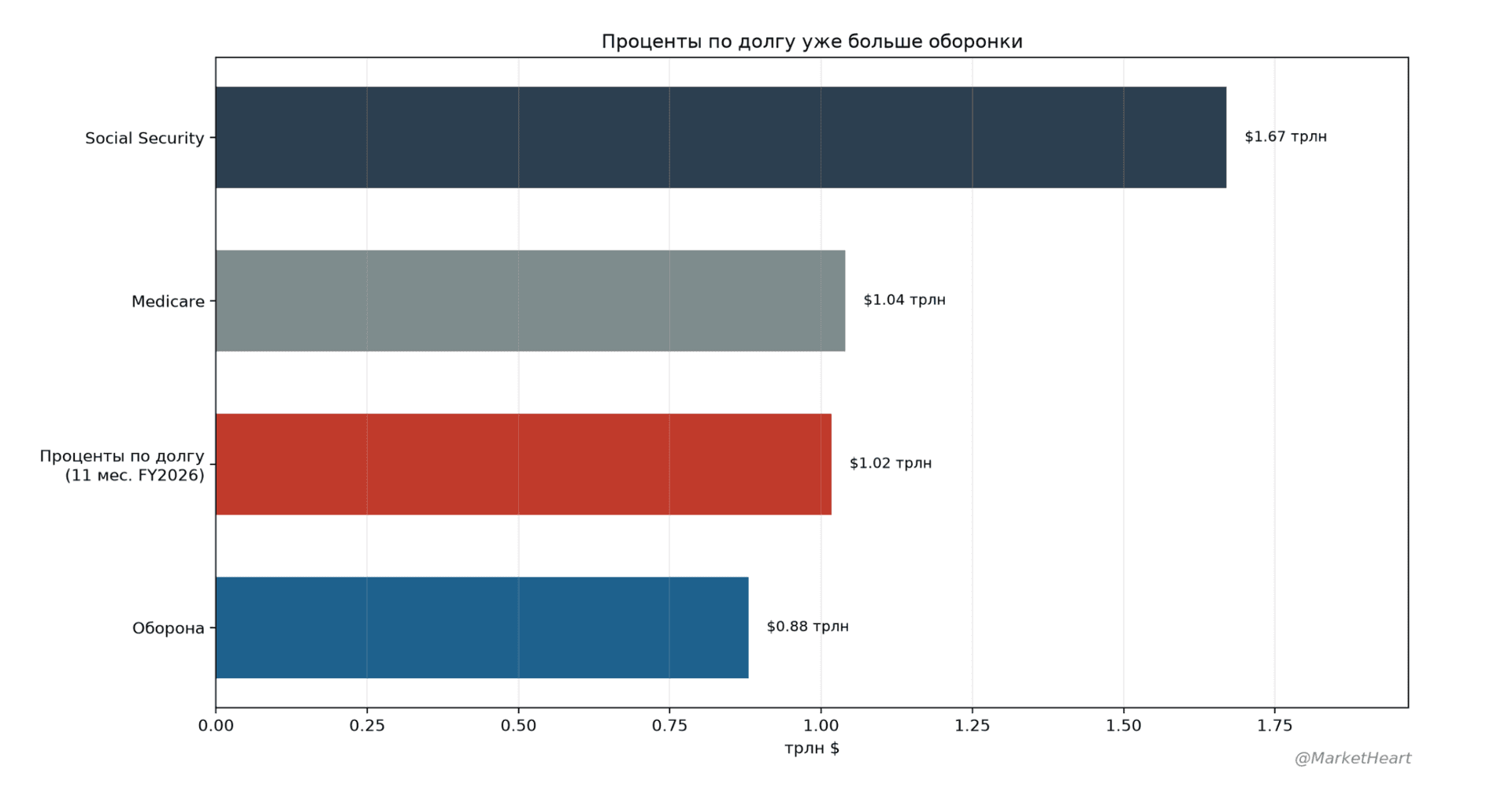
The Fed has raised rates to 3.75–4%. U.S. budget interest expenses will exceed $1 trillion in 2026. An analysis of the impact on government debt refinancing.

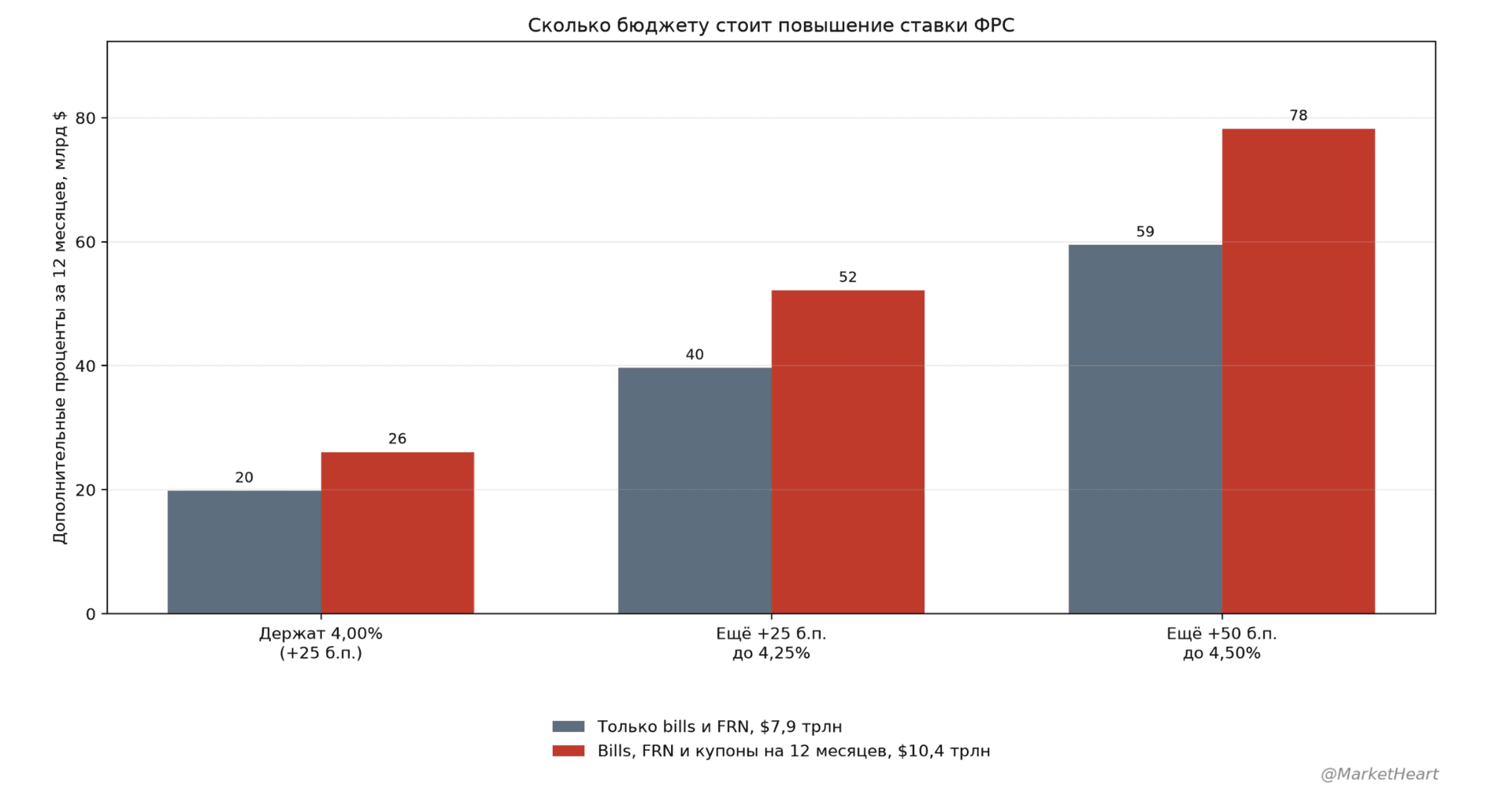
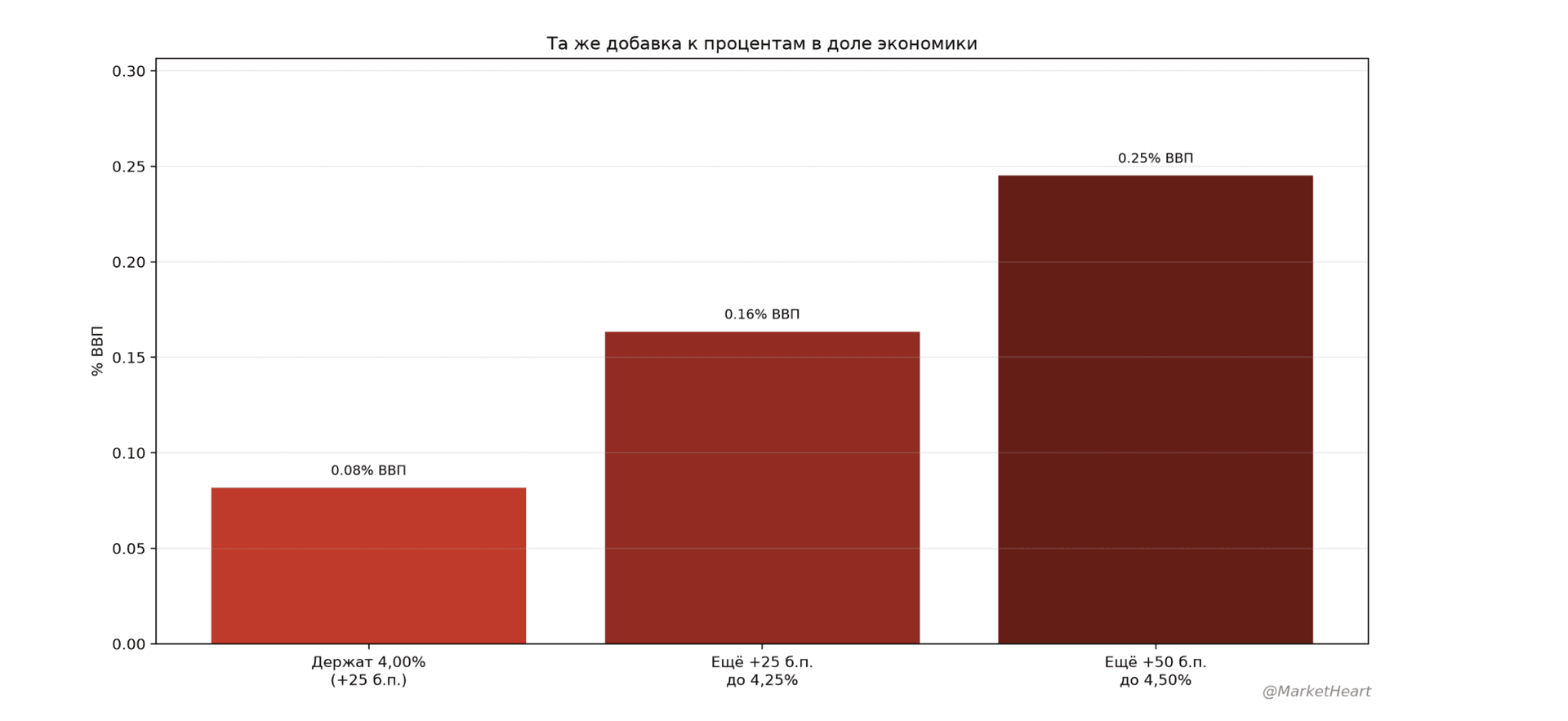
On September 16, the Fed raised its benchmark rate by 25 basis points—to 3.75–4%. The decision was unanimous. The committee explained the move as necessary to accelerate the return of inflation to the 2% target. For the market, the tightening may look like a signal of the regulator's determination to fight inflation. For the American budget, tightening means something else—more expensive refinanced debt at a time when the volume of maturities is particularly large.
Debt has already become a separate budget problem
According to CBO (Congressional Budget Office) projections, net interest expenses of the federal budget in fiscal year 2026 will exceed $1 trillion—up from $970 billion the year before. Their share will reach approximately 3.3% of GDP. By 2036, the CBO expects this amount to grow to $2.1 trillion, or 4.6% of GDP:
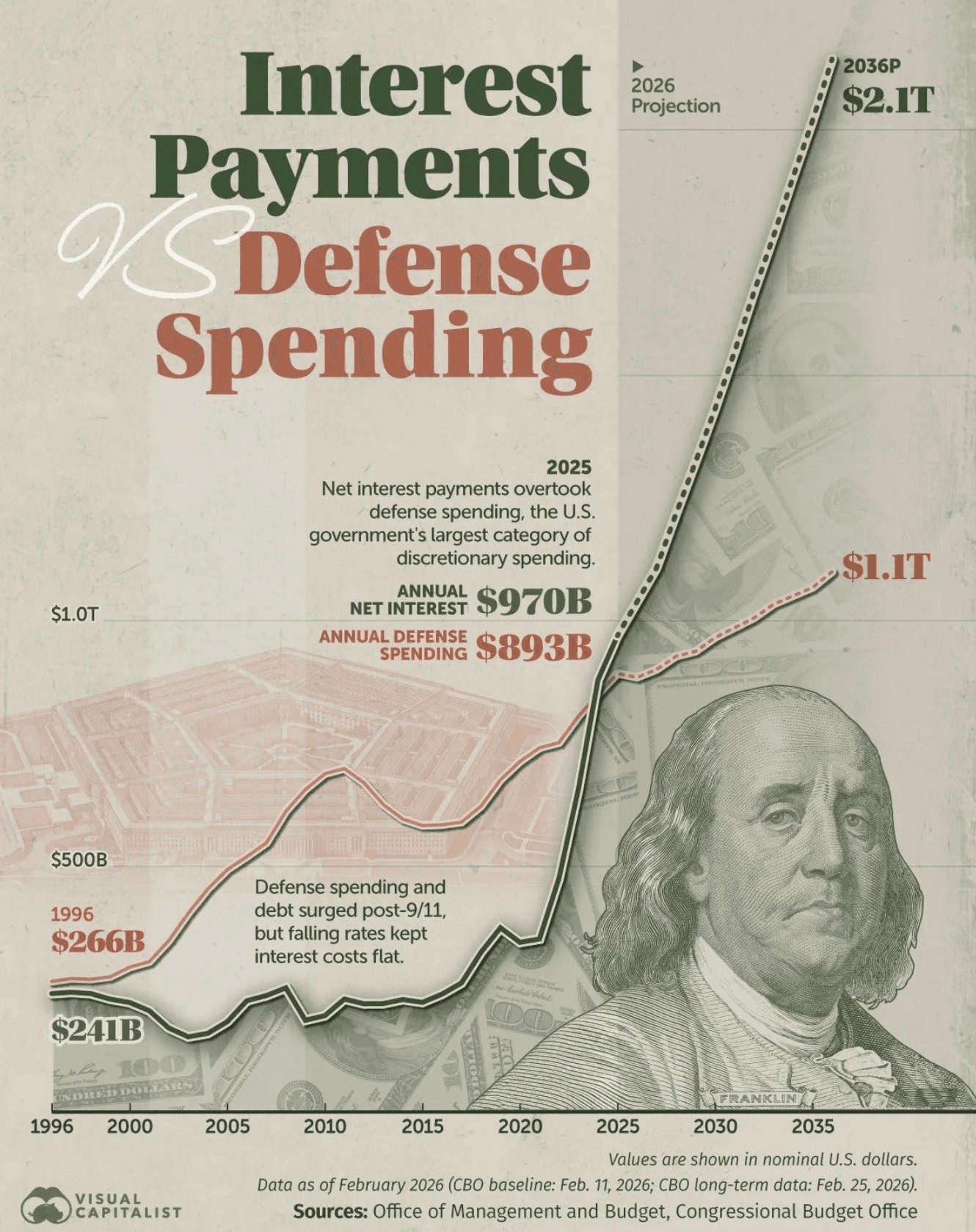
This is fundamentally important: interest expenses are growing not only because of the Fed rate. The main factor is the volume of debt itself. In 2026, debt held by private investors continues to increase, while the budget deficit remains enormous. According to CBO estimates, for the first 11 months of fiscal 2026, the deficit totaled about $2 trillion. The result is a vicious cycle: the government has to borrow more and more, while the cost of servicing new and refinanced issues gradually rises. Interest on debt stops being a secondary budget line item and becomes one of its structural constraints.
Why the current increase is particularly sensitive
A rate hike doesn't mean that all American debt instantly becomes 25 basis points more expensive. Old ten-year and thirty-year bonds continue to be serviced at their previous coupons. The problem lies in debt that must be regularly refinanced.
Treasury bills (T-bills) with maturities up to one year are especially sensitive. It's the short end of the curve that's most closely tied to Fed monetary policy. When the Treasury issues a new bill after an old one matures, the rate on it already reflects the new financial conditions.