This text is an automatic translation from Русский. It was generated by AI and may contain inaccuracies.
Read original →Sugar Faces Looming Shortage
Why the global sugar market may face a deficit in the new season after the 2025/26 surplus, how weather patterns, El Niño, and competition from ethanol production are affecting supply, and what cushion remains for the world's largest producers.
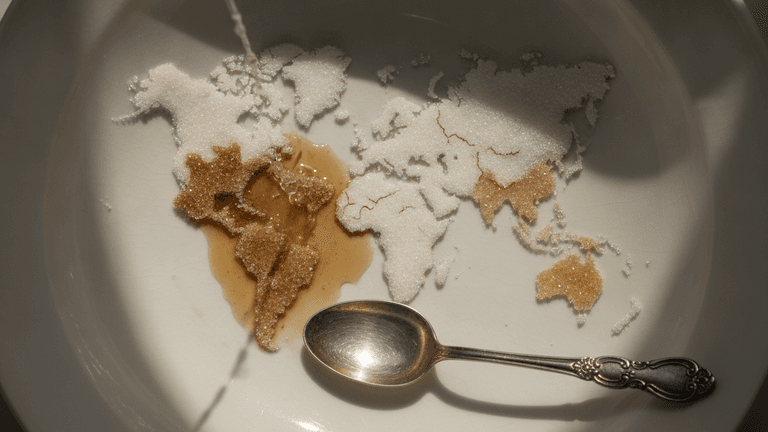
The global sugar market is entering a new season with a noticeably tighter balance than expected just a few months ago. After the 2025/26 surplus, the 2026/27 market may shift to a deficit. Estimates vary widely: the International Sugar Organization (ISO) expects a deficit of just 0.2 million tons, while Green Pool anticipates a gap of 3.2 million tons. In between are StoneX's estimate of 0.9 million tons and Covrig Analytics' forecast of 0.3 million tons.
For pricing, total production volume isn't the only factor that matters. Export capacity, delivery timelines, individual countries' inventory levels, and decisions by major producers all play a role. This is where weather problems become particularly acute.
The market is revising its earlier forecast
About seven months ago, sugar fell to a five-year low. In February, raw sugar dropped to $0.13 per pound—the lowest level in more than five years. By the end of September, futures were trading at $0.19 per pound—roughly 40% above the February low. Investors had been counting on a large harvest in Brazil: the world's largest producer was expected to increase supplies and strengthen the global surplus. According to the International Sugar Organization's (ISO) current estimate, the 2025/26 season will see a surplus of 1.1 million tons. At the time, there was no indication of a deficit.
Then two conditions affecting supply changed simultaneously. The oil shock strengthened incentives to direct Brazilian sugarcane toward ethanol production. At the same time, weather deteriorated: heavy rains began disrupting harvesting and processing of cane in Brazil, while lack of rainfall threatened crops in India and Thailand. The market began pricing in these risks even before final production figures became known. Since July, raw sugar futures have risen more than 25%; at the close of trading on September 30, the ICE contract stood at $0.18 per pound. This represents a significant recovery from the five-year low, though not a historic price record.
The question is how much supplies will contract. ISO expects a small deficit of 0.2 million tons in the 2026/27 season after the previous year's surplus. Other estimates diverge from this forecast, so it's premature to consider the scale of the future shortage a settled matter. But the reason for the reversal in expectations is already clear: the largest producers are simultaneously facing weather-related risks, while Brazil is also dealing with competition between sugar and ethanol production. At the center of this story is El Niño: it intensifies precipitation in some cane-growing regions and drought in others.
El Niño has hit different sides of the market
The main source of uncertainty has been El Niño—a periodic warming of waters in the equatorial Pacific that alters weather patterns across different regions and can affect harvests. For the sugar market, this is particularly important due to differences between crops. Sugar beet, for example, requires adequate moisture: drought during the growing period reduces yields. Sugarcane is also sensitive to water shortages, but heavy rainfall and waterlogging during harvest can complicate collection and degrade raw material quality. Therefore, the same climate phenomenon can create risks for sugar production in several regions simultaneously, but for different reasons.
For Brazil, the world's largest sugar producer, this means problems with harvesting and processing cane. In India, a weak monsoon is worsening crop prospects. In Thailand, key cane-growing areas have faced moisture deficits: rainfall there has been about two-thirds of the 30-year average. In Europe, a hot summer damaged sugar beet conditions. In the U.S., drought is delaying the harvest.
Brazil, India, and Thailand together account for more than half of global sugar production, so weather problems in these countries quickly transform from a local agricultural issue into a global market factor. Moreover, according to the forecast cited in the article, the El Niño peak is expected only at year-end.
The problem isn't limited to sugar. Weak rainfall creates risks for rice in Southeast Asia, drier weather threatens cocoa in West Africa, and coffee and palm oil are also under weather-related pressure.
Brazil is losing part of its export capacity
Brazil is particularly important for the global balance. The USDA expects sugar production in the country to decline from 43.8 million tons in 2025/26 to 42.5 million tons in 2026/27—a drop of 1.3 million tons. Exports are forecast to fall from 34.1 million to 33.6 million tons.
Weather factors, however, could lead to a sharper reduction in supplies. Some key production areas have received up to four months' worth of rainfall in the past month alone. The rains have halted harvesting and cane processing, and the lost time may prove difficult to make up. The season typically runs through December, but new rainfall could once again disrupt operations. According to José Pessoa, head of the Brazilian agribusiness group José Pessoa, Brazil's exports could lose around 2 million tons as a result.
The Brazilian market has another factor at play: ethanol. The same sugarcane used to make sugar can be processed into fuel. Therefore, growing interest in ethanol directly reduces the volume of raw material available for sugar production. In the 2026/27 season, the USDA expects 52% of processed cane to go toward ethanol and 48% toward sugar. In August 2025, Brazil raised the mandatory share of anhydrous ethanol in gasoline from 27% to 30%, creating additional demand for fuel production.
Following the 2026 oil shock related to the Middle East conflict, this factor has become even more pronounced: oil prices affect the attractiveness of biofuels, and with it, how much Brazilian sugarcane ultimately ends up as sugar.
India Gives the Market a Breather
The Indian situation looks different. The USDA estimates sugar production in the country at 30 million tons for 2025/26—5.3 million tons below the previous forecast. The cause was excessive rainfall that disrupted crop development and field operations.
Production is expected to recover to 33.6 million tons in 2026/27, an increase of 3.6 million tons year-over-year. Planted and harvested areas could approach 6 million hectares, up 2% from the previous year. Exports are forecast at 3.6 million tons versus 3.5 million tons the year before. Ending stocks could rise from 5.076 million to 6.506 million tons.
India partially offsets the production decline in other countries. Its 3.6 million ton increase exceeds Brazil's 1.3 million ton production drop. But this isn't enough to fully offset the production declines in Thailand, the EU, the U.S., and Russia.
Moreover, India's capabilities in the external market depend not only on the harvest. Domestic prices and food inflation remain a priority for authorities: in 2026, sugar prices rose sharply, and the government had to authorize duty-free imports of 1 million tons and limit stockpiling by large consumers to increase supply in the domestic market. Export and import decisions may therefore shift along with the domestic situation.
Thailand Cuts Production
Thailand's outlook appears considerably tighter. Sugar production could fall from 11.258 million tons in 2025/26 to 9.5 million tons in 2026/27. The loss would amount to 1.758 million tons, or roughly 15.6%.
According to USDA data, one of the reasons is the reduction in planted acreage following the decision to set the sugarcane procurement price below cost to curb inflation. Meanwhile, weather conditions add to the risks: in the northeastern regions, which are key to sugarcane production, rainfall has been about two-thirds of the 30-year average. In a more severe scenario, Bloomberg suggests output could fall below 10 million tons.
Exports, however, are projected by the USDA to remain at 6 million tons. Despite the production decline, ending stocks are estimated by the agency to increase slightly—from 13.254 million to 13.454 million tons. In other words, at current production levels, Thailand can still maintain exports without drawing down stocks. If the harvest declines further, this situation could change.
Europe and the US Are Also Cutting Output
The problems are spreading to beet sugar producers as well. In the EU, production in 2026/27 could decline from 15.519 million to 14.353 million tons—a drop of 1.166 million tons, or roughly 7.5%. The industry is under pressure from reduced sugar beet acreage, weak sugar prices, and high costs. As a result, some farmers are opting for other crops.
A separate risk is emerging in France—the EU's largest sugar producer (in recent years, France has accounted for about 29% of sugar beet grown in the EU). Following a record hot summer, output could hit its lowest level since 1980.
In the U.S., production in the forecast is declining from 8.382 million to 7.993 million tons. Sugar beet acreage may contract by 4.3% to 418 thousand hectares—the lowest level in more than 45 years. Additional pressure came from unfavorable planting conditions: USDA noted lagging planting pace and expected lower yields. Beet sugar production is ultimately forecast at 4.821 million short tons raw value—4% below 2025/26 and the lowest since 2019/20.
A decline is also expected in Russia: according to USDA's May forecast, output may decrease from 7 million to 6.25 million tons. That's a reduction of 750 thousand tons, or approximately 10.7%. Here, one shouldn't directly attribute the entire decline to El Niño: for the Russian market, it's more important to consider domestic weather conditions and sugar beet yields.
Against this backdrop, the overall picture becomes more complex.
What this means is that India's recovery is happening at the same time as a significant drop in output from several other producers. Thailand has been hit particularly hard, with production falling by nearly 1.8 million tons.
From Sugar to Food Inflation
For consumers, the shift in market balance isn't just reflected in the price of sugar itself. More expensive raw commodities drive up costs for beverage manufacturers, confectionery makers, and other producers of sugar-heavy products. At a time when food inflation remains a sensitive issue for central banks, additional increases in commodity prices pose a distinct risk.
The market is already showing this reaction. Since the start of the year, global spending on sugar has risen 18%, while food price increases have reached their highest level in more than three years. Sugar has emerged as one of the most significant drivers of this growth.
That said, this process has a flip side. High prices can gradually constrain demand. Health-conscious consumers are cutting back on sugar consumption, and food companies are reformulating their products. An additional factor is the spread of GLP-1 drugs (such as Ozempic and Wegovy) for weight loss: their proliferation is forcing market participants to revise their long-term expectations for demand for sweet products.