This text is an automatic translation from Русский. It was generated by AI and may contain inaccuracies.
Read original →From Dotcoms to SpaceX: Why This Cycle Will Be Worse Than the Last
An analysis of three major financial bubbles: the 2000 dotcom crash, the 2008 mortgage crisis, and the current situation in 2026. Why central bank easy money and investor complacency are leading to a new market collapse.

In 2026, financial markets have reached a state of maximum complacency. Most participants—investors, policymakers, and a significant portion of society—are convinced that the current situation is stable, and that risks are either under control or greatly exaggerated. Historically, this is precisely the state that has preceded the most severe crises. Today, it has reached its peak.
To understand why the current 25-year cycle of ultra-loose monetary policy, artificial inflation of valuations, and disregard for fundamental risks is more dangerous than previous ones, we need to systematically examine how the mechanisms of recent bubbles worked and why the lessons of the past were never learned.
Dot-coms: New Technology and Easy Money
In the late 1990s, following the Asian crisis and the collapse of major hedge fund LTCM, the Federal Reserve sharply cut interest rates. The emergence and commercialization of the internet provided the perfect story for speculation: the "new economy" supposedly changed all the rules, and old approaches to valuing companies no longer applied.
Companies with minimal revenue and no profits commanded enormous valuations. A classic example— Cisco. In March 2000, its market capitalization exceeded $500 billion. Two years after the bubble burst, the Nasdaq index had lost roughly 80%. Many investors who bought shares at the peak never recovered their investments, even decades later.
The main mechanism was simple: low interest rates made borrowed money cheap, the new technology story created a sense of limitless possibilities, and mass euphoria eliminated any doubts. When the story ended, the market collapsed, followed by high-profile accounting fraud scandals, such as the infamous Enron.
The 2008 Crisis: How Mistakes Were Repeated on a Larger Scale
After the dot-com crash, the Fed again responded to economic problems by cutting rates—this time to the lowest levels in half a century. Fed Chairman Alan Greenspan actively promoted adjustable-rate mortgages. Banks sharply loosened lending standards and began issuing loans en masse to people with low incomes and weak credit histories.
These loans were packaged into complex financial products and sold to investors around the world. When interest rates began to rise, millions of borrowers couldn't service their debts. The banks that created these toxic instruments suffered enormous losses. The government was forced to bail out the largest financial institutions under the "too big to fail" principle.
The lesson of 2008 turned out to be the same: a prolonged period of cheap money encourages the hunt for any yield, while weak regulation allows risks to accumulate in the shadow parts of the system. After the crisis, the losses ultimately fell on ordinary citizens and future generations.
The Post-Crisis Period and Economic Support Programs
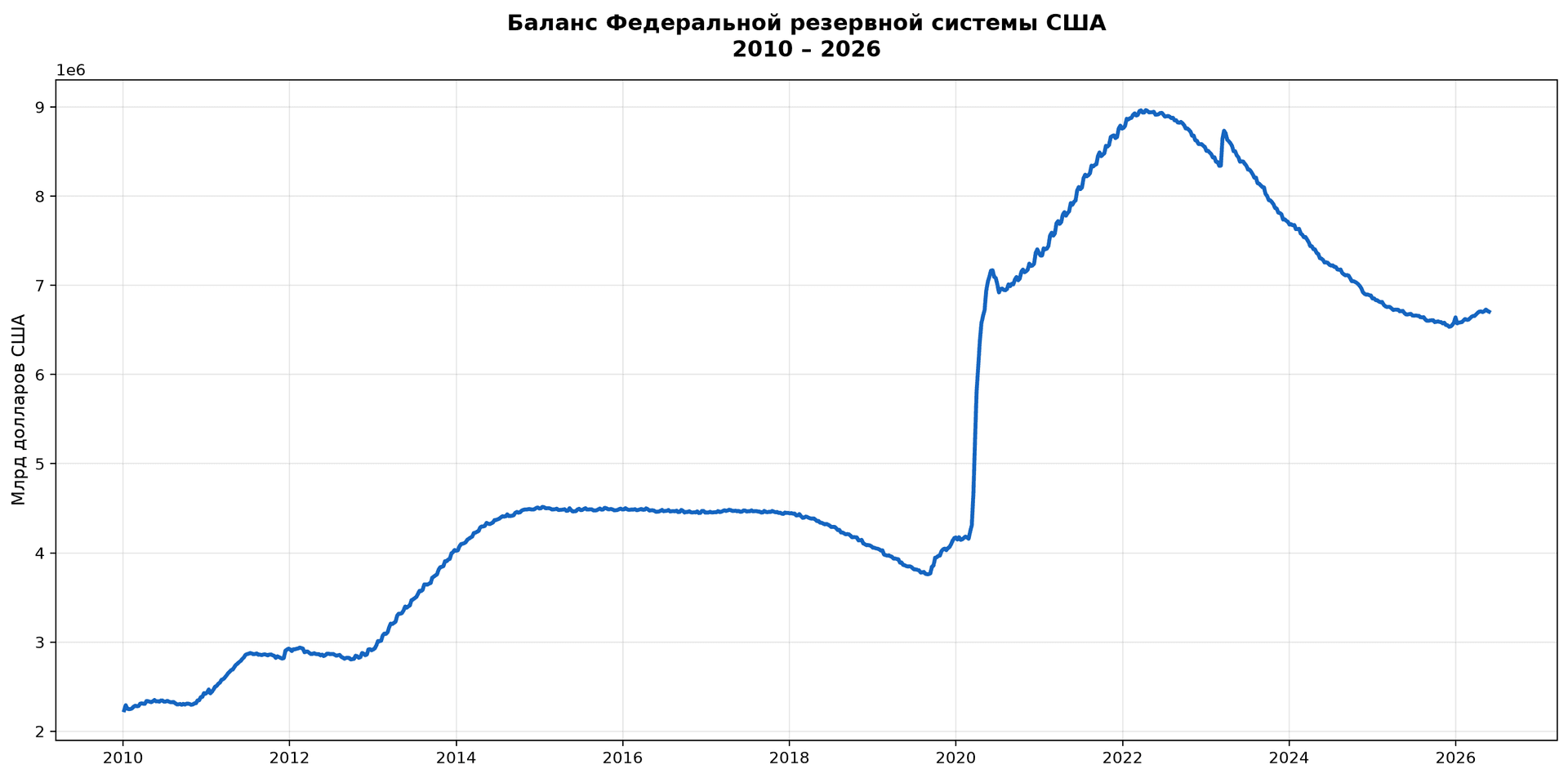
After 2008, central banks shifted to a policy of massive monetary injections into the economy. Cheap money became a constant backdrop for many years. The 2020 pandemic led to a new, even larger round of such measures. Money actively flowed into financial markets, intensifying the concentration of capital in the largest companies.
During this period, market participants developed a persistent habit: any serious problems are solved with additional liquidity injections. Markets grew accustomed to low volatility and constant growth. It was during these years that the foundation was laid for the next, even larger bubble.
The AI Bubble of 2023–2026 as the Culmination of the Cycle
The current cycle combined all previous mechanisms and added new ones. Artificial intelligence became the most compelling story in recent decades. Trillions of dollars were invested in infrastructure development. Private companies spent years artificially understating the cost of their products for customers in order to demonstrate rapid growth.
The circular financing mechanism that was actively used in recent years deserves special mention. Major players invested money in startups and infrastructure, which in turn purchased products and services from affiliated companies. This created the illusion of rapid growth and enormous demand. Sam Altman and a number of other tech moguls played a particularly important role here, aggressively promoting the narrative of AI as a salvation for all problems while simultaneously building schemes of mutual financing.
When the real numbers began to be disclosed (including during the preparation for stock offerings), it turned out that the return on most corporate AI projects was either nonexistent or extremely low. Large companies began to limit their use of AI tools, as computing costs started spiraling out of control.
Particularly revealing is a mechanism that can be called the AI commoditization trap. Semiconductors and chip-manufacturing companies are increasingly dominating the tech sector, while the rest of the technology space is contracting. AI is rapidly becoming a commodity. Initially, companies achieve savings by cutting staff—this provides a temporary margin boost. But then they start losing revenue because barriers to entry are eroding. Technologies become cheaper, and algorithms become available to all competitors simultaneously. As a result, companies lose their unique advantages and begin competing on price, destroying their own revenue.
A vivid example of such a zero-sum game is the recent situation with Micron's earnings report. The memory chip manufacturer's stock surged after publishing strong results. However, the very next day, Apple's market capitalization dropped noticeably following announcements of product price increases. Essentially, one company's gain in the chain became another's loss, and ultimately a blow to ordinary consumers.
SpaceX became the symbol of the final stage of this cycle. The largest stock offering in history went through at a valuation of around $1.8 trillion, even though the company remains unprofitable. Demand significantly exceeded supply. Investors actively sold other tech stocks to free up money for participation.
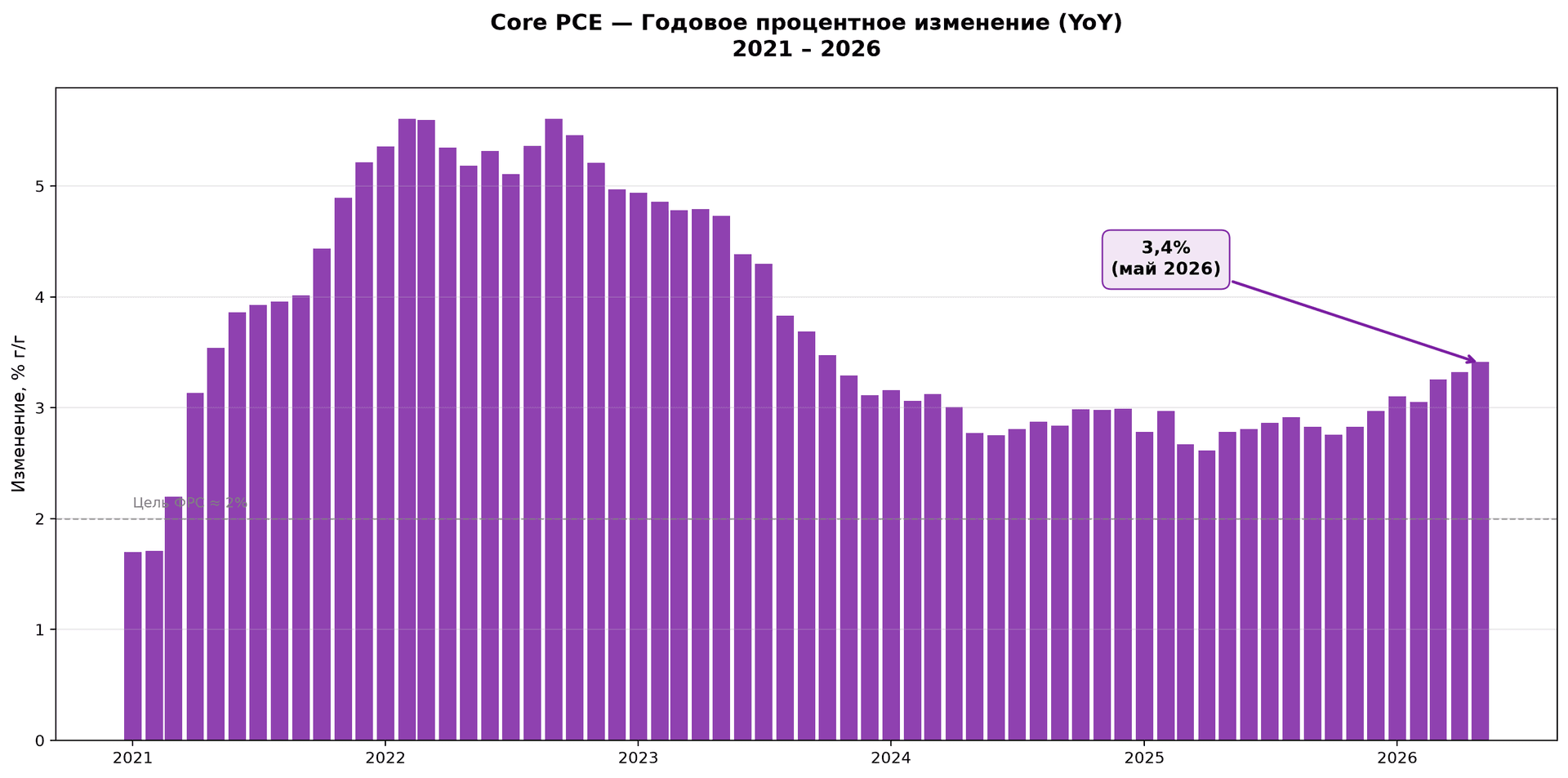
Meanwhile, the war with Iran led to rising energy prices. Inflation in the US remains persistent. According to May 2026 data, the Core PCE index—a key inflation indicator closely watched by the Fed—rose 3.4% year-over-year, the highest since October 2023. The six-month rate exceeded 4%. The real economy is already feeling pressure through rising costs and consumer caution.
Trump's Role, Idiocracy, and the K-Shaped Economy
The policies of recent years have played a significant role in reaching the current state of maximum complacency. The politicization of the Federal Reserve System, pressure on the regulator, a series of decisions undermining trust in institutions, and elements of open corruption have created an environment in which markets have stopped adequately assessing risks. The parallels with the late Roman Empire are obvious here: concentration of power, weakening of institutions, the rise of political spectacle, and ignoring long-term consequences. As I wrote in the article "Navigating Economic Turbulence: Lessons from History and Contemporary Challenges," such periods always end with a sharp reassessment of reality.
This is particularly evident in the K-shaped economy. While the U.S. stock market shows high capitalization levels, the University of Michigan Consumer Sentiment Index remains at historically low levels. Only a small layer of the wealthy benefits as their assets grow. For the majority of the population, real incomes are stagnating or declining, costs are rising, and confidence in the future is falling. This is a classic divide in which the upper part of the letter "K" (finance and technology) continues to grow, while the lower part (the real economy and consumption) stagnates or falls (University of Michigan Consumer Sentiment Index and FRED).
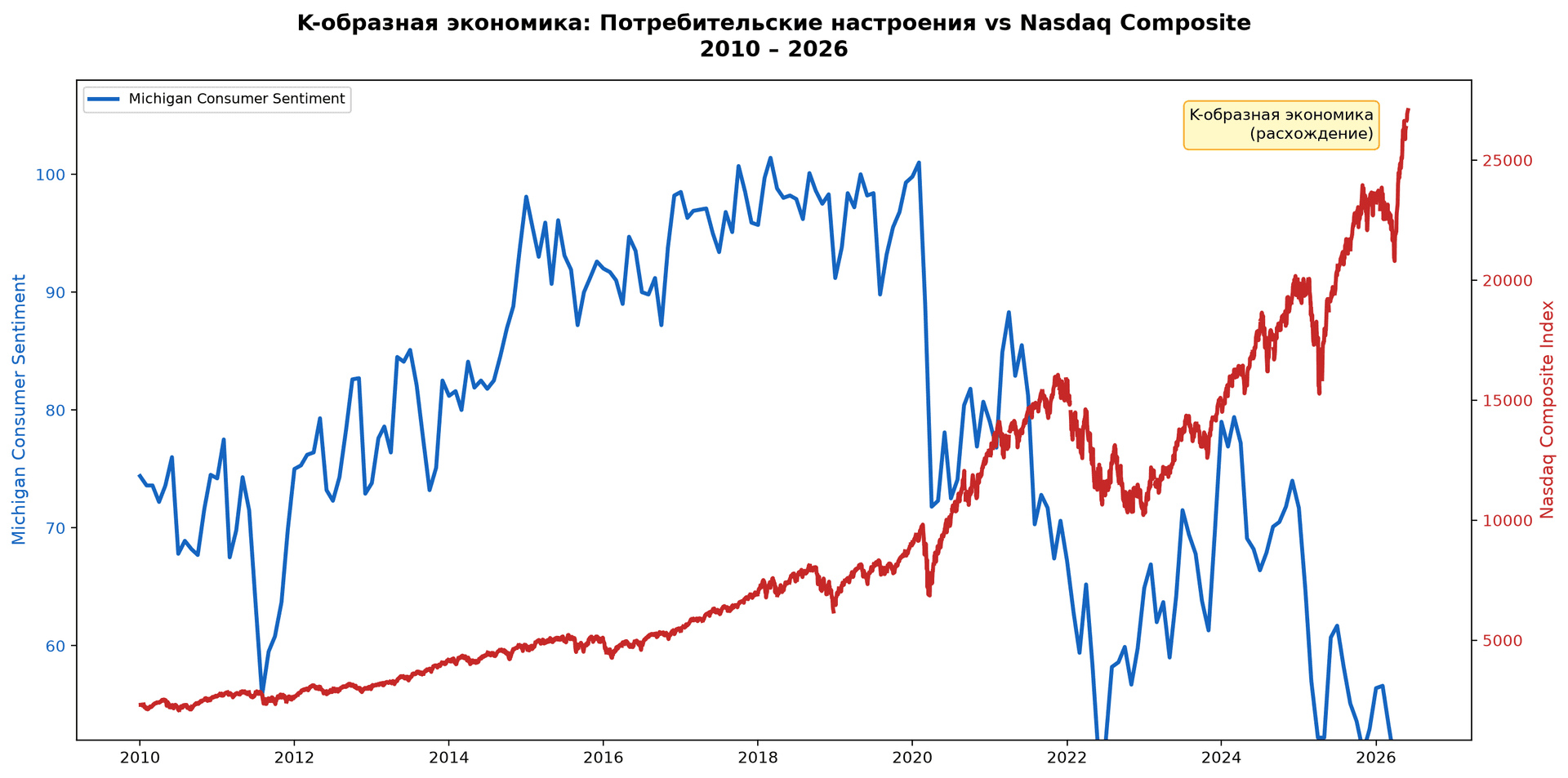
The chart vividly illustrates the K-shaped economy phenomenon: while the technology sector and stock market continue to rise, the consumer sentiment index remains at multi-year lows. This reveals a deep divergence between financial markets and the real economy.
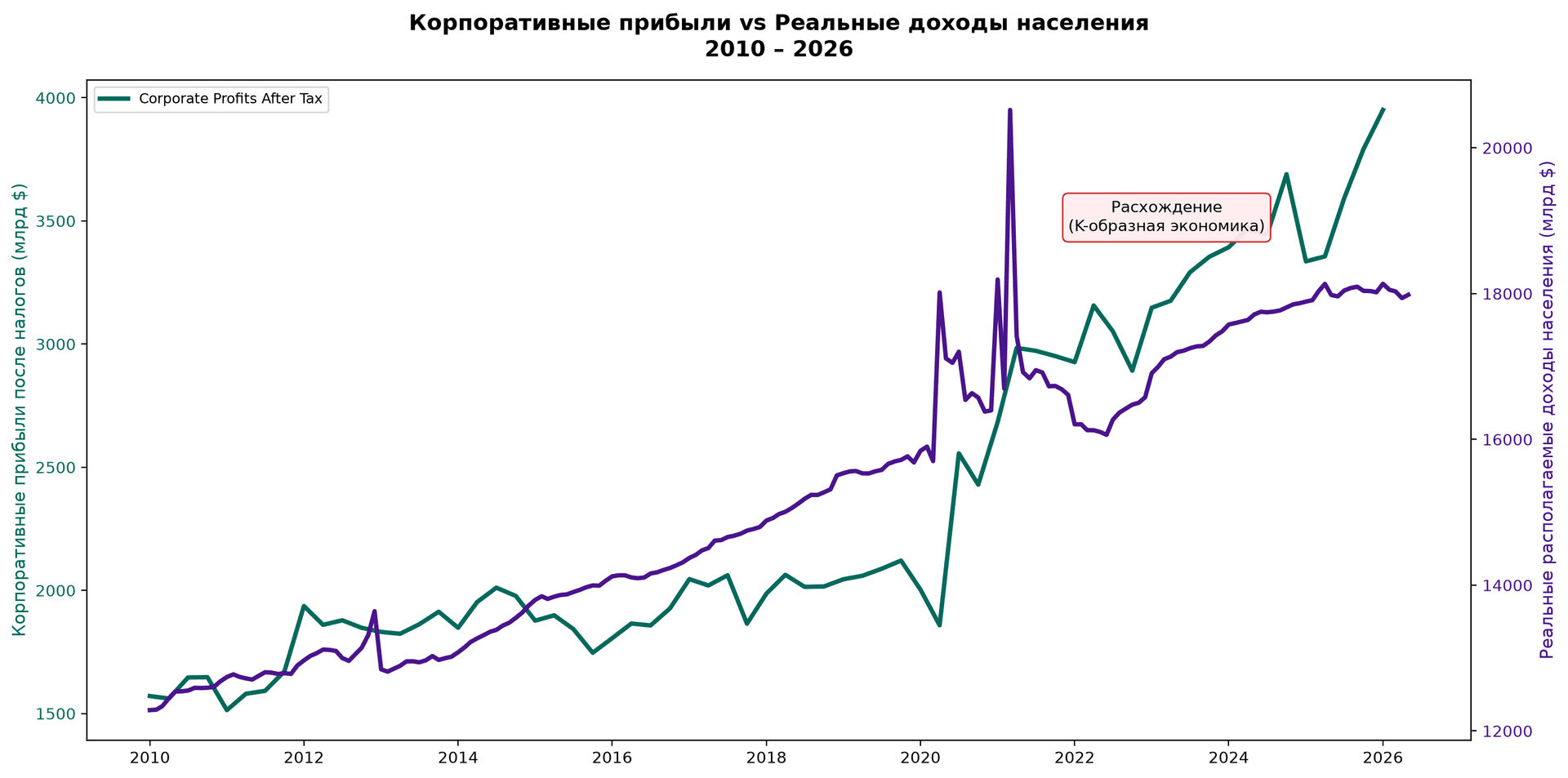
The chart shows another manifestation of the K-shaped economy—rising corporate profits against a backdrop of stagnating real disposable personal income.
Other Systemic Risks
Beyond the artificial intelligence bubble itself, other threats have accumulated. The shadow banking sector deserves particular attention. The volume of loans issued by non-bank financial institutions in the U.S. already exceeds $2 trillion. Individual private credit funds have repeatedly restricted investors' ability to withdraw funds. This part of the system remains weakly regulated while being heavily interconnected with traditional markets.
.png&w=1920&q=75)
The role of shadow banking in financing the technology and software sector is particularly alarming. Major private credit funds such as Blue Owl have actively lent to AI sector companies and software startups against future revenues that have largely proven illusory. When the first signs of disillusionment with AI returns began to emerge in 2026, Blue Owl and similar entities faced mass redemption requests. As a result, the funds were forced to impose capital withdrawal restrictions are a sign of looming stress in the shadow banking system.
This creates additional systemic risk: if tech company valuations drop sharply, problems in private credit could quickly spread to traditional banks through complex financing chains.
Complacency as the Main Danger
All these factors have existed for quite some time. Yet markets, policymakers, and much of society remain in a state of maximum complacency. Historically, it's precisely this state that has preceded the deepest crises.
The blame here is distributed among several parties: monetary authorities who have pursued ultra-loose policies for decades, politicians who deliberately weakened institutions and pressured regulators, the financial sector that chased returns at any cost, and the media that reinforced the dominant narrative.
What This Means for Russia
For Russia, the current situation carries both risks and serious opportunities. Moscow's actions in recent years—consistently reducing dollar dependence, developing alternative payment systems, strengthening ties within BRICS, and accelerating import substitution—are taking on deep strategic significance. In conditions of eroding confidence in the dollar and Western financial institutions, these steps allow Russia to secure more advantageous long-term positions (Belov A. "Revaluation of Official Reserves. International Experience").
A new crisis in the West could be leveraged to accelerate technological sovereignty, attract capital and specialists, and strengthen Russia's role as one of the centers of a new multipolar financial architecture. The key is not to repeat the mistakes of past cycles and maintain a sober assessment of what's happening.
History shows that periods of maximum complacency always come to an end. The only question is how painful the exit from the current state will be, and who will manage to extract long-term advantages from it.
This article was written shortly before the publication of the annual economic report from the Bank for International Settlements (BIS) on June 29, 2026.
The chief "bank of central banks" warns that the combination of high government debt, the AI investment boom, and reliance on non-bank financial institutions makes markets extremely fragile. All of this has unfolded against the backdrop of a prolonged period of cheap money and accommodative central bank policy.
Sources (12)
- 1. FT и WSJ — архивные материалы по кризису доткомов и Enron (2000–2002)
- 2. Financial Crisis Inquiry Commission Report (2011)
- 3. Федеральная резервная система США — данные по балансу ФРС (2008–2022)
- 4. CNBC (16 июня 2026)
- 5. Bloomberg (май–июнь 2026) — материалы по SpaceX IPO
- 6. Bain & Company (2026)
- 7. WSJ/Bloomberg — данные Core PCE (май 2026)
- 8. University of Michigan Consumer Sentiment Index
- 9. Bloomberg (июнь 2026) — материалы по частному кредиту
- 10. Белов А. «Искусственный интеллект против естественной глупости», argument.media
- 11. Белов А. «Навигация в экономической турбулентности: уроки истории и современные вызовы», argument.media
- 12. Белов А. «Переоценка официальных резервов. Международный опыт», argument.media