This text is an automatic translation from Русский. It was generated by AI and may contain inaccuracies.
Read original →Expert Yushkov: Kazakhstan's Economy Will Suffer from CPC Disruptions
Following attacks on tankers, the CPC has halted oil loading. An expert weighs in on the consequences for Kazakhstan and the global oil market.

In recent days, the Caspian Pipeline Consortium (CPC) has come under fire: tankers transporting oil through the CPC system have been hit by drone attacks. As a result, loading operations at the Black Sea terminal have been suspended. Kazakhstan's Ministry of Energy reported that production and technical facilities continue to operate normally, but shipping in the region remains unsafe.
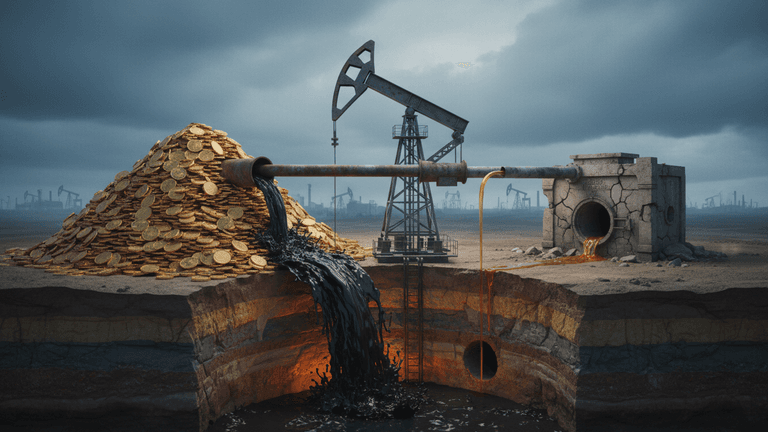
For Kazakhstan, this is not just a temporary logistics disruption: CPC is the largest export route for Kazakh oil, accounting for 80% of the republic's total oil exports.
The pipeline, stretching more than 1,500 kilometers, connects oil fields in Western Kazakhstan with a marine terminal near Novorossiysk. It transports over 60 million tons of oil annually, of which more than 50 million tons comes from Kazakhstan alone, and in 2025 an all-time pumping record was set—70.52 million tons passed through CPC. The world's largest oil companies also profit from CPC operations: consortium participants developing Kazakh fields include Chevron, ExxonMobil, Eni, Shell, and TotalEnergies.
Blow to Kazakhstan's Economy
Igor Yushkov, an expert at the Financial University under the Government of the Russian Federation, told Argument Media that the consequences of the CPC shutdown will be felt on two levels.
First and foremost, international consortia developing Kazakhstan's largest fields—Tengiz, Karachaganak, and Kashagan—will suffer. They export the bulk of their oil production through CPC under production sharing agreements.
But the problem extends beyond the interests of oil companies. The oil sector accounts for roughly 8-9% of Kazakhstan's GDP, so reduced production and exports will inevitably lead to lower budget revenues.
"Kazakhstan itself as a state will also suffer. Yes, the main problems arise for the consortia developing the fields, but as a result they will reduce payments to Kazakhstan itself. Budget revenues and the country's economy will take a hit."
Are There Alternatives?
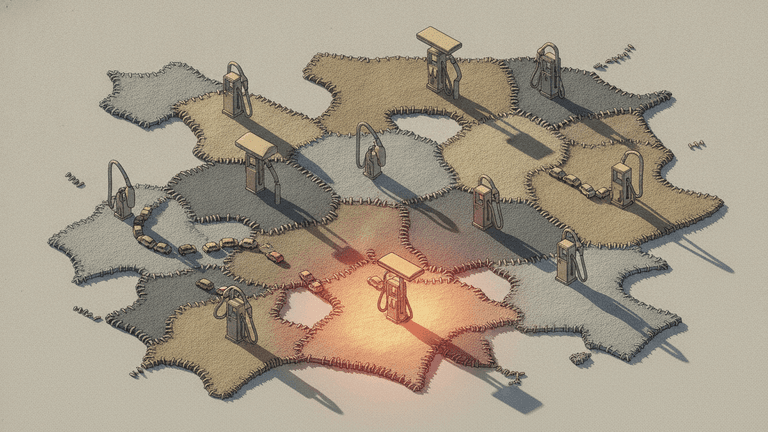
Formally, Kazakhstan has several alternative export routes, but none of them can fully replace CPC.
Some oil is shipped to China via the eastern route, but export volumes through this channel are relatively small. The Kazakhstan-China pipeline transports about 20 million tons of oil annually, and that's the route's maximum capacity.
Another option is the Atyrau-Samara pipeline, through which oil enters the Transneft system. From there, crude is exported through terminals in Novorossiysk or Baltic ports, primarily Ust-Luga, for subsequent sale to European countries. State-owned Kazakh oil companies have been using this route for many years, the expert explained to Argument Media.
There's also a trans-Caspian route: oil is delivered to the Caspian Sea coast, then transported by tanker to Baku, after which it enters the Baku-Tbilisi-Ceyhan pipeline and is shipped to end buyers from the Turkish port. In 2025, approximately 1.3 million tons of oil were exported via this route.
However, as Yushkov notes, this option remains the most expensive.
"The oil has to be reloaded several times: from tanker to pipeline, then back again. It's expensive, which is why the route isn't particularly in demand. Meanwhile, CPC, along with the Atyrau-Samara system, remains the most cost-effective option."
But the problem isn't just about cost—it's also about scale. According to the expert, the capacity of alternative routes is incomparable to CPC's capabilities. Moreover, some fields physically lack the ability to quickly redirect production to other routes.
"The capacity of the Atyrau-Samara pipeline can't compare with CPC, so pumping 50 million tons there instead of through CPC would be impossible. And some fields simply won't be physically able to deliver oil anywhere except through CPC. So the possibilities for alternative routes are limited, and none of them—or all of them combined—can replace CPC."
Consequences for the global market
A halt in supplies through CPC could become an additional factor driving up global oil prices, which have already approached the $100 per barrel mark for Brent.
While Kazakhstan isn't among the world's largest exporters, its supplies remain a significant part of the global market. By the end of 2025, the republic exported more than 78 million tons of oil. Such disruptions become especially sensitive under conditions of already existing supply constraints.
Yushkov points out that the global market is already under serious pressure due to the situation in the Middle East. Iranian oil exports are currently halted, the Strait of Hormuz is effectively blocked, and Yemeni Houthis are threatening supplies through the Red Sea, including the Saudi East-Westpipeline.
"If on top of this the export of most Kazakh oil stops, it will be noticeable on the global market and will further push prices upward."
The consequences of attacks on the CPC extend far beyond a single piece of transport infrastructure. For Kazakhstan, this means the risk of reduced budget revenues and temporary shutdowns of some production. For international oil companies, it means lost export earnings. And for the global market, it's yet another factor intensifying supply shortages and keeping oil prices elevated.