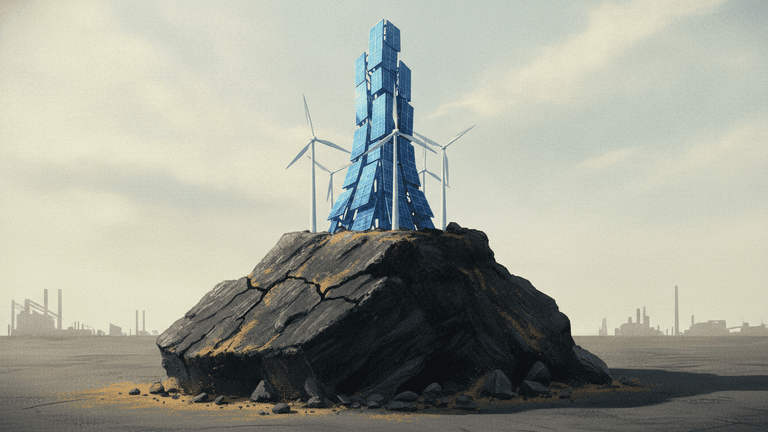
Coal Falls Below 50%: How China Is Transforming Its Energy Sector
China is reshaping its energy landscape: coal-fired generation has dropped below 50% as renewables grow at record pace. An analysis of the energy transition in the world's largest economy.
6 min read
Share:
Coal Losing Share, Though Not Yet Volume
In the first half of 2026, coal-fired generation in China fell below half for the first time in history—to49.7%, whereas coal still accounted for 65.5% of the country's total electricity generation as recently as 2016.
A significant turning point occurred back in 2025: coal-fired generation in China then declined for the first time since 2015declined in absolute terms—by approximately 71 TWh, or about 1%. With electricity demand growing by roughly 5%, this means that for the first time in a decade, all consumption growth was covered without increasing coal-fired power plant output.
However, it's too early to talk about China rapidly abandoning coal. In January through June, coal-fired power plants generated about 2.5 trillion kWh—a volume that remains close to historical highs.
Renewables are growing faster than the entire energy system
The main reason for this development is the unprecedented pace of solar and wind generation construction. In 2025, Chinainstalled 315 GW of solar and 119 GW of wind capacity—a combined total of more than 430 GW in a single year. For comparison, this exceeds the total installed power generation capacity of many large countries. By year-end, solar and wind plants alone had 1.84 billion kW of capacity and for the first time surpassed the installed capacity of all the country's thermal generation.
As a result, by the end of the first half of 2026, the share of renewable sources reached a record 41.2%, while wind and solar together provided 24.6% of generation versus 9.7% in 2020. By the end of June, solar capacity reached approximately 1.27 billion kW, up 15.8% year-over-year, and wind capacity hit 680 million kW, up 18.5%.
Not only installed capacity is growing, but actual generation as well. In 2025, wind and solarproduced about 2.31 million GWh, nearly double the 2022 figure. Solar generation alone delivered about 1.17 million GWh (up 40% year-over-year).
Behind this energy transition stands a massive industrial base. China produces the majority of the world's solar energy equipment and holds dominant positions in the production of polysilicon, wafers, solar cells, and modules (the country's share exceeds80%), while Chinese manufacturers control a significant share of the global wind turbine market. Beijing thus reaps a double benefit: reducing its own energy system's dependence on fossil fuels while simultaneously developing an export industry in which Chinese companies already enjoy advantages of scale and cost.
Coal as Insurance
That said, it would be a mistake to write off coal as a relic of the past. China remains the world's largest producer and consumer of coal: in 2025, the country accounted for roughly 52% of global production and 56% of global consumption. Proven reserves are estimated at approximately 143 billion tons, or about 13% of the world total, placing the country fourth behind the United States, Russia, and Australia.
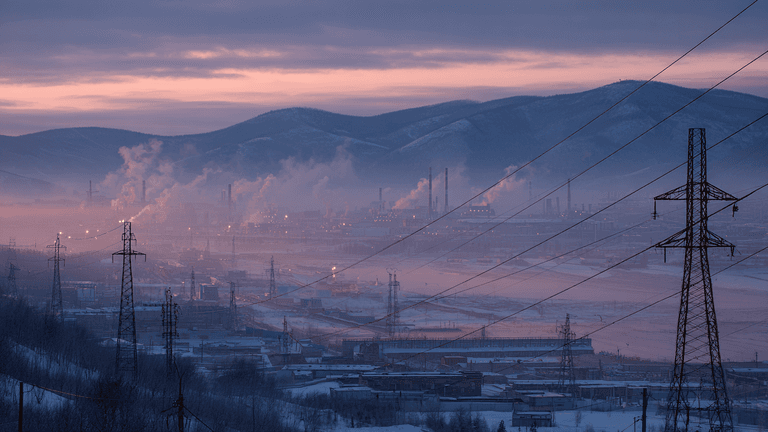
China's energy sector has been built around coal for decades: the largest deposits are located in the northern and northwestern regions—primarily in Shanxi, Inner Mongolia, Shaanxi, and Xinjiang. An infrastructure for mining, processing, rail transport, and power generation has developed there. For a country with massive industry and rapidly growing electricity demand, this means a high degree of energy autonomy.
Moreover, coal-fired power plants have a property that solar and wind lack: they can generate electricity when the system needs it. For China, this is especially important during periods of extreme heat, when air conditioners simultaneously increase the grid load by hundreds of millions of kilowatts. That's why coal's role is gradually changing: it's becoming less a source of constant baseload generation and more a dispatchable capacity able to compensate for renewable fluctuations.
This has already been enshrined in state policy. Since 2024, China has operated a capacity payment mechanism for coal-fired power plants: stations receive money not only for electricity produced, but also for their readiness to provide the system with capacity when needed. In 2024–2025, the mechanism allowed compensation for about 30% of a plant's fixed costs, and from 2026 onward, the reimbursement share has been raised to at least 50%.
There's another problem—renewables can't always be delivered where they're needed. The main solar and wind capacity is located in the north and west of the country, while the largest industrial consumers are concentrated on the eastern and southern coasts. Between them lie thousands of kilometers.
Additionally, due to grid constraints, some of the electricity produced simply cannot be accepted into the system. In January–February 2026,curtailment affected 9.2% of solar and 8.5% of wind generation, compared to 6.1% and 6.2% a year earlier. This illustrates the main infrastructure challenge of China's energy transition: building a solar or wind farm isn't enough—the energy produced must also be transmitted to consumers at the right moment.
This is precisely why China is simultaneously scaling up renewables while maintaining coal. Until the current infrastructure can fully compensate for the intermittency of solar and wind, coal-fired plants remain the guarantee of reliable energy supply.
What Beijing Has Built Into the 15th Five-Year Plan
For China, the foundation of its economic planning system is the five-year plan—a framework that defines the goals, directions, and development prospects for the national economy. The 15th Five-Year Plan is currently in effect, covering 2026 through 2030.
According to this plan, by the end of the decade China intends to bring installed renewable energy capacity to approximately 3.5 billion kW, with combined wind and solar capacity exceeding 2.8 billion kW. Their annual generation is expected to surpass 4 trillion kWh (up 74% from 2025), while total renewable energy output should reach around 6 trillion kWh per year (1.5 times more than in 2025).
A separate target calls for increasing renewable energy consumption from approximately 1.2 billion tons of standard coal equivalent in 2025 to 1.8 billion tons by 2030. The new plan for reaching peak emissions also sets a goal of reducing GDP carbon intensity by 17% relative to 2025 levels and raising the share of non-fossil sources in total energy consumption to 25%.
At the same time, Beijing isn't setting out to rapidly phase coal out of its energy system. The focus is on improving the efficiency and environmental performance of fossil fuel use and gradually replacing coal with clean generation where feasible. This creates an interesting dynamic: China is simultaneously building a new energy system while hedging it with the old one. The reason is straightforward—avoiding a repeat of the 2021 energy shortage and maintaining reserve capacity in case of demand spikes or weather-related disruptions.
Coal Below 50%—Just the Beginning
The 49.7% figure is indeed historic, but its significance isn't that China has suddenly abandoned coal. What matters more is this: the world's largest power system has learned to increase electricity production with virtually no expansion of traditional coal-fired generation.
The question now is how quickly this trend will shift from a statistical turning point to a sustained decline in absolute coal consumption. To achieve this, China needs to tackle two challenges: continue scaling up renewables while simultaneously building out the grid infrastructure, storage capacity, and system management mechanisms that will allow this generation to operate without constant backup from coal-fired power plants.