This text is an automatic translation from Русский. It was generated by AI and may contain inaccuracies.
Read original →Interview with Alexander Novak
Deputy Prime Minister Alexander Novak sat down with Marina Kim to discuss achieving 70% import substitution in the energy sector, reorienting exports toward Asia, and plans to increase clean energy's share to 90% by 2050. How sanctions have accelerated Russia's technological sovereignty.
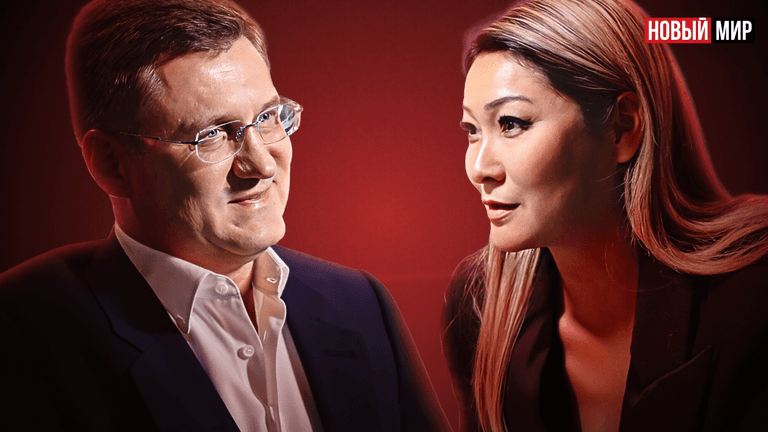
Watch the video version of the interview at the link.
— (Marina Kim) Looking back at this intense five-year period from 2020 to 2025, what was the most difficult part, and what was the main achievement of this entire process of the great pivot to the East, while maintaining stability and resilience at home?
— (Alexander Novak) I'd like to touch on the 25-year milestone, because if we compare how Russia's energy sector has changed over 25 years, I'd say it's made a dramatic leap forward—both in quantitative terms in the production of energy resources like oil, gas, electricity, and coal. Over 25 years, there's been a colossal jump in physical production volumes. Just for comparison: in 2000, oil production in our country was just over 300 million tons. Now we're producing over 500 million tons. I can say the same about gas and coal—I just won't cite the figures. That's in terms of physical output.
As for quality, our industry has certainly become resilient and high-tech. It's gone through a period of developing its own Russian technologies, qualitatively transforming extraction, refining, and transportation. I can tell you that we've modernized around 150 units at oil refineries alone, which enabled us in 2016 to begin producing Class 5 environmentally friendly gasoline and diesel fuel. And we could talk about every sector this way. So yes, the industry has made an enormous leap during this time.
Looking at the last five years specifically, we also see transformation, but this transformation was mainly driven by the fact that we faced, first, the 2020 pandemic, and then harsh sanctions starting in 2022 from unfriendly countries. This included restrictions on equipment and technology supplies, foreign companies withdrawing from cooperation, limitations on our ability to export energy products, bans on oil and petroleum product deliveries to Europe and the US, and price caps—something that had never been imposed before. In other words, the sanctions pressure during this period was unprecedented. In terms of the transformation of our energy sector...
— But it didn't work. The whole paper sanctions story—it didn't work. Right?
— I'd put it this way: our industry proved resilient to all kinds of sanctions. It transformed and acquired new qualities. This is connected, first, with the development of Russian technologies to replace foreign equipment and foreign technologies. Ten years ago, Russian equipment and technologies accounted for roughly 38%; now we've reached 70% import substitution. In the next 2-3 years it will be 90%. We've been able to ensure that our enterprises, our economy, can produce the most complex equipment needed for extracting, refining, and transporting energy resources. That's the first point.
Second, we reoriented our transport and logistics chains, which had been established and operating for many decades. Through no fault of our own, but because of restrictions imposed by Western countries, we were forced to leave the European market. Today our main markets are the Asia-Pacific region, African countries, and Latin American countries. This too was a challenging process. They tried to obstruct us by imposing sanctions on vessels and limiting our ability to obtain insurance. And this pressure continues, by the way, on our friendly partners as well—particularly on China, India, and other partners—to discourage them from buying our energy resources. So international cooperation, the redirection of flows, and increasing the share of our resources used by friendly countries—this too is an objective process that was implemented during this time.
I'd like to note that we've been developing our eastern direction for some time now. This doesn't mean we only just started doing this because of sanctions. It simply prompted even greater cooperation and collaboration. The Power of Siberia project, which was signed and implemented before sanctions, led us to begin construction of the Vostok gas pipeline. The ESPO oil pipeline to the port of Kozmino and the Skovorodino-Mohe branch to China—these also predated the sanctions. We began developing our relationships with our Asia-Pacific partners long ago, on the president's instructions. Today, this has simply accelerated and intensified.
— That's precisely what helped during the difficult process when sanctions were being imposed on us endlessly. We had already laid certain groundwork before this to get through that period more calmly and sustainably.
— Here, you see, we can objectively say that the issue isn't just about sanctions, but that this process would have moved in this direction anyway—to a greater extent in terms of increasing cooperation, both in volume and quality—because it's clear that today's centers of economic growth are India, China, and the Asia-Pacific countries. In the future, it will be African countries that should also take off and develop. And today we're also actively developing cooperation with African nations. So this is an objective process. Where the economy is growing, more energy is required, more projects are being implemented. Therefore, Russia, as a global leader in energy, will objectively develop its cooperation in these directions.
— The president spoke about this in his speech, and it was a brilliant speech. That's not just my opinion—it's the opinion of experts.
— The president clearly outlined all the global challenges that are on today's world energy agenda, which are being discussed here at Russian Energy Week. And he set tasks for developing Russian energy, developing the domestic market, for gasification, for utilizing our domestic energy sources, developing fuel and energy balances, developing the electric power industry—especially in connection with increased consumption resulting from digital technologies.
— I'd like to note this separately, because it's not entirely clear to consumers, to ordinary people. It seems that the digital economy should, on the contrary, reduce consumption of these sources, this energy. But both the president and Sergey Semyonovich Sobyanin spoke about this at the plenary session—that the digital economy actually consumes even more than heavy industry, almost twice as much.
Accordingly, this requires a completely different configuration of power grids. I know a meeting is being prepared on this issue, but perhaps something can already be revealed about what's fundamentally new in the approach. Data centers being built, many of them in the Far East, will require new capacity.
The topic of coal generation came up—that local coal generation could be used to power such centers. What else will be done in this direction?
— One of the problems we need to solve is improving the efficiency of existing capacity and the network infrastructure that's already been built. The fact is that today—and this was also discussed yesterday at the panel session—a lot of capacity is being built based on consumer applications. And this translates into additional costs for consumers in the form of tariffs.
But often, the consumers who submit applications for infrastructure construction don't always fulfill their part of the bargain. Utilization of the built capacity is quite low, so we need to improve the efficiency of what's already been built and create conditions so that capacity is built closer to actual needs—not inflated—to avoid burdening consumers with tariff loads and the economy with additional expenses.
That's why we're considering various options, including reservation fees and introducing "take or pay" mechanisms. It's important to implement modern mechanisms.
If we return to the story of implementing digital technologies and how this affects costs or electricity consumption and energy intensity—there are dual factors at play here. On one hand, the construction of data centers increases electricity consumption.
— By multiples. And the cost. In America, costs increased 300% over 5 years. Electricity prices where there are data centers.
— This is because data center construction is outpacing the development of energy infrastructure. It's a phenomenon today that demand for data centers is growing faster than infrastructure can be built. And the data center itself can be built physically faster than a power plant or transmission line.
— You install the modules, connect them, and everything works.
— A data center consumes—we can verify the numbers—let's say a data center that consumes 100 megawatts, for example, can be compared to the volume of energy required for half a million cars per year. Imagine, those are the consumption levels we're talking about.
Global electricity generation grew 4.3% last year. We've never seen growth rates that high before. And in China and India, growth is running at 6 to 7%. That's where modern digital technologies are developing most actively. So on one hand, this increases consumption, but on the other hand, the use of artificial intelligence itself significantly reduces costs and improves industry efficiency. Which in turn reduces the energy intensity of these industries and boosts their competitiveness.
— So these are countervailing processes, right?
— Yes, let me give you an example from geological exploration. Core sample analysis used to be done by researchers, scientists, specialists. It took an enormous amount of time—many people working on it for 2-3 months. Now, using large databases, information that's already been entered into databases is processed by artificial intelligence to analyze the core, its composition, extraction potential. It takes just a few minutes. Imagine how much productivity increases.
This productivity growth is precisely the effect that outpaces consumption and the increase in energy intensity from implementing digital technologies. Or take digital twins, for example, which are already being actively used across various industries today, including energy.
Right now practically all our oil refineries are creating digital twins that manage the oil refining process. Depending on oil quality, the system calculates what product would be most profitable to produce, both economically and in terms of physical processing.
The model calculates the most efficient way to run the plant. This also allows for significant cost reduction and management of the plant's unit costs. These are just examples. So this will continue to develop actively. And I'm confident that in the coming years we'll see entirely new effects from using artificial intelligence that we don't even know about today.
— New effects for the energy sector, right? There'll be another leap forward in technology?
— I think what we're seeing now is active platformization across various industries. And in energy, naturally, its own digital energy platform is taking shape, which will efficiently utilize energy resources, improve the efficiency of the entire sector, reduce unit costs, manage processes, and have access to this information. All of this will be enabled by artificial intelligence.
— The President mentioned the energy balance of regions, noting that what's needed is not digital twins per se, but digital databases that would aggregate everything available across different regions, so that artificial intelligence—as I understand it—or simply digital technologies could manage this process, to understand where there's more or less. Essentially, it's a GOELRO 2.0 plan.
— In his speech yesterday, the President devoted considerable attention to both technological sovereignty and the use of modern digital solutions. And he instructed the government to work on this more actively—which we will certainly do.
— Does such a platform already exist, or is it being developed—one that will manage these balances?
— It's gradually taking shape. You see, right now it exists at the company level. Take Gazprom, for example, which has made significant progress in this direction—they already have their own digital platforms. They're managing processes digitally, using artificial intelligence, starting from geological exploration, selecting drilling methods, extraction, and operations. It's all digitized. You can go see it for yourself. I personally verified this—I went and saw it myself.
Then, after operations, comes processing, transportation, all the way to the end consumer. A digital platform has essentially been created. And going forward, this will be integrated into a digital platform for the entire energy sector. This will be actively developed.
— This will also increase energy efficiency, right? The entire system can account for literally a million nuances?
— This will boost efficiency and labor productivity, which is critically important for the development of our economy today. And it will mean energy savings and better energy quality. Everything here is interconnected.
— So we've taken a bit of a glimpse into the future of technology, which the president spoke about—what's key and important for the energy sector worldwide. The OPEC Secretary General, here at the forum, shared his forecasts, some of which actually contradicted the International Energy Agency's projections, saying that in about 25 years the population will grow by roughly 25%. Which means energy consumption will also increase.
He forecasts that the global economy will also roughly double by that time. That's what I wrote down. Maybe I got it wrong, but I think that's right. Accordingly, energy capacity also needs to increase. But how? As you can see, we're talking about 25 years. Obviously there's a certain balance right now—coal, gas, nuclear. Where's the window for a breakthrough? Where will the main leap forward be over the next 25 years?
— There are forecasts from experts, including our OPEC colleagues, the OPEC secretariat. First, I want to say that we have very well-established cooperation with the OPEC Secretary General. He was at the St. Petersburg International Economic Forum, and now he came to Russian Energy Week. We have excellent dialogue, and we exchange experience—beyond our interaction within the OPEC+ framework, we also work simply in the Russia-OPEC energy dialogue.
Coming back to global consumption estimates. Most experts agree that by 2050, global energy consumption will grow by roughly 20% compared to today. At the same time, electricity consumption growth could be substantial—it could double. That's why in the current situation it's important to focus in the near term on creating conditions for developing electrical infrastructure that will meet electricity demand at that scale.
That means building power plants and building out the grid network. I think if we're talking about electricity sources, we'll continue building gas-fired power plants and hydroelectric plants. And nuclear power plants will have a larger share in the balance. And of course, renewable energy sources. Many countries are already active in this area.
— So you are betting on them after all, you're not writing them off?
— We see this trend already happening globally. In China, for example, 80% of new capacity additions are solar and wind.
— 80%?
— 80%, yes.
— Of the global total?
— Annually.
— Of their energy mix?
— Yes, of what they're bringing online domestically. And given that they have a massive energy sector, they also play a dominant role in the global balance of new capacity additions when it comes to developing renewable energy sources.
— But they're still going with what you might call a mixed approach. Renewables, nuclear, small modular reactors, right? That's a growing area now.
— Right now their balance is dominated mainly by coal-fired power plants, so they're diversifying their mix. Going forward, they plan to reduce coal's share, increase the share of gas, and increase the share of renewable energy sources. As for our country, we have...
— Yes, so what should our target balance look like?
— Well, this balance is already diversified. Here's how it actually breaks down today: we have roughly 2% renewable energy sources, about 20% nuclear generation, 19% hydro generation, 45% gas, and 15% coal.
So our strategy and our general energy development scheme envisions a partial reduction in coal from 15% to 8%, an increase in renewables to 8-10% by 2050 from the current 2%. Nuclear generation's share will increase from 20% to 25%. Gas generation's share remains at roughly 40-45%. Cheap and environmentally clean. So already our balance consists of about 85-87% clean energy sources. In the future it will be even higher—90%.
— The cleanest in the world, as Vladimir Putin said about our energy balance. And it will get even cleaner.
— Our energy balance was developed back in Soviet times, very competently. We don't depend on any single source—we have all types of sources, and all of them are developing. Our balance won't change much by 2050. Yes, as I've already said, the share of renewable energy sources will grow—that's a general trend, there's no getting away from it. Coal will decrease slightly, and the percentage of clean energy will rise from 85% to 90%.
— A clear target indicator.
One more general question, and then we'll keep everything brief from here on. Vladimir Putin spoke about a new energy realism—that's what he called it—saying the world has entered such an era. This relates to the processes we've been discussing: reorientation toward the East, the unfriendly actions of our Western partners, their somewhat reckless obsession, as he put it, with energy transition and green energy.
How do you see these processes, and how do you envision a more just energy order, considering that the technologies we're developing, for example, help us achieve technological sovereignty and, going forward, technological leadership? But as the president said, we're ready to share these technologies with friendly countries.
We're ready for exchange, we're ready to help those countries that traditionally haven't been as successful in this area—Africa, Asian countries—to overcome their technological backwardness. And this is no longer a colonial energy order, but something newer, more just—something we seem to be moving toward. Do you see it that way?
— The president paid special attention in his speech yesterday at Russian Energy Week to developing international cooperation and collaboration. It's clear that global energy cannot develop in isolation. This is an industry that requires international ties, development of cooperative relationships, technology exchange, implementation of joint projects, and investment guarantees that ensure, among other things, production and sale of products for export. So today the vector has indeed shifted, as I mentioned, toward greater interaction with the Asia-Pacific regions, but our country has always been open. We weren't the ones who banned equipment supplies to us or purchases of our resources.
— We were dependent on technologies as well, which is precisely why we existed in a geopolitical colonial order where we had the resources but they gave us the technologies, and for that we were in this inferior position.—
— As I've told you, we primarily use Russian equipment, and our next task is to ensure Russian production of all critical technologies—what we call technological sovereignty. And we'll complete this task within 2-3 years.
— Our detractors express concern that we used to be dependent on Western technologies, and now as this transition is taking place, won't we end up dependent on Chinese technologies? They're also moving quite rapidly in certain sectors—in the nuclear cycle and others—trying to compete in this race...
— I don't quite understand your question, frankly, because I'm telling you that we use Russian equipment today, not Chinese, and it will be 90%.
How would we go from being dependent on European to being dependent on Chinese, if we're focused on technological sovereignty? This means we have a clear understanding of the equipment and technologies that are already being made by Russians, that will be produced by our Russian enterprises. We don't intend to be dependent on anyone—on the contrary, we intend to ensure technological leadership in the world and become exporters of the relevant technologies.
And in many technologies, we're already leaders in certain areas that can be actively utilized. Unfortunately, today's markets aren't global—we can mainly trade with friendly countries, but this trade is developing successfully. Trade with unfriendly countries will resume, and we'll work with a broader circle of countries.
Right now, as I've already mentioned, it's Africa and Latin America, and we now have solar power plants that are competitive on the global market. Not to mention nuclear power plants—there we're absolute world leaders.
Today, 75% of all nuclear generation being built worldwide is essentially being built by our Rosatom. We've now learned to make highly competitive oil and gas equipment, and we're ready to supply it around the world. Work is underway with many different countries to allow our manufacturers and service companies into their markets. We're actively developing this direction. The President set this task, and just yesterday he emphasized it again in his speech at Russian Energy Week.
— The share of the ruble already exceeds almost 50% in our settlements, right? If we take it overall. Are there target indicators by timeframe—in a year, in five years—for this to be 60-70%? Do we set such target goals for ourselves?
— I wouldn't say we have some explicit goal to constantly move in a particular direction. The market itself drives the need for settlements in national currencies. If you take, for example, our friends in North Korea or India, we've already shifted to 90-95% in national currencies.
Automatically, without any specific targets. Simply because they won't let us settle in the currency that used to be the hegemon. Today we settle comfortably in national currencies. And this doesn't prevent us from maintaining trade.
Moreover, we're becoming more independent from political decisions, whether in energy or economics. They constantly try to create conditions to prevent our economy from developing through various means. Sanctions, payment restrictions, and so on. That's why we're forced to create secure conditions for economic development and international settlements.
— Now a more practical question—we're wrapping up, but this is still important. Regarding fuel. You monitor this fuel situation weekly. How long will the domestic fuel market priority remain in place? What metrics do you use to monitor the gasoline and diesel situation in the regions on a weekly basis?
— We have a task force at the government level, there's a task force at the Ministry of Energy level, with participation from all federal authorities and companies.
And we carefully analyze the production situation, consumption, calculate balances, look at the situation in each region, physical fuel availability, pricing, and so forth. So we examine the situation at these task forces in great detail.
For us, the main thing is that demand is met by supply, that there are regulatory reserves that can be used in case of any fluctuations. Well, for example, we used part of the accumulated reserves—not all, but part—during the period of heightened demand, that's August-September, now demand is declining, consumption is actually falling, production is balanced, our companies are producing. We monitor this. Our main task is physical availability and keeping prices at the inflation level.
— This question just begs to be asked. Gas as an alternative to gasoline—is that possible? In the near term? When will methane or LNG in transportation become widespread and cheap for consumers?
— You know, gas has long been one of the fuels used to power transportation. We're talking about liquefied petroleum gas, liquefied natural gas, methane.
It's becoming increasingly widespread. Let me tell you, if we're talking about methane specifically, just 10 years ago consumption was quite modest. Transportation consumed 400 million cubic meters per year. Now consumption is around 2 billion cubic meters.
Consumption has grown fivefold over 10 years. Yes, it's still significantly less than gasoline or diesel, but we're creating the conditions and opportunities. Vehicles that run on gas fuel are appearing. Ultimately, consumers make their choice based on price, quality, and personal preference.
— There are consumer habits, and they're hard to change.
— For now, the internal combustion engine remains the priority, but gas transportation fuel is also growing quite rapidly. Though its share remains insignificant for the time being.
— One last lightning-round question. You can answer right away, because I think you probably know the answer. What's the one number you want people to remember from Russian Energy Week 2020-2025?
— Minus 40%. Or plus 40%.
— That works out to an increase of +40%. Alright, we'll note that down and revisit this figure in 2050. We'll see how things turn out. Thank you very much.