This text is an automatic translation from Русский. It was generated by AI and may contain inaccuracies.
Read original →Utility Tariff Hikes Push Inflation Beyond Central Bank Forecast
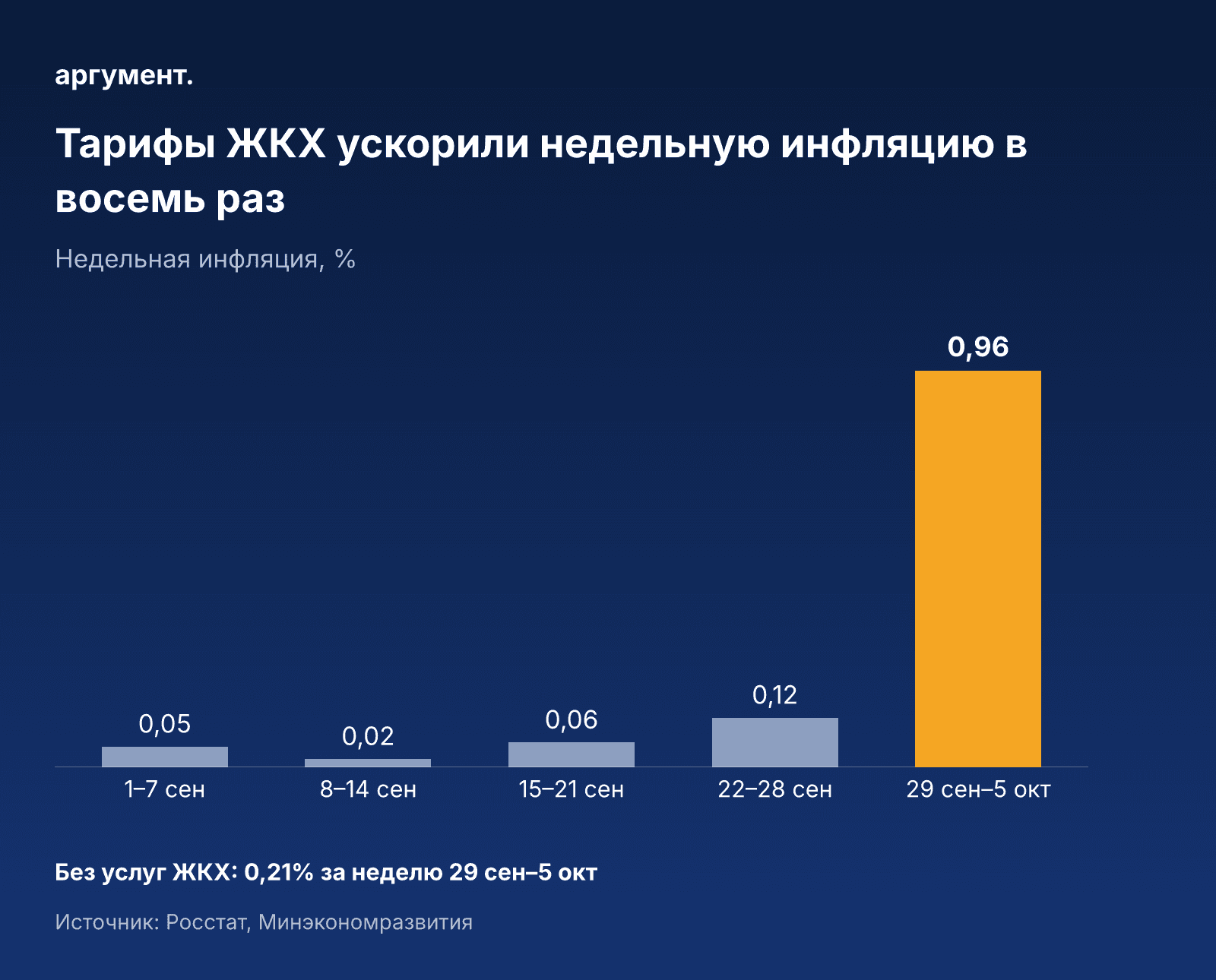
Following the indexation of housing and utility services, prices rose by 0.96% in a week, with annual inflation jumping to 7.17%. This figure surpasses the upper bound of the Bank of Russia's forecast for 2026.

Consumer prices rose 0.96% in the week of September 29 to October 5, according to the Ministry of Economic Development's monitoring. Annual inflation climbed from 6.25% to 7.17% in seven days, exceeding the Central Bank's year-end target. We examine the reasons behind this surge and how long its effects will be reflected in statistics.
One Week More Expensive Than All of September
A week prior (September 22-28), prices increased by 0.12%, and over the four weeks of September combined, they rose by approximately 0.25%. The new figure is nearly four times that amount. The surge was driven by utility payments: as of October 1, regions indexed tariffs, causing services to become 5.14% more expensive in a single week.
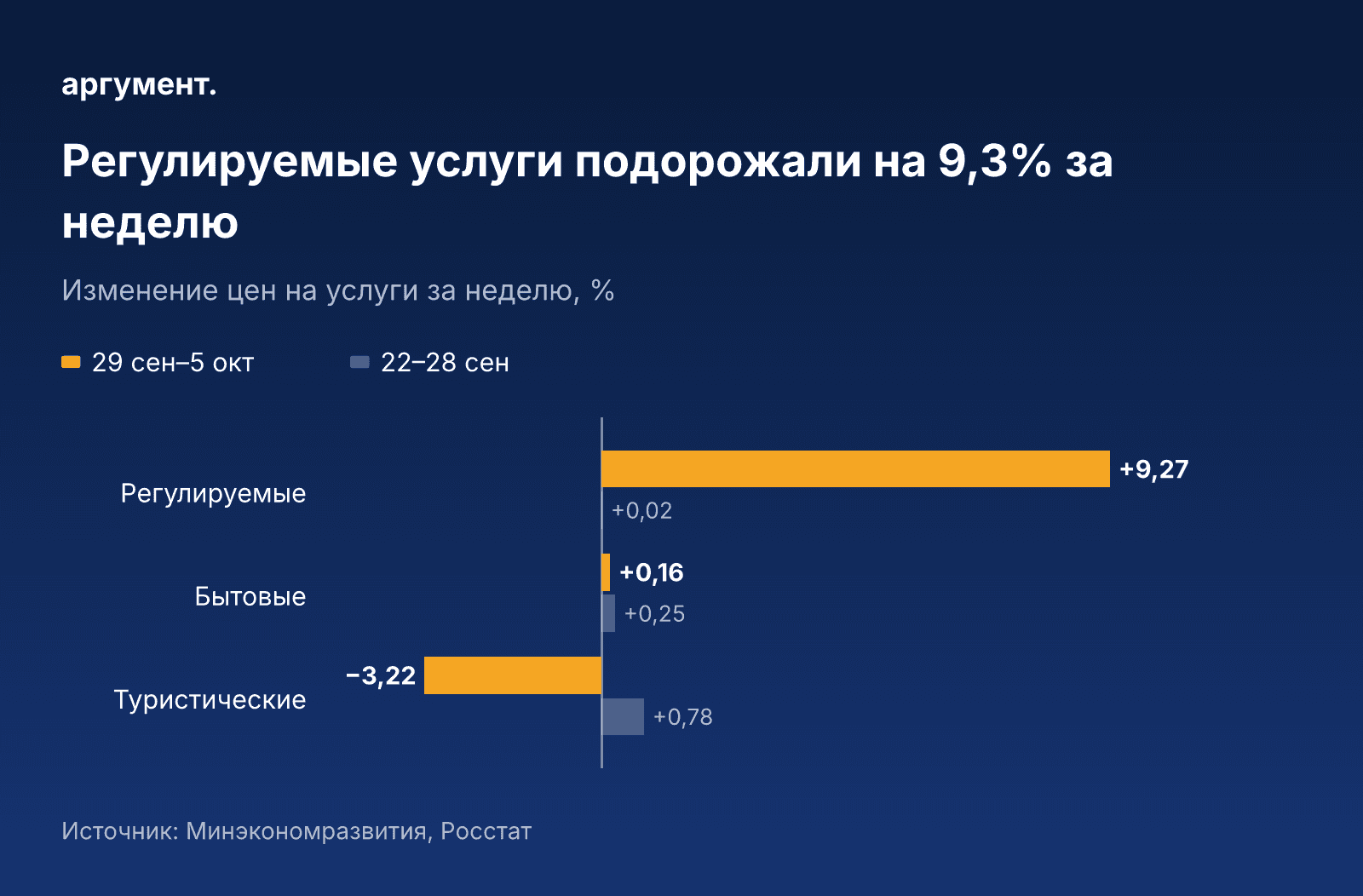
The observed services in the monitoring are composed of three groups. Regulated services include prices set by the state: housing and communal services (water, heating, electricity, gas), public transport fares, and rent for state-owned housing. These were responsible for the surge, with regulated services increasing by 9.27%. In contrast, tourist services—meaning trips within Russia and abroad, hotels, and sanatoriums—decreased by 3.22%.
Tourist services are becoming cheaper seasonally: the velvet season has ended, and trips to the Black Sea coast decreased by 6.8% in a week, while trips to Southeast Asian countries fell by 3.1%. Household services, ranging from repairs to hairdressing, increased by 0.16% compared to 0.25% a week earlier.
Excluding housing and communal services, prices rose by 0.21% for the week. This is almost twice as fast as the previous week, when inflation, without any tariffs, stood at 0.12%.
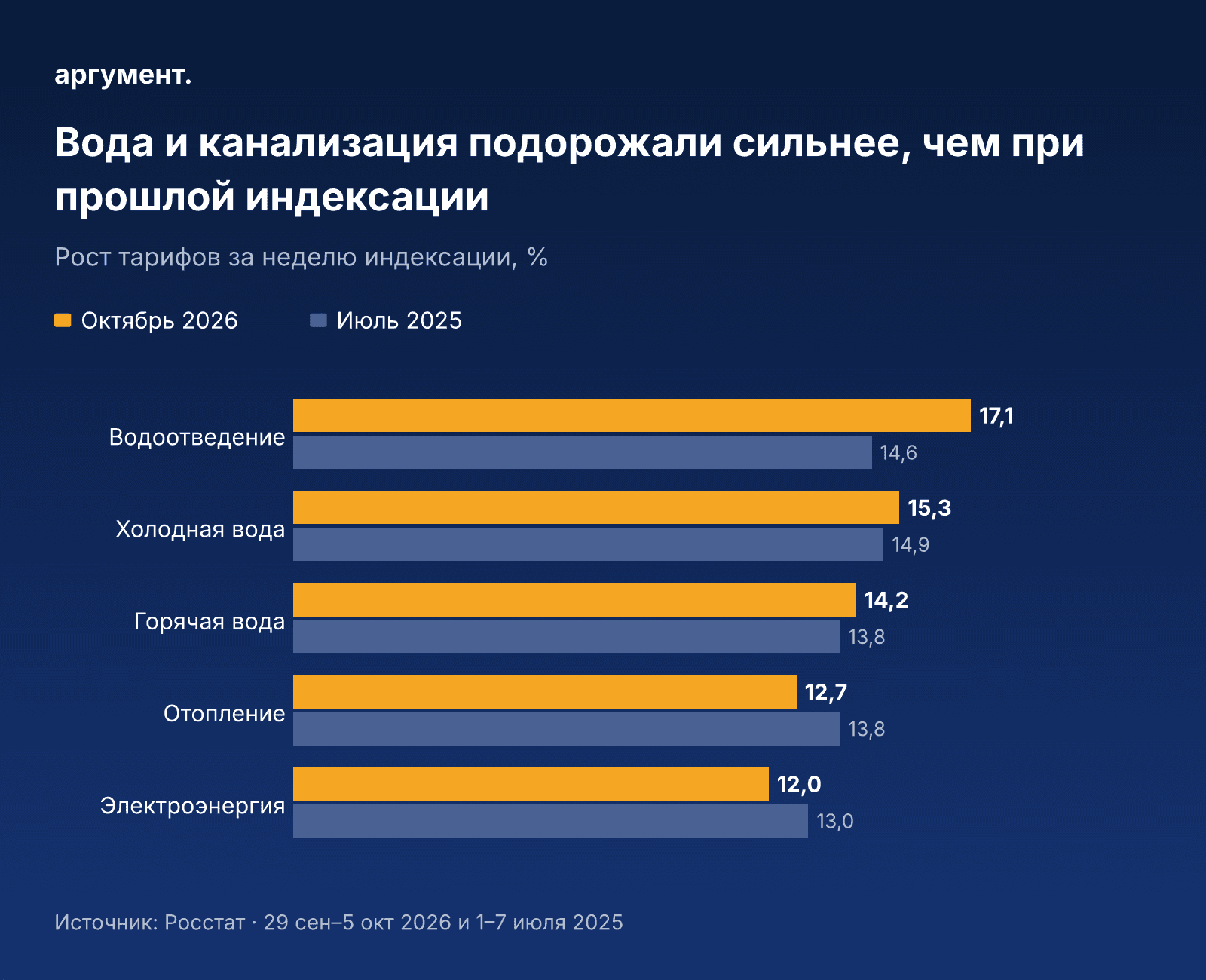
This year's indexation is occurring in two stages. As of January 1, housing and communal service fees increased by an average of 1.7%, and as of October 1, they rose according to regional limits, ranging from 8% in Khakassia and Chukotka to 22% in Stavropol Krai. In Moscow, the cap was 15%, and in St. Petersburg, it was 14.6%.
According to Rosstat, the most significant increases were observed in increased in price. water disposal and cold water. A year ago, tariffs were indexed in July, by an average of 11.9%, and the week of indexation contributed 0.79% to inflation. The current jump is more significant, although heating and electricity prices rose less than in 2025.
Even without tariffs, prices are not standing still.
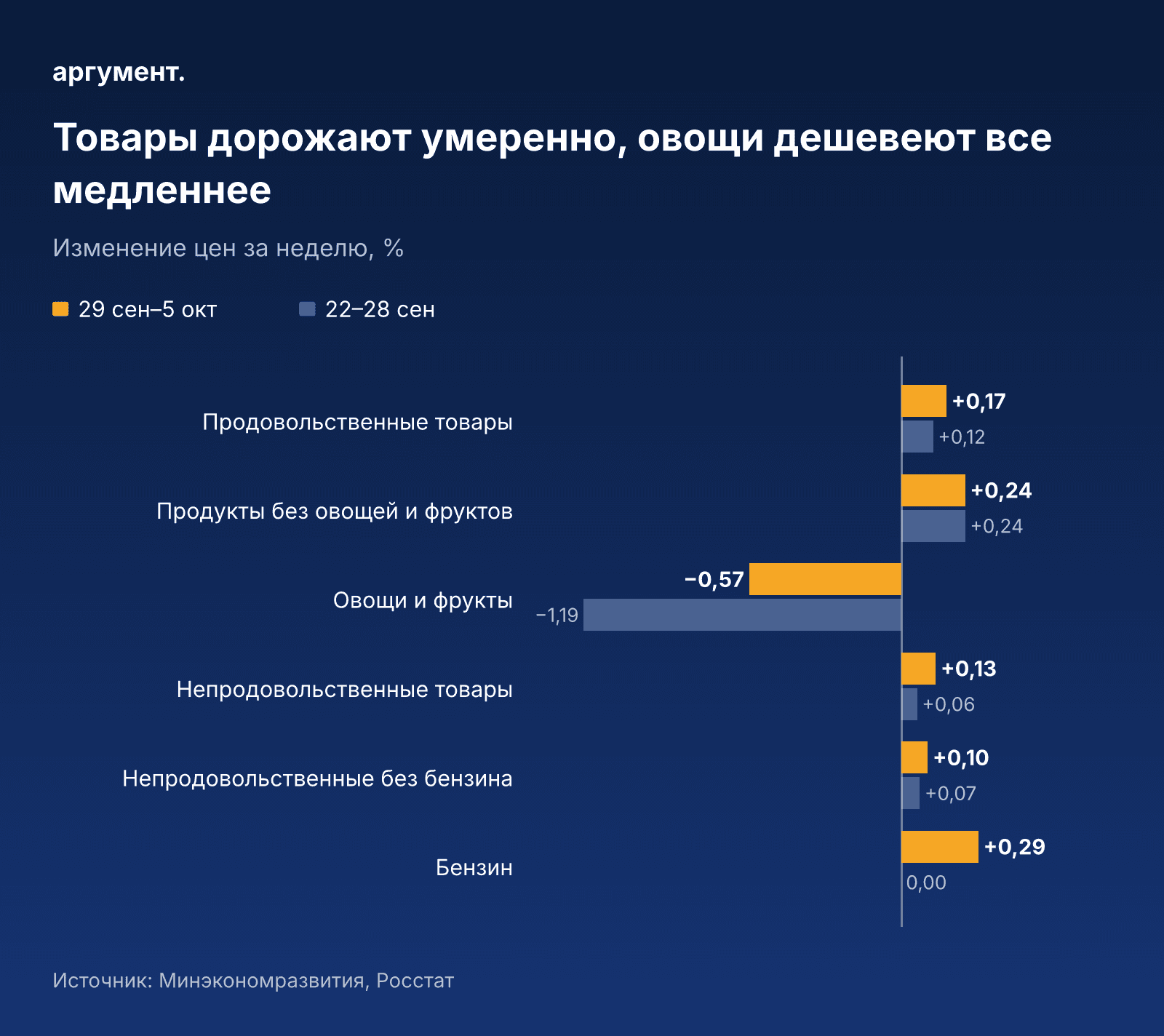
Food prices rose by 0.17% over the week, while non-food items increased by 0.13%, with both figures higher than the previous week. The seasonal decline in fruit and vegetable prices is slowing: down 0.57% compared to a 1.19% drop a week earlier. Excluding these, food products have increased by 0.24% per week for the second consecutive time.
The mechanics are seasonal. In summer and early autumn, vegetables and fruits become cheaper as new harvests arrive: in August, fruit and vegetable products decreased by 5.72% over the month. By October, the harvest is collected, storage and logistics costs are added to the price, and greenhouse tomatoes and cucumbers become more expensive as daylight hours shorten.
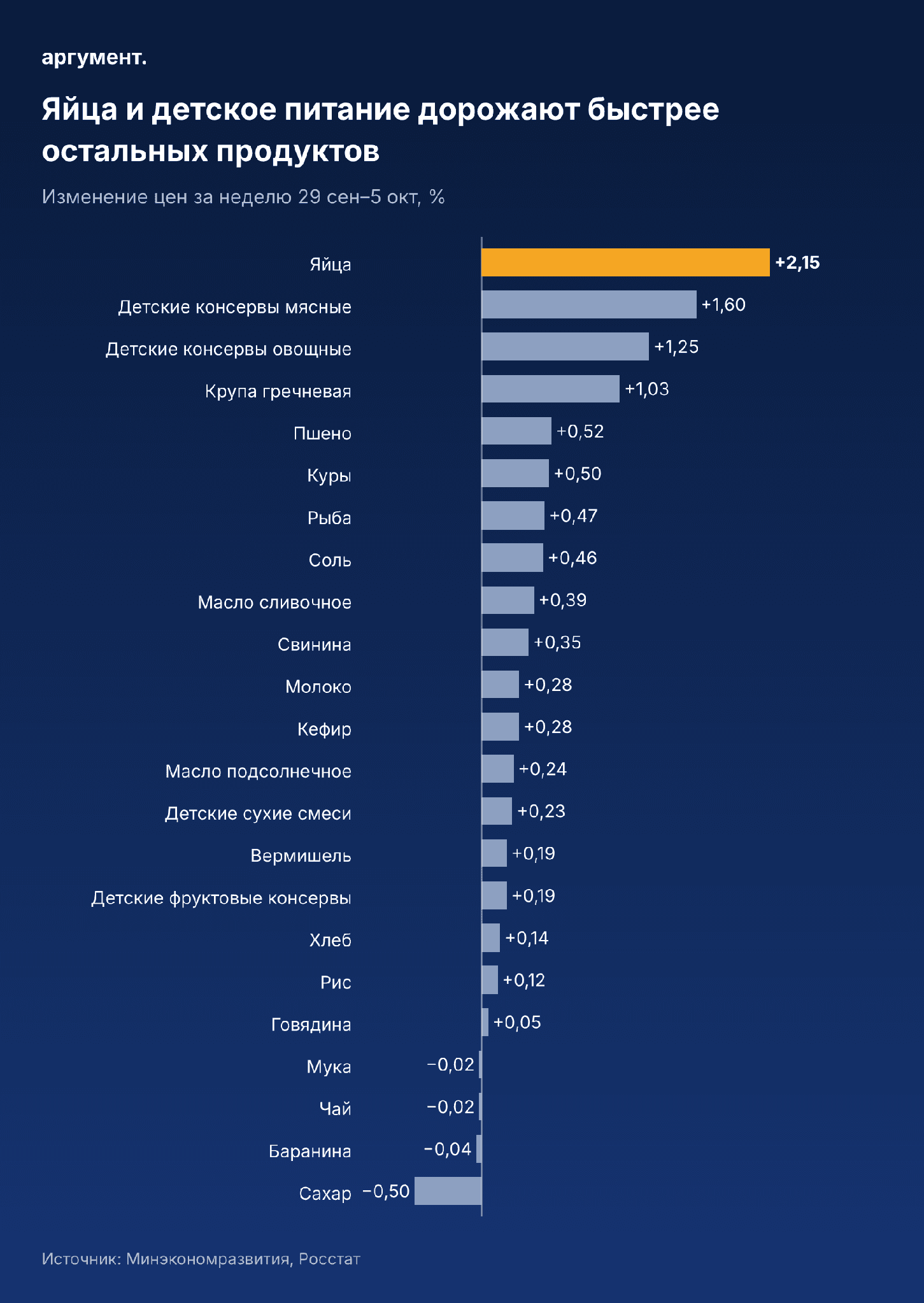
Among socially significant products, eggs are rising fastest: up 2.15% after 1.9% a week earlier, and 10.6% since the beginning of the year. This is followed by baby meat and vegetable purees, and buckwheat, which has increased by 15.5% since January. Sugar fell by 0.5% over the week but has risen by almost a quarter since the start of the year.
The increase in egg prices is largely seasonal. In the summer, producers sold them to retailers below cost, and in the autumn, demand returns with the opening of schools and kindergartens, while production in private household plots declines, explained analysts at AD Libitum. By August 23, the wholesale price for a dozen C1 eggs reached 60 rubles, 1.4 times higher than at the end of May and a third higher than a year ago. Galina Bobyleva, head of Rosptitsesoyuz, stated at the time that production had increased by 500 million units over the year, and there was no reason for price increases.
Sugar is getting cheaper due to the same seasonal logic, just in reverse: factories are processing the new beet harvest. The wholesale price without VAT fell from a record 58.9 rubles per kg at the end of July to 41.6 rubles by September 21, a five-year low according to AB-Center data. The 2026/27 harvest is expected to yield about 6.3 million tons of sugar, with consumption around 5.6 million tons. Retail prices lag behind wholesale by approximately a month and a half, so the decline on shelves has only just begun.
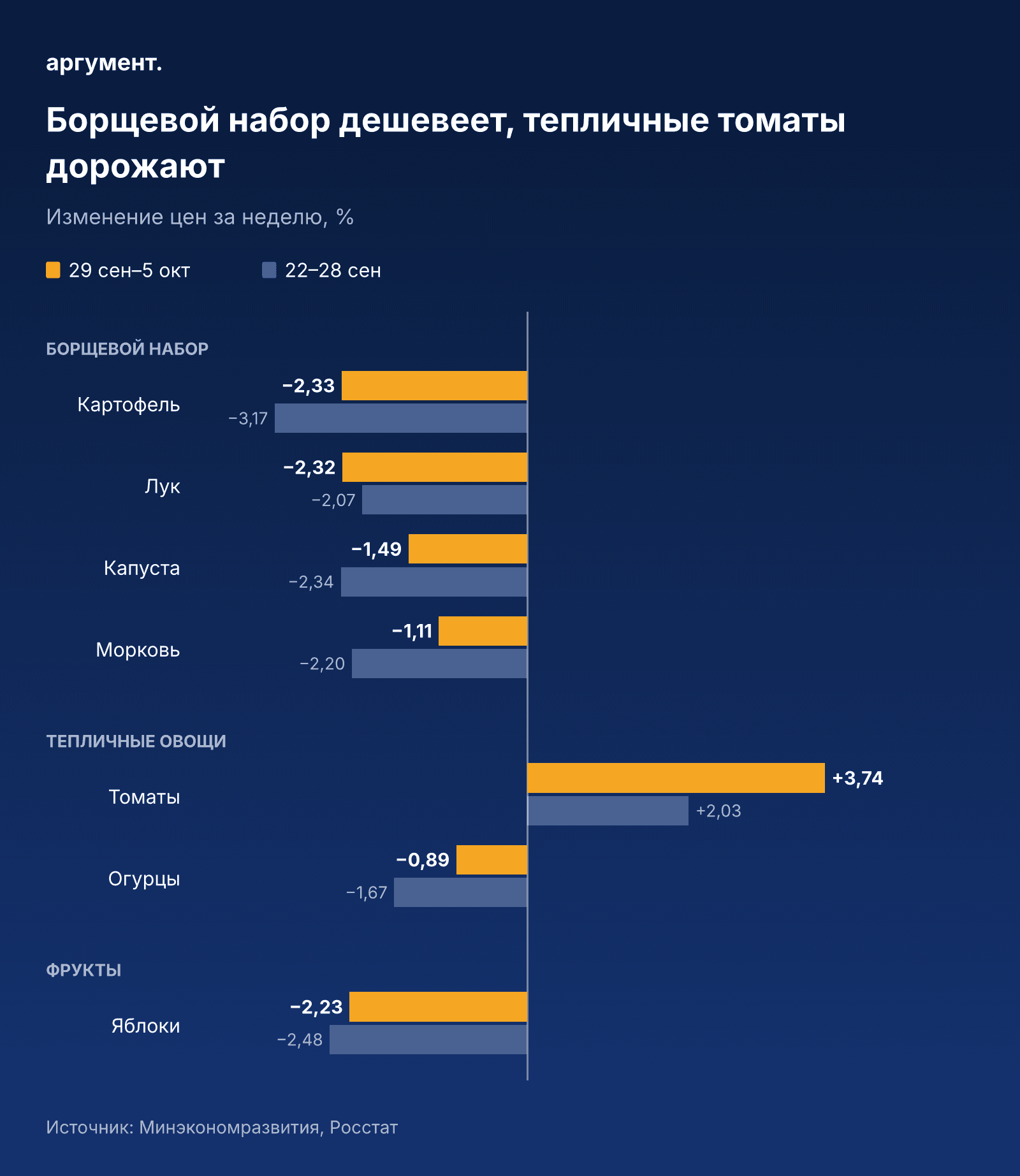
The "borscht set" continues to get cheaper: potatoes, onions, cabbage, and carrots lost between 1.1% and 2.3% in value over the week. Outside this set, apples are also cheaper, down 2.2% for the week. Greenhouse vegetables, however, are behaving differently: tomatoes have already reversed course and risen by 3.74%, marking their second consecutive week of growth.
Gasoline prices are rising three times faster than other prices.
Annual inflation is unevenly distributed. Gasoline prices have surged by 22.55% over the year, three times faster than the average inflation rate. Excluding gasoline, non-food items increased by 3.98%, meaning this single category boosts inflation across the entire segment from 4% to 6.5%.
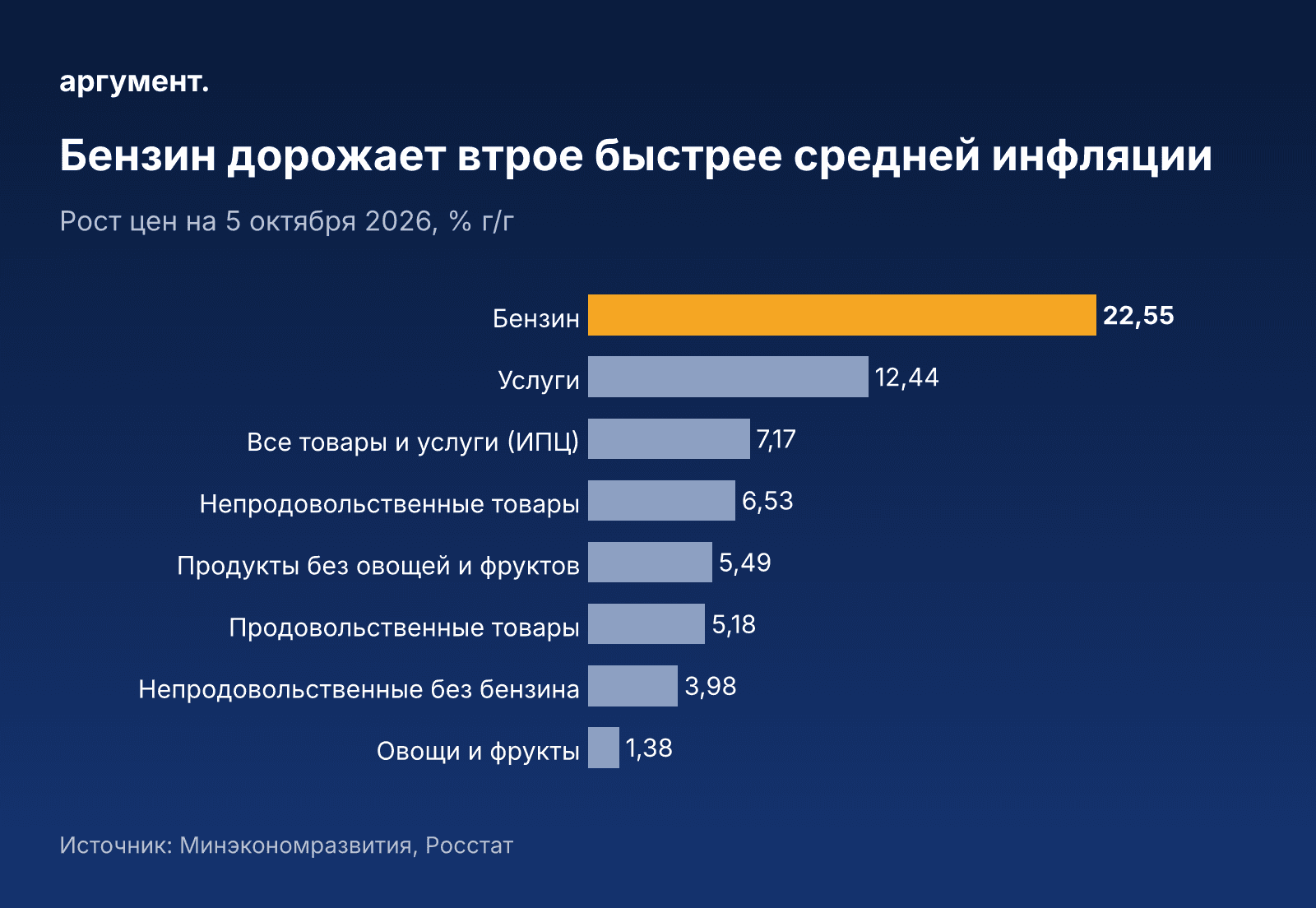
Services are 12.44% more expensive year-over-year, and this already accounts for October tariffs. The annual window from October 2025 includes two utility indexations: a 1.7% increase in January and another in October, causing service prices to rise 1.7 times faster than the overall index.
Food prices, in this context, appear moderate: 5.18% for the year, with fruits and vegetables showing a mere 1.38% increase. By the end of 2025, fruit and vegetable products decreased in price by 8.8%, and their prices have barely risen over the past 12 months. However, there are plenty of hotspots within the basket: chicken prices have risen by 14% since the beginning of the year, sugar by 23.7%, and buckwheat by 15.5%.
Gasoline prices rose by 0.29% over the week after a period of no change, while diesel fuel decreased by 0.1%. The annual figure has a chance to slow down due to the base effect: in October 2025, gasoline prices increased by 2.63% in a single month. The Bank of Russia, in its September decision cited fuel price volatility as a significant contributor to inflation in recent months.
Global Markets Add Pressure
The global food price index, calculated by the Ministry of Economic Development, rose by 1.2% over the week, and in October, it was 18% higher than a year ago. The UN Food and Agriculture Organization (FAO) index increased by 1.5% in September month-over-month and 5.8% year-over-year, driven by gains in cereals and sugar.
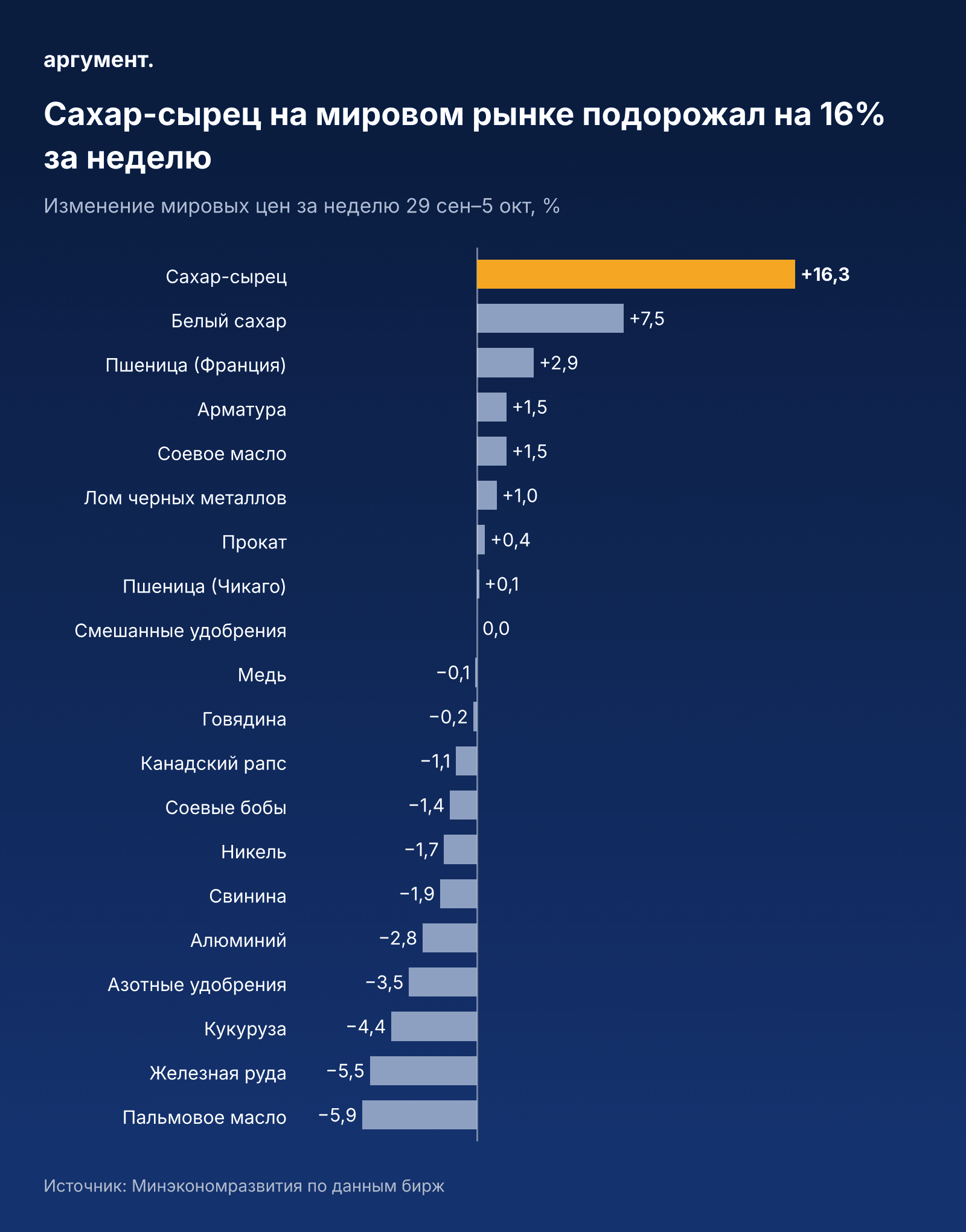
The most dramatic movement of the week was in sugar. Raw sugar on the Intercontinental Exchange (ICE) surged by 16.3%, while white sugar climbed 7.5%. This creates an unfavorable backdrop for the Russian market: domestic sugar prices have already risen by 23.7% since the beginning of the year, and high global prices make exports more attractive than domestic sales.
Over the past year, soybean oil, Chicago wheat, and copper have all seen their prices increase by a third. Fertilizers are, on average, 9.7% more expensive, and non-ferrous metals are up 15.7%. For Russian exporters of grain, fertilizers, and metals, this supports revenue, but for the domestic market, it sets a higher price benchmark, which, in the case of wheat, is partially mitigated by a floating export duty.
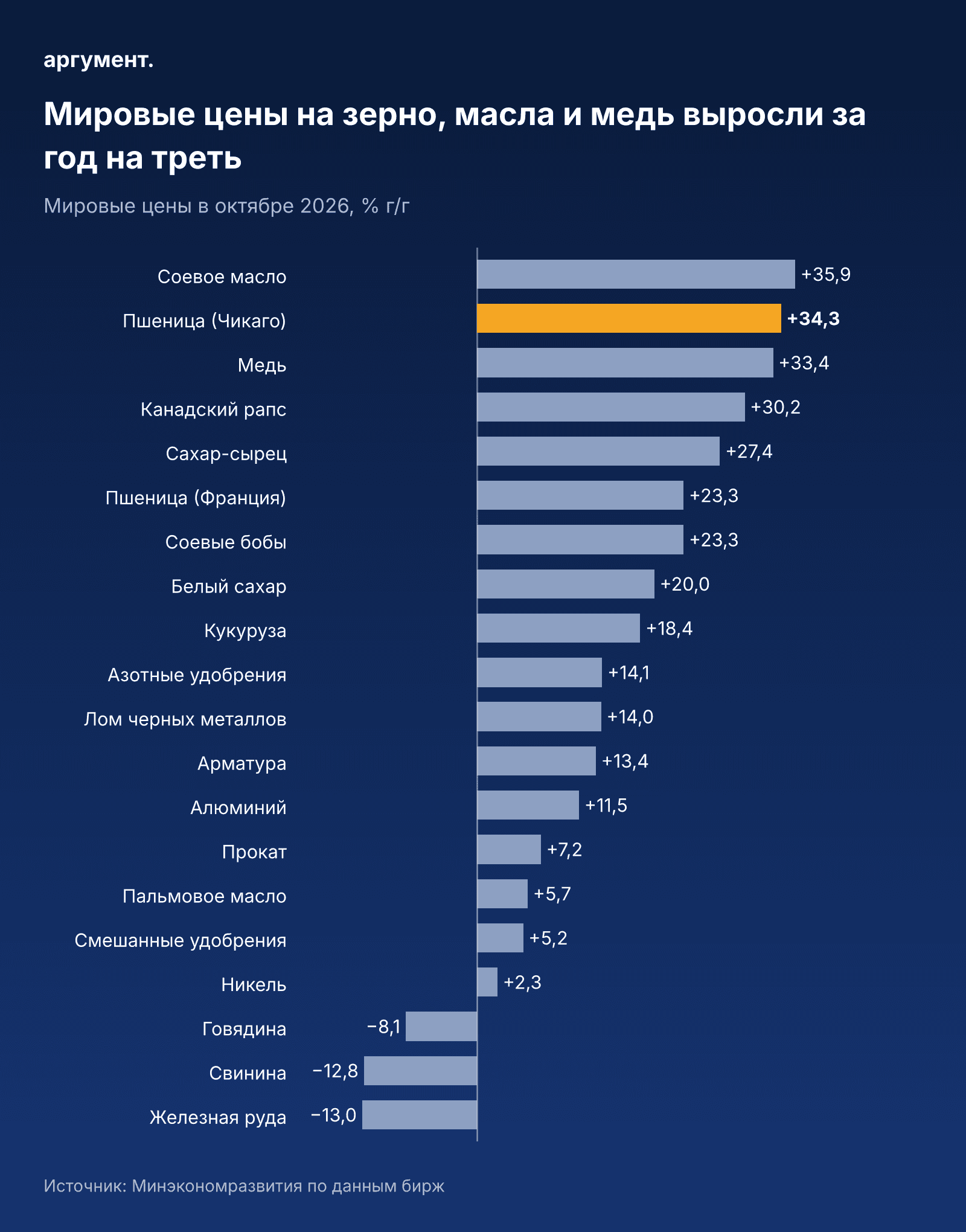
Over the past year, only three of the 20 commodities tracked by the Ministry of Economic Development have seen price decreases in global markets: iron ore by 13%, pork by 12.8%, and beef by 8.1%. Iron ore prices are falling due to China and increased supply: Beijing tightened regulations for replacing steelmaking capacity, requiring one and a half old tons to be retired for every new ton produced, while new mines are opening in Guinea, Australia, and Brazil. Pork prices are being pulled down by weak demand in the U.S.: consumers are shifting to chicken, and the wholesale price of pork carcasses in early October dropped to its lowest level since December 2023. Beef is retreating after reaching record highs: in 2025, it rose by an average of 26.4% on the Chicago exchange compared to 2024.
Tariffs will disappear from weekly statistics, but not from annual ones.
On September 11, the Bank of Russia maintained its key rate at 14%, and it projected inflation for 2026 to be between 6% and 7%. Since the beginning of the year, prices have risen by 5.94%. To stay within the upper bound of this forecast, prices must increase by no more than 1% over the remaining 12 weeks, which translates to approximately 0.08% per week.
In September, the average weekly increase was 0.06%, but that month saw seasonal price reductions for vegetables. However, the remaining autumn and winter months typically push prices higher. Until spring, vegetables come from storage facilities and greenhouses, and storage and supplementary lighting incur costs. A year ago, in October alone, fruit and vegetable prices rose by 4.18%, and overall prices increased by 0.5%. If this October mirrors last year's, it alone will consume half of the remaining buffer to the Central Bank's upper forecast limit.
The tariff hike will disappear from weekly data in the next report, but it will remain in the annual inflation figures until October 2027. Consequently, at its October 23 meeting, the Central Bank will face inflation exceeding its own forecast, and only a sharp deceleration in goods prices can bring it back within the target range before December.