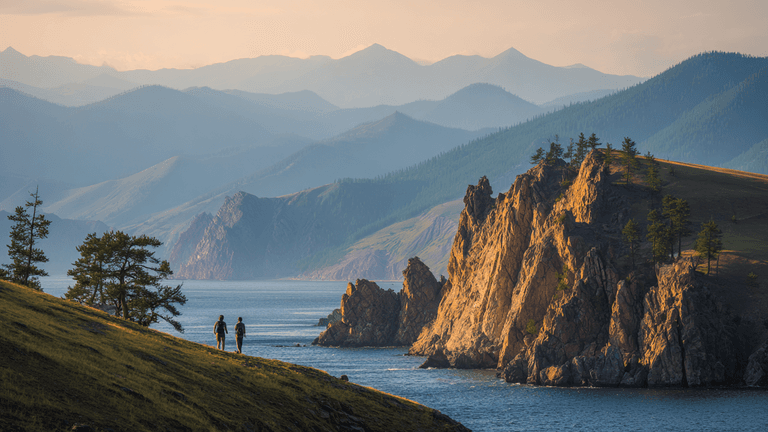
New Shores
Russia's tourism industry is experiencing a paradoxical moment. On one hand, it's showing impressive growth, recovering to pre-COVID levels and breaking records for domestic travel: in the first 8 months of 2025, the number of trips increased to 123 million, up 3% from the same period in 2024, with tourist spending reaching 1.4 trillion rubles.
On the other hand, this growth has been a forced measure and reaction to foreign policy pressure. International vacations have become a complex logistical and financial challenge for millions of Russians. The closure of direct connections with EU countries, problems with bank cards, and the departure of international services have dramatically changed the landscape. Under these conditions, domestic tourism has transformed from a backup option into the main resort front. According to Rosstat, international airfares for the 2025 summer season increased by an average of 12% compared to the previous year.
The main destinations remain traditional: Moscow (14.1%), Moscow Region (13.5%), and Saint Petersburg (6.5%). These account for more than a third of all trips. The top 10 also includes Krasnodar Krai (6.4%), Leningrad Region (4.3%), and the Republic of Tatarstan (2.5%).
The average traveler profile: a 44-year-old woman preferring a five-day vacation. According to analysts, daily spending amounts to 2.3 thousand rubles, almost 10% higher than a year earlier.
The share of tourists preferring domestic travel with incomes exceeding 100 thousand rubles per month is also growing—up 10% over the year. Even people with relatively high incomes prefer to save money and vacation in Russia rather than go abroad. Among this group, not only basic accommodation services are in demand, but also gastronomic tours, spa retreats, and short 'smart vacations' with educational and cultural programs.
Infrastructure and Investment Drivers: Subsidized Lending as an Industry Engine
One factor in the widespread development of Russia's tourism industry has been large-scale subsidized lending for tourism infrastructure as part of the national project 'Tourism and Hospitality Industry.'
The program has been operating since 2021 and has become the main source of investment in the construction and modernization of hotels, sanatoriums, tourist clusters, and parks. Banks issue loans at 3–5% per annum for up to 15 years, with the federal budget compensating the difference. Investors, developers, and regions can participate.
According to Rostourism and VEB.RF, loans worth 1.9 trillion rubles have been approved, of which 530 billion rubles have already been disbursed for more than 400 projects in 77 regions—from large complexes in Crimea, Altai, and Karelia to glamping sites and modular hotels. In the first half of 2025, 14 thousand rooms were commissioned, with another 30 thousand expected by year-end. Currently under construction: 367 hotels with 78 thousand beds. The average project size is 500 million–2 billion rubles.
The national project is bearing fruit. Thanks to state support, the tourism market has shifted from small business to large capital: while projects under 100 million rubles predominated in 2020, by 2025 the share of large projects (over 500 million rubles) has nearly tripled.
The Test of Maturity
Russian tourism is demonstrating confident growth, largely driven by the forced reorientation of demand toward domestic destinations. Development is fueled by massive state support in the form of subsidized lending, which has allowed the industry to transition from the era of small business to large investment projects.
The industry now faces a new challenge: not only to increase quantitative indicators, but also to develop service quality and diversify tourism products to meet the growing demands of affluent Russians and transform domestic tourism from a forced measure into a conscious and attractive choice.