This text is an automatic translation from Русский. It was generated by AI and may contain inaccuracies.
Read original →The Fate of Druzhba: Can Hungary and Slovakia Protect Their Energy Lifeline?
An analysis of the situation surrounding the Druzhba pipeline following drone attacks: impact on oil prices, the EU and US position, and energy security prospects for Hungary and Slovakia. Expert assessments and forecasts.
The Story of Our "Druzhba"
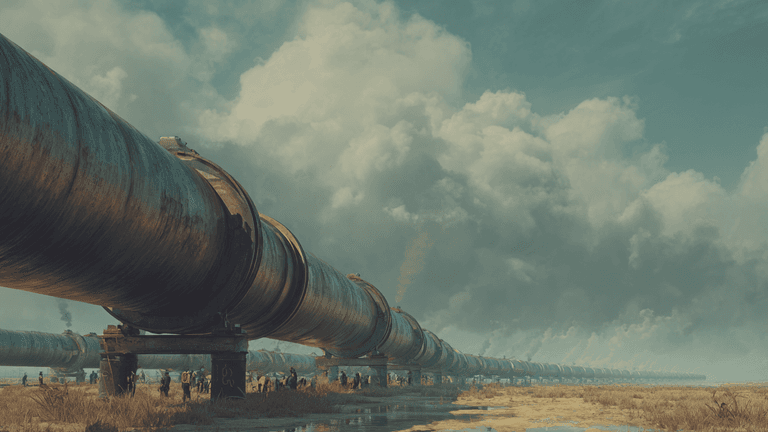
The pipeline was commissioned back in 1964 and stretches more than 4,000 kilometers: from Samara Oblast through Bryansk and Belarus to Ukraine, and from there to Hungary, Slovakia, Czechia, and Germany. Its design capacity exceeds 1.2 million barrels per day, though in recent years actual pumping volumes have fallen to 250–300 thousand barrels. According to Eurostat, more than 80% of oil imports to Hungary and Slovakia came through this very route. Meanwhile, other EU countries have effectively stopped receiving oil via Druzhba—deliveries are now limited to Hungary and Slovakia. For Budapest and Bratislava, Druzhba is not just a pipe, but a matter of energy security.
Will It Follow Nord Stream's Fate?
Comparisons to the 2022 Nord Stream pipeline sabotage are inevitable. But Druzhba has one fundamental difference: a land-based pipeline can be repaired faster than an undersea one. In 2023–2024, Bryansk Oblast already became a target of drone attacks, and pumping was restored within days. However, a series of systematic attacks is turning the pipeline into a lever of pressure on Europe.
The editors of the Telegram channel "KB.Ekonomika" believe that Druzhba's fate largely depends on the U.S. position. "The office of Hungarian Prime Minister Viktor Orbán has already stated that Donald Trump is aware of the strikes and expressed dissatisfaction with what's happening. Unlike the Nord Stream situation, when Germany and the U.S. had a longstanding conflict over the pipeline, the picture is different now. The Trump administration needs to maintain its 'peacemaker' image: if it condemns Russian strikes on Ukraine, it's logical to condemn Ukrainian attacks as well. Intuitively, it seems that Druzhba's fate won't repeat the 'Streams' scenario—the price for the EU is too high," the channel's analysts note.