This text is an automatic translation from Русский. It was generated by AI and may contain inaccuracies.
Read original →LUKOIL in 2025: Losses and Foreign Asset Write-Offs
Analysis of LUKOIL's 2025 financial results: net loss of 1.059 trillion rubles, asset write-downs of 1.667 trillion rubles, impact of U.S. sanctions, and the loss of European refineries. How the company's business model is changing.

LUKOIL, one of Russia's largest oil companies, has reported a massive net loss for the first time in years—1.059 trillion rubles for 2025. Net profit from continuing operations came in at 96.652 billion rubles, significantly below the 2024 figure when profit exceeded 794 billion rubles. Operating profit nearly halved—falling to 526.6 billion rubles from 1.067 trillion in 2024.
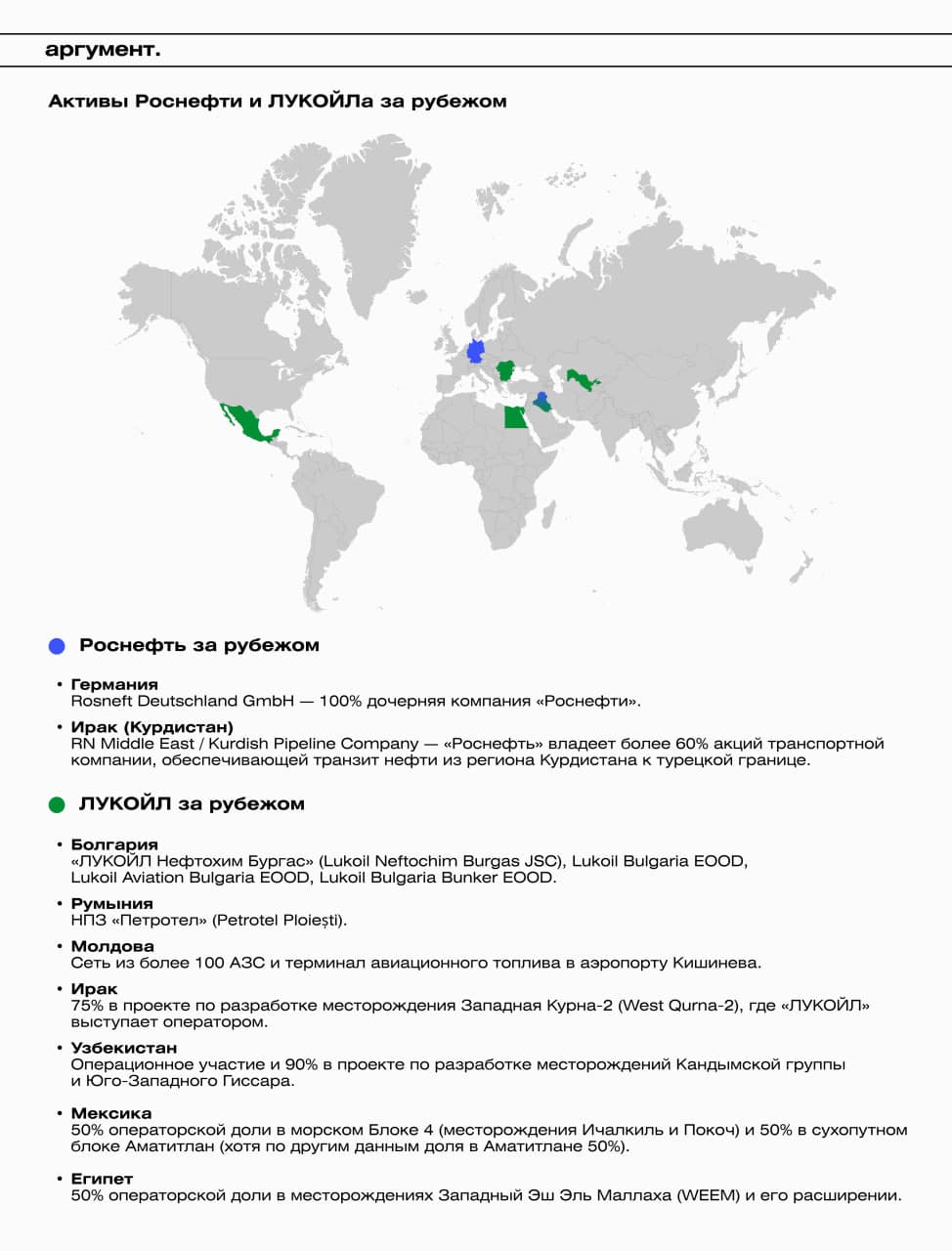
The primary driver of this result was the impairment of foreign assets. The company's financial statements indicate that investments in LUKOIL International were fully written off following the loss of control over international subsidiaries. These results are reflected as discontinued operations, underscoring that this represents a serious shift in the company's business model rather than simply a temporary margin squeeze.
The role of U.S. sanctions and the geopolitical factor
LUKOIL's losses are directly tied to sanctions imposed by the U.S. Treasury Department in October 2025. The company and several of its subsidiaries were added to the SDN sanctions list, effectively blocking full-scale operations abroad and jeopardizing international activities. In response, LUKOIL was forced to seek buyers for foreign assets or shut down projects, resulting in write-offs at high book values.
The sanctions hit the most profitable part of the business: overseas refining, trading, and retail. These aren't just paper losses, but a real reduction in long-term revenue streams and access to international markets.
What actually happened
In 2025, LUKOIL's revenue fell from 4.4 trillion to 3.8 trillion rubles, while losses from the disposal and impairment of foreign assets totaled 1.667 trillion rubles. This shows that the main cause of the company's crisis is precisely the loss of value in its international business.
Breaking down the causes of the loss reveals three layers: first—impairment of foreign assets, second—erosion of the operating base, third—loss of the most profitable part of the international value chain, including refining, trading, and retail. The biggest blow came to European refineries, gas stations, and trading operations, not just production.