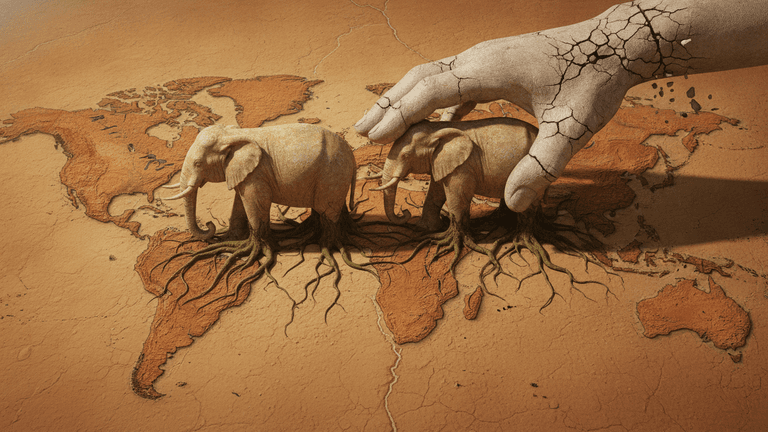
Trump has signed legislation imposing secondary sanctions: tariffs of up to 100% on goods from countries that import Russian oil and gas. How this will affect China and India.
7 min read
Share:
On September 18, U.S. President Donald Trump signed legislation imposing new sanctions against Russia and Iran. It had previously been passed by the House of Representatives (262 votes to 159) and the Senate—86 votes to 11. The bill was named the Lindsey O. Graham Sanctioning Russia and Iran Act of 2026 in memory of Senator Lindsey Graham, who championed the initiative until his death in July 2026. Its key distinction from most existing restrictions is the attempt to target not only Russia directly, but also countries that continue to purchase its energy resources.
Banks, the "shadow fleet," and tariffs for buyers of Russian oil
Let's examine in detail what's included in the new anti-Russia initiative.
The law requires the U.S. administration to expand sanctions against Russian authorities, the financial sector, state-owned companies, and individuals connected to the military industry, energy, and logistics. Within 30 days of the law taking effect, the U.S. president must conduct a review of potential targets and impose sanctions. Such reviews must then be conducted every 180 days. A separate section concerns the Central Bank, Sberbank, VTB, Gazprombank, and other state-owned banks. Most of them are already under U.S. restrictions, but the law complicates the procedure for both imposing and lifting sanctions. Foreign financial institutions may also face restrictions if they conduct significant transactions with Russian state banks. Additionally, the law prohibits new U.S. investments in Russia and purchases of Russian sovereign debt, and provides for sanctions against the "shadow fleet"—vessels, their owners, operators, insurers, and other participants in the transportation of Russian energy resources in circumvention of restrictions.
The law provides for raising duties on all goods imported into the U.S. from Russia to 500%. The list includes oil, natural gas, LNG, petroleum products, petrochemical products, coal, and coal products. The new duty will be levied on top of already existing fees and restrictions. However, it's important to understand that the direct economic impact of this measure on Russian exports will be limited: trade volume between Russia and the U.S. is already relatively small. For the January-July 2026 period, Russian-American trade totaled $2.3 billion, nearly 9 times less than the figure for the same period five years earlier. Therefore, another provision of the document is far more important—secondary tariffs against third countries.
The law requires imposing duties of up to 100% on goods imported into the U.S. from countries that continue to purchase Russian oil or gas. This will affect countries that continue to purchase Russian energy resources after the law takes effect and were among the top five importers of Russian oil or gas over the previous 12 months. The document separately identifies five countries that facilitate circumvention of oil sanctions against Russia—for example, through financial services, transportation, or servicing of "shadow fleet" vessels. The initial tariff on these countries must be imposed within 30 days of the law taking effect, but the rate won't necessarily be 100%—it will be set in a range from 0 to 100. Subsequently, the Office of the U.S. Trade Representative (USTR) will be able to adjust it—raising or lowering it depending on the dynamics of Russian energy purchases. Before imposing or changing a tariff, the White House or USTR must provide written justification to Congress. And 180 days after imposing duties, and then every 180 days thereafter, USTR must update the lists of buyers and impose tariffs on them. At the same time, an exception is provided for some importers of Russian gas. The duty does not apply if gas purchases constitute less than 15% of Russia's annual gas exports, and the country itself is taking steps to reduce imports. And for final removal of measures against Russia, the U.S. president must confirm to Congress that a peace agreement has been concluded and hostilities have ceased.
The package includes an extension of sanctions against Iran until 2031: under the previous version of the Iran Sanctions Act of 1996, its term was set to expire in 2026. Trump himself proposed adding this provision at a late stage of negotiations between senators and the administration. So the law's main innovation isn't simply an increase in the number of sanctions. It creates a separate mechanism for pressuring foreign buyers of Russian energy resources while simultaneously establishing a more formalized procedure for the U.S. administration to apply these measures.
Caught Between Two Fires
Until now, American and European restrictions have mainly targeted Russia directly: its banks, companies, vessels, export goods, and individual citizens. Third countries have also faced the risk of secondary sanctions—for example, for helping circumvent the price cap on Russian oil.
Or recall August 2025: Trump announced an additional 25% tariff on Indian goods, citing India's continued purchases of Russian oil. But the new law allows U.S. tariff policy to be tied not to a particular administration's individual decision, but to the fact of energy cooperation with Russia itself.
From January to August 2026, Russia exported an average of 7 million barrels of oil per day, according to IEA data. About 87% of crude oil during this period went to China and India—50% and 37% respectively, according to the Centre for Research on Energy and Clean Air. These two countries replaced a significant portion of the European demand that disappeared after 2022 and may find themselves among the primary targets of secondary tariffs under the Graham law.
New Delhi has already stated it's closely monitoring the situation. India's Ministry of External Affairs confirmed the country is prepared to defend its trade and economic interests, and that the consequences of American sanctions could affect not only bilateral relations but the global energy market as well. Beijing has also opposed the American approach. China stated that trade and economic relations with other countries should not be subject to interference or coercion from third states.
What Will Trump Do
Now the key question becomes how actively and aggressively the U.S. administration will use the powers provided by the law—particularly regarding the largest buyers of Russian oil and gas.
Washington faces an obvious contradiction here. The higher the tariffs on China and India, the more they affect not only Russia but also America's trading partners. According to the latest U.S. Census Bureau data, China accounts for more than 6% of total U.S. trade turnover from January to July 2026. The Middle Kingdom trails only Mexico and Canada, while India ranks 11th among U.S. trading partners at 2.5%.
Imposing new tariffs against China and India could trigger another round of trade conflict and raise costs for American importers, who are already experiencing the negative consequences of the global fuel crisis. Gasoline and diesel prices in the U.S. are hitting records, having already jumped 50% and 70% respectively since the start of the conflict with Iran.
However, under current economic conditions, a rapid abandonment of Russian energy resources would pose a serious challenge for the world's largest economies: it would require replacing significant volumes of oil and gas, which is extremely difficult given the war in the Middle East, and could lead to additional cost increases. Russian Urals crude has been trading in recent weeks at a minimal discount, and on certain routes at a premium to Brent, largely thanks to strong demand from Asian consumers.
Moreover, Iran's example shows that China has no intention of abandoning profitable energy supplies even under the threat of American restrictions: the PRC remains the main buyer of Iranian oil. Meanwhile, Washington has already used the threat of new tariffs as leverage in negotiations with Beijing. In October 2025, Trump announced readiness to impose an additional 100% tariff on Chinese goods, but after meeting with Xi Jinping in Busan, South Korea, the parties agreed to a partial tariff reduction—"dialogue is better than confrontation."
That's why the most likely scenario is negotiation. Trump is scheduled to meet with China's leader at the White House on September 24, and the new tariffs could become one of the key topics of discussion. India, for its part, is also familiar with Trump's negotiating strategy: after additional duties were imposed, New Delhi reduced its purchases of Russian oil—but not to zero, rather to a level that allowed India to secure more favorable terms for trade with the US. It's reasonable to assume that this time around, New Delhi will seek exemptions, delays, or a softer tariff regime in exchange for a partial, rather than complete, reduction in imports.