UK Prime Minister Steps Down: Long Live Business-Friendly Socialism
Following Starmer's resignation in the United Kingdom, Andy Burnham is the likely next prime minister. He promises to 'get Britain off the hook' of government bonds, though the market itself barely noticed the change in power.
7 min read
Share:
Seventh Prime Minister in Ten Years — and Once Again Without Elections
On June 22, Keir Starmer announced his resignation. Formally voluntary, but in reality following an ultimatum from his own party: after the disastrous local elections in June, where the right-populist Reform UK won 1,453 seats while Labour lost a full 1,496 seats, more than a hundred MPs were ready to publicly demand his resignation.
Andy Burnham is almost certain to replace Starmer. His main potential rival, former Health Secretary Wes Streeting, chose not to compete and instead backed Burnham, calling on the party to do the same. This turns the leadership election into a "coronation": nominations open on July 9 and close on the 16th, and if Burnham remains the only candidate, he'll move into Downing Street by July 17. A general election isn't required for this — the next one must be held no later than 2029. For the British system, this is routine, but from the outside it looks odd: the country is getting its seventh prime minister in ten years, and once again without voters having a say.
Who Is Mr. Burnham?
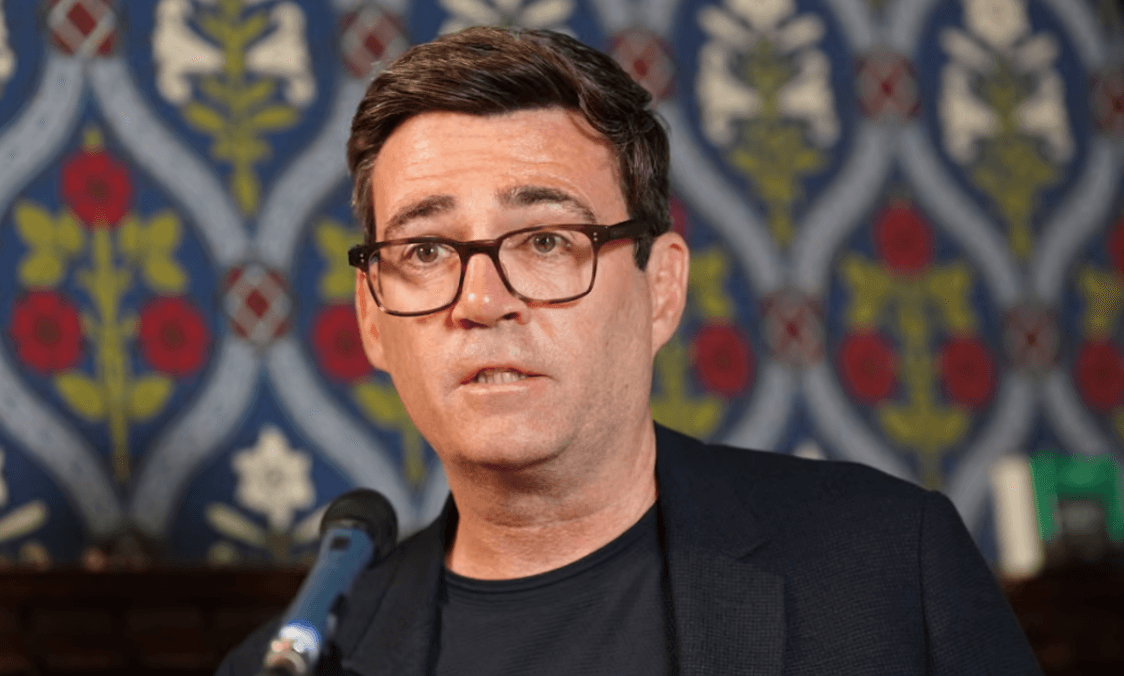
Andy Burnham. Source: Guardian
Andy Murray Burnham was born in 1970. He comes from a working-class Merseyside family and studied classics at Cambridge. He served as MP for Leigh from 2001 to 2017, and under Prime Minister Gordon Brown (2007-2010) held positions as Chief Secretary to the Treasury, Culture Secretary, and Health Secretary. He lost the leadership contest twice: in 2010 he came fourth (10.4% of votes), in 2015 he came second (19%), while winning an internal party vote required more than 50%. After that, he left Parliament and in 2017 became Mayor of Greater Manchester. The nickname "King of the North" stuck in autumn 2020, when he publicly battled Boris Johnson's government over funding for COVID restrictions in his region.
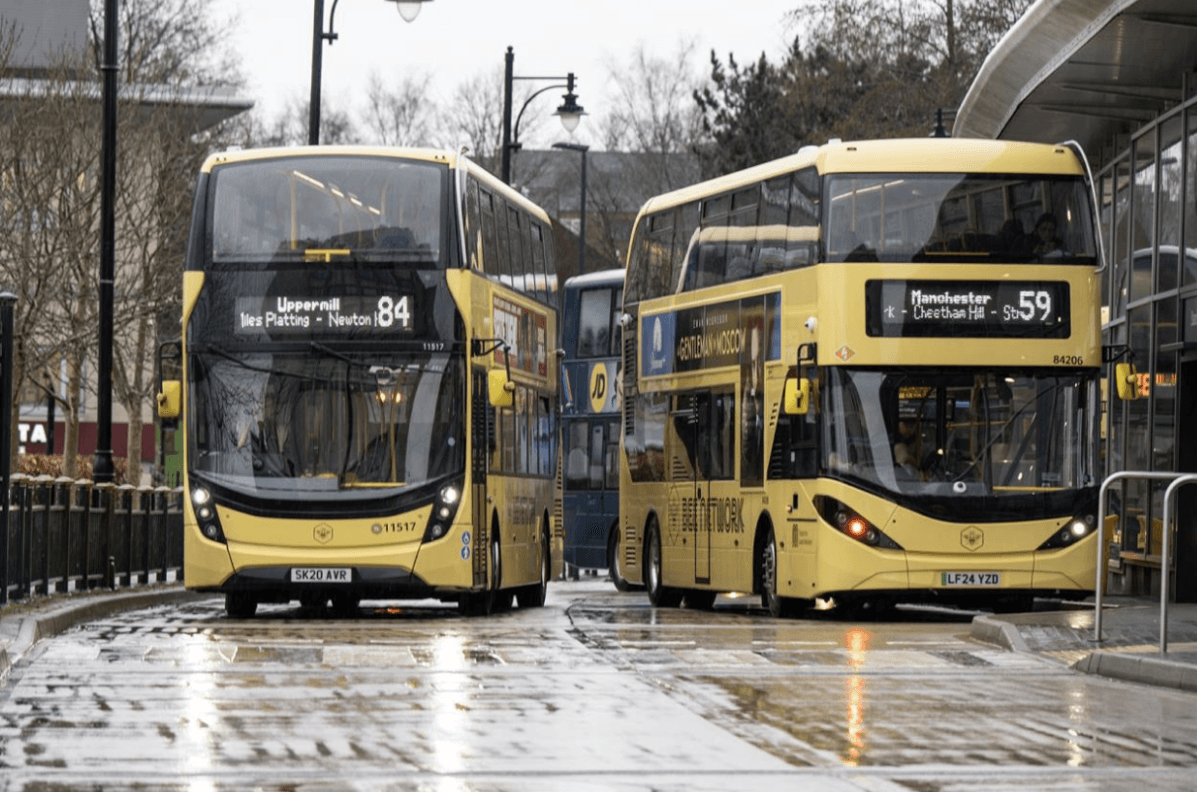
The signature policy of his city leadership is the Bee Network: buses returned to public control in 2023 with a £2 fare cap. In June 2026, he won a by-election in Makerfield to return to Parliament with one stated goal — to take over the party.
Bee Network buses with fixed price cap Source: Transport for Greater Manchester
"Manchesterism" as National Policy — Burnham's Economic Views
Burnham calls his model "business-friendly socialism," and its Manchester version "Manchesterism." The basic thesis is simple: the high cost of living, weak growth, and even debt market instability all share a common cause — the state's loss of control over basic goods and services. Manchester itself serves as proof, having become the fastest-growing region in the country under his leadership. The slogan is "roll back the eighties" — essentially reversing the privatization and policies of Margaret Thatcher, who liberalized and introduced market relations across all spheres of British life, which persist to this day. Burnham wants to ensure public regulation of public transport, create social housing, and establish control over public investment.
It's crucial to emphasize that this is a program of ownership, not spending. Burnham is proposing not so much an increase in capital injections as a rewrite of who owns what and who profits from what. And this is a forced solution, because there simply isn't money in the UK government budget for new spending. Last autumn, Andy Burnham was discussing potential borrowing of £40 billion for municipal housing construction. He was criticized then, and as his chances of leading parliament became more realistic, the borrowing figure quietly disappeared from his rhetoric, while the "control" framework remained. Manchesterism mutated from "spend" to "reappropriate" precisely at the moment it collided with the realities of Albion's debt.
£2.9 trillion in debt—that's the new prime minister's real boss
Britain's national debt at the end of March 2026 stands at £2.9 trillion, or 93.8%of GDP. Servicing this debt cost the treasury approximately £110 billion in the 2025/26 financial year—that's 3.6% of GDP and 8.1% of all government spending. Interest payment expenditures are now at one of their highest levels in half a century, since World War II. In other words, every twelfth pound the government spends goes not to hospitals or housing, but to bondholders.
Worse still, the arithmetic that underpinned British debt sustainability for decades has broken down. Yields on 30-year government bonds climbed to 5.7%—the highest since 1998, while 10-year yields held around 5.0% in early May. At these rates, the cost of borrowed money has, for the first time in a generation, exceeded the pace of nominal economic growth. This means the government now needs to run a primary surplus just to stop the debt from growing, let alone reduce it. Any new spending by Burnham competes not with "reserves," but with these £110 billion already committed to creditors.
He promised to get off the hook—and put handcuffs on himself
The famous phrase with which Burnham spooked investors in autumn 2025 sounded like a declaration of rupture: Britain needed to "get off the hook" of the bond market. In January he walked it back, clarifying that he's not indifferent to the government bond market, just that the "low-growth trap" is disadvantageous to investors themselves.
And then came a preemptive capitulation. Before even becoming prime minister, Andy Burnham promised to remain faithful to the fiscal rules of the current Chancellor of the Exchequer Rachel Reeves, which require balancing current spending with revenues through 2030. He confirmed his campaign pledge not to raise rates on the three main taxes that provide the Treasury with its core revenue: income tax, employee National Insurance contributions, and VAT. And he promises to preserve the "triple lock" on pensions. Under this rule, pensions increase each year by the highest of three measures: inflation, wage growth, or a fixed minimum of 2.5% if the first two indicators fall below that threshold.
At the same time, Burnham withdrew the most expensive of his previously announced ideas—compensation for women whose pension age was raised, and easing of student loan repayments. Add it all up: before entering Downing Street, he surrendered the borrowing lever, the main tax levers, and locked in growing pension obligations. What's left to finance "socialism" on the spending side? Almost nothing.
The market didn't notice the change of prime minister
The best indicator of a politician's real weight is the bond market's reaction. And it's telling: as Starmer was leaving and Burnham was emerging as the frontrunner, the yield on 10-year government bonds didn't spike but actually fell—to 4.78%by June 24. What moved it wasn't the news, but a weak PMI business activity index (49.4 points, meaning contraction for the second consecutive month) and expectations of policy easing from the Bank of England.
That's the diagnosis. The market looks not at the prime minister's name, but at the volume of issuance and growth rates. Britain's risk "premium," as analysis by IPPR, is sustained not by weak fundamentals but by investor doubts that the stated plans will be delivered. Burnham's signal is transparent: prime ministers are interchangeable (especially in Britain), but the bond issuance schedule is not. The only thing that could turn gilts against him is any hint of additional spending beyond the plan.
Where socialism does fit: water, buses, and other people's rent
However, Burnham does have room for a left-wing maneuver precisely where fresh ideas aren't needed. This involves redistributing control in utilities and infrastructure, not increasing debt. For example, the new government could nationalize Thames Water, the largest water company serving around 16 million people. The corporation owes more than £15–20 billion and is in a state of decline. No one will simply bankrupt and shut down such a systemically important entity due to potential unrest.
Regarding other utilities, Burnham speaks of "stronger public control" without going as far as full nationalization. Critics rightly point out that the line is blurred, given that he's already brought buses back under public control in Manchester.
His strongest economic argument relates to the housing problem. Andy Burnham has abandoned the idea of borrowing an additional £40 billion to avoid conflict with the Treasury, and instead proposes completely repurposing the existing Social and Affordable Homes Programme worth £39 billion toward building council housing.
As it stands, the state is already paying for expensive property in the country. Due to a shortage of cheap social housing, the treasury provides billions in housing benefits that subsidize rent. Meanwhile, the share of Britons living in rented flats and houses stands at 35%, or around 8.8 million households. And roughly two-thirds of this rental market is owned by private individuals rather than the state, with the money ending up in their pockets.
In other words, the budget is already subsidizing other people's rent, just doing it in the most expensive way possible. The logic of Manchesterism here is not to spend more, but to own the asset instead of paying for the outcome. This dovetails with a social agenda that's cheap for the budget: banning zero-hours contracts, extending targeted levies for social care.
Sanctions and Ukraine: changing prime ministers changes nothing
On the "Russia" front, the change of government will alter nothing, since Burnham is one of the most consistent supporters of Ukraine in British politics. He condemned the return of Crimea in 2014, called on FIFA to strip Russia of the 2018 World Cup, and in 2023 co-founded the UNBROKEN Cities together with the mayors of Lviv and Liverpool, aimed at supporting Ukraine.
Analysts agree: nothing will change for Kyiv, because there is no influential pro-Russian force in British politics, and support for Ukraine rests on a cross-party consensus that survives changes of prime ministers. The only new commitment created by the "Russia" agenda is defense spending: the country currently spends 2.5% of GDP, but by 2035 this figure must reach NATO's target of 3.5%. This is yet another line item that needs to be written into a budget where £110 billion already goes to debt holders.