This text is an automatic translation from Русский. It was generated by AI and may contain inaccuracies.
Read original →Has AI Shrugged?
Data center investments surged to $455 billion in 2024. An analysis of parallels between the railway boom of 1873 and today's AI infrastructure: why financial crises don't halt technological progress and who controls the future.
1873: A Financial Glitch, Not a Flawed Idea
The Panic of 1873 made it into textbooks as the collapse of a railroad bubble. In reality, it was a breakdown in the financing mechanism, not in the transportation concept itself. The failure of investment bank Jay Cooke & Company, overleveraged with Northern Pacific bonds, coincided with a shift in monetary regime— Coinage Act 1873, which removed silver from circulation, draining liquidity and triggering a cascade of debt defaults.
Yet looking at FRED statistics on total U.S. railroad mileage, the picture is clear: within just a few years after the panic, construction returned to its previous pace, and by 1890 the network reached approximately 200 thousand miles. Cross-referencing with data from John Stover's American Railroads shows growth from ~93 thousand miles in 1880 to ~163 thousand in 1890—meaning the financial "timeout" didn't alter the network's trajectory.
Data Centers as the New Rails
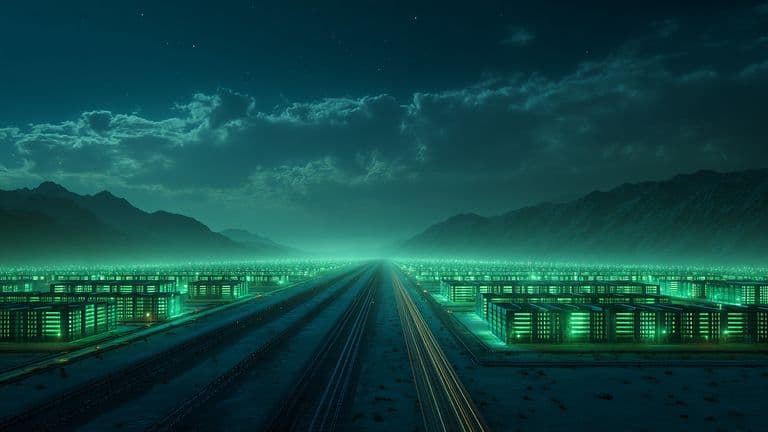
Today we're laying lines again – only not across prairies, but through the clouds. Server farms, power lines, undersea cables – this is the new track. According to Dell'Oro Group, global data center investment surged 51% in 2024, reaching $455 billion. And according to NVIDIA Investor Relations, data center revenues exceeded $115 billion – a figure that looks more like a mid-sized country's GDP.
But can we unequivocally call this a sign of maturity? Or are we witnessing a 21st-century "railway mania" phase, where infrastructure is being built faster than the economy that would justify it can emerge? So far, there are no answers. We're at a stage where even excess capacity doesn't look like a mistake, because it creates opportunity for something not yet invented.
"The Fifth Revolution": Human or Machine?
The World Economic Forum speaks of a – an era of digital and biological convergence. But there's growing discussion of the next one – Industry 5.0: humans returned to the center of processes.