This text is an automatic translation from Русский. It was generated by AI and may contain inaccuracies.
Read original →Expert Yushkov: If Russian Gas Is Completely Banned, Europe Will Have to Pay More for LNG Than Asia to Secure Supplies
FNEB expert Igor Yushkov explains why Europe will be forced to pay more for LNG than Asia following the ban on Russian gas from 2026. Forecast on prices and market volatility.
AI summary
Expert Igor Yushkov warned that after a complete ban on Russian gas, Europe will have to compete with Asia for LNG by offering higher prices. The European and Asian gas markets have turned into a system of communicating vessels, where tankers go wherever prices are higher. The rejection of Russian pipeline supplies will increase price volatility in the European market.
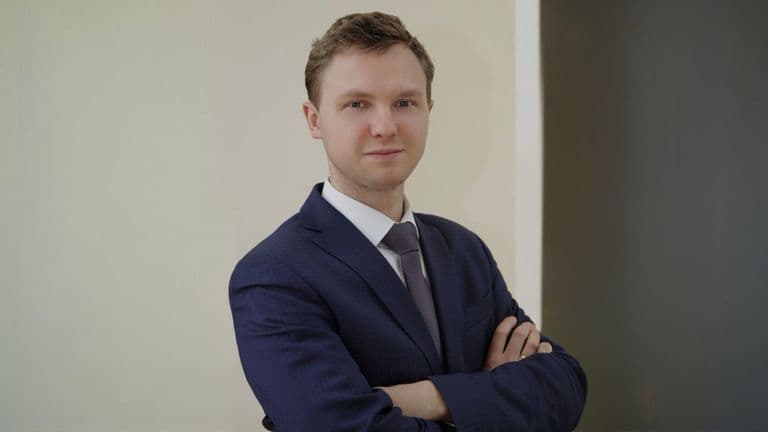
Igor Yushkov, lead analyst at the National Energy Security Fund (NESF) and research fellow at the Financial University under the Government of the Russian Federation, Igor Yushkov told Argument Media in an interview commenting on the EU's plan to phase out Russian gas that today's European and Asian markets have become "a system of communicating vessels":
"When prices rise in Asia, LNG gets shipped there. Then Europeans need to raise prices even higher to get the tankers back to their market. It's always price competition—gas goes wherever the price is higher. Right now, additional volumes can only be purchased as LNG, since all pipeline suppliers are operating at maximum capacity."
Under the plan approved by the EU Council, the ban on Russian gas will take effect on January 1, 2026, with a transition period for existing contracts extending until January 1, 2028. The smaller the volume of Russian pipeline supplies—which for many years provided market stability—the higher the price volatility in the European market, the expert emphasizes:
"Russian gas supplies were a stabilizing factor for decades because Gazprom was de facto the guarantor supplier. You could turn to them and they would send whatever volumes were needed. If they ban the remaining supplies coming to the EU via TurkStream, the European market will become even more volatile".
However, even in the event of a complete ban on Russian gas, we shouldn't expect gas prices in Europe to surge significantly from current levels of $380 per thousand cubic meters to the 2022 peaks, when prices exceeded $2,500 per thousand cubic meters. According to Yushkov, the 2022 situation was exceptional:
"Back then, the key reason was a general gas shortage due to insufficient oil and gas projects. The Europeans themselves spent years scaring energy companies, saying they shouldn't invest in new oil and gas projects—because we're about to have an 'energy transition.' If you invest money in oil and gas, you'll be left without your investment. That's why 2022 was a unique situation".