The New Reality for Developers
According to judicial statistics, 24,300 lawsuits related to shared construction financing were filed in Russia in 2022 (compared to 13,300 in 2021). In 2023, this figure surged nearly ninefold to 211,400 cases, with awarded claims totaling 128.1 billion rubles. In Moscow alone, more than 1,700 cases were heard in just the first ten months of 2024, resulting in 881.3 million rubles awarded to equity holders—with courts siding with consumers in 74% of cases. According to Komsomolskaya Pravda, over 120,000 lawsuits were filed in Moscow and the Moscow region alone between 2022 and 2024—affecting up to 55% of new apartment transactions. Total awarded damages exceeded 74 billion rubles, while the volume of unbuilt housing reached approximately 7 million square meters, translating into tax losses of around 15 billion rubles.
The surge in lawsuits can be explained by several factors. On one hand, citizens themselves have become more attentive to the quality of new construction and are more actively using legal mechanisms for protection. On the other, entire legal firms and consultants have emerged in the market, professionally managing inspections and lawsuits against developers. Their goal is to extract penalty payments from developers. As a result, even minor defects can escalate into large-scale legal proceedings. For developers, this means rising direct costs, additional strain on reserves, and the risk of slower housing delivery rates, as well as reputational damage, since negative stories spread quickly through media and social networks. Moreover, developers may potentially build these "unplanned" expenses into future apartment sales, even though prices have already increased 2.6-fold since 2015, while average apartment size has shrunk by 14% to 48.8 square meters (according to ERZ.RF).
Where's the Line Between Extremism and Legitimate Complaints?
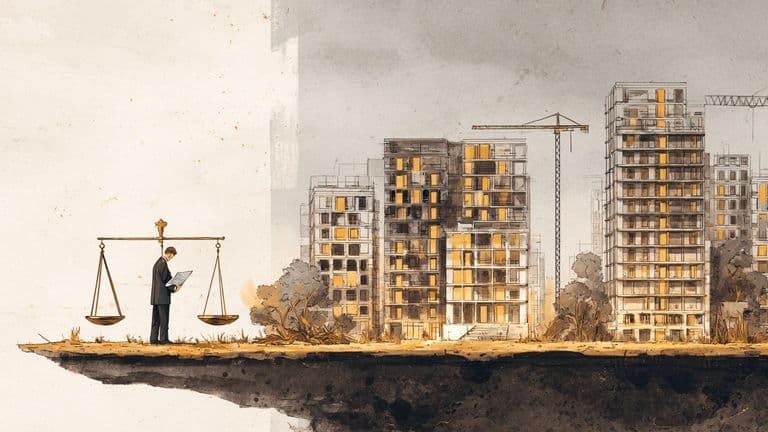
The key question for authorities is how to identify that very "line" where a developer is genuinely at fault for delivering substandard housing versus where an equity holder is simply looking to collect penalty payments. Anton Glushkov, president of the National Association of Builders (NOSTROY), told Argument that the current term "consumer extremism" isn't quite accurate. "I would call this phenomenon 'abuse of rights.' This is a systemic problem rooted in conflicting legal norms that allow unscrupulous participants to interpret the law in their favor. The key solution is not toughening measures against consumers, but improving the legislation," Glushkov emphasized.
State Duma deputy Alexander Yakubovsky, meanwhile,believes that the spike in litigation is connected not only to citizens' vigilance, but also to the dominance of intermediaries who have turned claims work into a business and are filing lawsuits en masse on behalf of equity holders.
What we have now:
The president of NOSTROY clarified the scale of the problem: according to expert estimates, over 70% of market players have already encountered such cases. Moreover, the trend has spread to the private housing construction market, where the number of conflicts increased noticeably last year.
Kirill Kholopik, head of the ERZ.RF portal,stated that in the "standard" segment, up to 50% of equity holders file complaints showing signs of abuse of rights. In the comfort class, such cases account for about 10%, while in the business class they are practically nonexistent. What's more, over the past three years, the share of "extremists" in the mass-market segment has grown fivefold.
In other words, such actions by buyers have become widespread. There are several reasons for this: the growth of legal services—firms have emerged that mass-recruit equity holders and file lawsuits, taking up to 50% of the awarded amount as their fee; vague quality criteria—the absence of unified standards allows for inflated demands on developers.
We also can't forget about delayed acceptance: refusal to sign the apartment transfer act in order to collect subsequent penalties and forfeitures. In other words, people—whether intentionally or not—are counting on offsetting part of their costs for potential future repairs.
How to resolve the situation
Since September 2024, Russia has imposed a restriction—the amount of claims for defects cannot exceed 3% of the contract price, and a moratorium has been introduced on penalty accrual if the developer has remedied the deficiencies within a reasonable timeframe.
So developers are already legally protected, but consumers shouldn't be forgotten. The internet is full of information about apartments that don't meet construction standards at handover, and sometimes finished units are even transferred to the client with mold. At the same time, lawyers emphasize that when mold is discovered in a new building, the buyer has every right file a complaint under consumer protection law. The main reasons are poor waterproofing, leaks, or excessive humidity (above 65%), particularly common in corner apartments and units on the first or top floors.
In such cases, homebuyers find themselves defenseless: fixing defects requires significant expense, and developers often try to minimize their liability. Experts emphasize that buyer protection should include a mechanism for independent inspections, the ability to quickly address critical problems, and transparent guarantees on finishing quality.
As a result, alongside inflated homebuyer claims, courts are also flooded with numerous legitimate cases—from leaking roofs to broken elevators. The mixing of these cases blurs the boundaries and creates a confrontational environment.
According to NOSTROY head Anton Glushkov, a long-term solution could be a unified database of court decisions: "This is the foundation for consistent practice. It will allow companies and citizens to navigate precedents, minimize the risk of manipulation, and reduce the number of disputes."
In Place of an Epilogue
"Consumer extremism" is a contentious concept. For some, it's an abuse of rights; for others, a natural defense of interests. But the facts show that the number of lawsuits and the volume of payouts are growing, and without legislative and procedural changes, the market may face a new wave of conflicts.
The rise in lawsuits reflects not only potential abuses but also a higher level of legal literacy among the population: people have become more attentive to housing quality and more willing to defend their interests in court. At the same time, the market cannot ignore the existence of professional "inspectors" who have turned complaint work into a business. Ultimately, the legal system is balancing between two extremes—the need to protect honest buyers and the risk of overburdening developers with fines and compensation.
Balance is only possible through transparent quality standards and acceptance procedures, limiting manipulation, and developing legal culture. Otherwise, trust in the industry will continue to decline, hurting both consumers and companies: some will have to accept poor quality, while others will face rising costs and project delays.