This text is an automatic translation from Русский. It was generated by AI and may contain inaccuracies.
Read original →Chocolate Without the Hype: Why Premium Prices Fell While Mass Market Segment Gets Pricier
Analysis of Russia's chocolate market in 2025: why premium Dubai chocolate dropped in price from 2,653 to 796 rubles, while the mass market segment rose 14% due to rising cocoa prices. Sales data and forecasts.
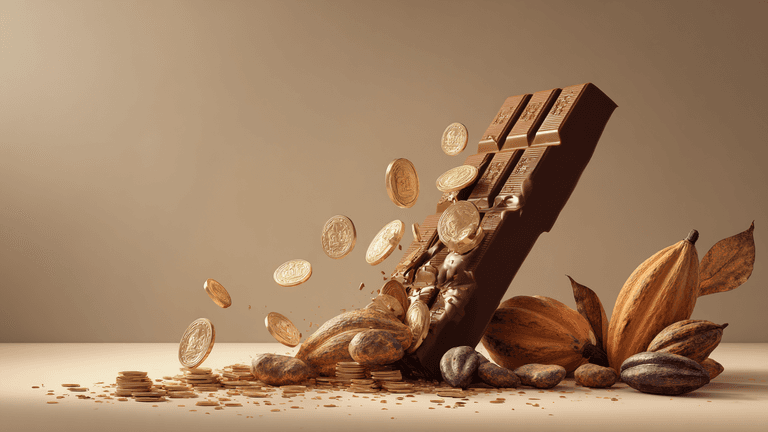
Russia's chocolate market has changed dramatically over the past year: 'Dubai' chocolate, once considered premium, has sharply declined in price and is no longer as expensive as before. Meanwhile, ordinary chocolate bars continue to get more expensive due to rising costs of cocoa and other raw ingredients globally. According to Чек Индекса (available to «Аргумент Медиа»), the median price of a Dubai chocolate bar in September–October 2025 fell 70%—from 2,653 to 796 rubles. Sales dropped even more sharply: down 63% year-over-year. By comparison, the average price of a regular chocolate bar rose 14% year-over-year, while the decline in purchases was moderate (–4%).
Hype as an Economic Phenomenon
Such a sharp divergence between two similar categories is explained by the largely speculative nature of the 'Dubai chocolate' phenomenon. As «Чек Индекс» notes, the premium effect was maintained primarily through scarcity: the scarcity story, reinforced by active marketing and social media, drove explosive demand growth in 2024. According to Wildberries, the sharpest spike in demand for Dubai chocolate came in August 2024, when sales surged nearly 500-fold. By September of that year, turnover had increased tenfold. But as analysts acknowledge, 'hype always ends.'
Early 2025 marked the turning point. Riding the wave of popularity, dozens of new suppliers entered the market, the product range expanded rapidly, and budget alternatives emerged. Supply began growing faster than demand—and average prices fell. At the same time, consumers began refusing to overspend on a 'trendy' product that by mid-year had lost its scarcity status and ceased to be perceived as a unique treat.
Steady Price Growth in the Mass Market Segment
In ordinary chocolate, the dynamic proved opposite—gradual and sustained price growth (+14%). This is linked not to marketing effects, but to objective increases in producers' costs.
The main reason for the price increase is the sharp rise in cocoa bean prices caused by crop failures in West African countries, which supply about 70% of global raw materials. In early 2025, cocoa bean prices soared to record levels, exceeding $10,000 per metric ton (for comparison: prices in 2023 held in the $2,200–$3,000 per ton range). Tree diseases, climate change, and the withdrawal of some plantations from production reduced volumes, while exchange prices reached record highs. Producers gradually began passing rising costs on to end consumers.
The segment meanwhile remains relatively stable in demand. Analysts interpret the 4% decline in purchases as a 'thrifty' transition. Consumers are choosing more affordable options but not abandoning chocolate entirely.
Market Normalization After the Explosive Wave
The market is returning to a more rational structure. While in 2024 the premium segment grew mainly on hype, by fall 2025 Dubai chocolate bar prices approached the level of expensive but traditional varieties. Loss of uniqueness and shelf saturation led to the 'trendy' product becoming just one of many premium chocolate options, rather than a separate category. Meanwhile, shoppers became more price-conscious, which intensified pressure on the previously inflated premium for 'exoticism.'