The Weakening Dollar and the Russian Economy: A Brief Overview
The dollar's decline in 2025 breaks conventional logic: for Russia, it's no longer an unambiguous benefit or a direct risk. Rodrigo Bocner explains how, in this new reality, a weak dollar simultaneously cools inflation, pressures the budget, and changes the rules of the game for the economy.
15 min read
Share:
Introduction
In the first half of 2025, the U.S. dollar weakened significantly—more than in any first half over the past fifty years: the U.S. Dollar Index (DXY) fell 10.7%. Conventional wisdom holds that a weak dollar benefits commodity-exporting countries. But Russia's case is more complex: sanctions, the shift to settlements in other currencies, and changes in energy markets create an atypical picture.
This article explains how a weak dollar affects the Russian economy—its budget, trade, inflation, and monetary policy. Overall, moderate dollar weakness has a largely positive effect on Russia—mainly through lower inflation and a stronger ruble. But the relationship is indirect and heavily dependent on sanctions, oil prices, and how far the economy has progressed with de-dollarization.
1. The Dollar Cycle and Emerging Market Economies
In the first half of 2025, an unusual event occurred in global currency markets: the U.S. Dollar Index (DXY), which measures the dollar's value against a basket of six major currencies, dropped 10.7%. This marked the weakest first-half performance in more than fifty years. Morgan Stanley analysts believe this may signal the end of a fifteen-year dollar rally and suggest it could decline another 10% or so by the end of 2026. By early 2026, the DXY index settled around the 99 level—roughly 10% below its January 2025 peak (above 109 points). This dynamic reflects the consequences of U.S. tariff policy, growing budget deficits, and the gradual reallocation of global capital away from dollar-denominated assets.
For most experts studying emerging economies, the situation is straightforward: a weak dollar typically benefits commodity-exporting countries, since such goods are priced and appreciate in dollars. It also reduces inflation in countries heavily dependent on external supplies, because foreign purchases become cheaper, and supports stronger national currencies. These mechanisms are well documented in international finance theory.
But Russia differs significantly from a typical emerging economy in this regard. Since February 2022, its economic system has changed substantially under the influence of sanctions, currency controls, active de-dollarization, reorientation of energy supplies toward Asian markets, and a sharp increase in government spending related to military needs. As a result, the familiar mechanisms by which the dollar exchange rate affects the economy have either changed or begun working in reverse. Therefore, understanding how dollar weakness affects Russia requires a deeper and more detailed analysis than what is typically applied to emerging markets.
The purpose of this article is to offer such an approach. The second section examines recent DXY dynamics and their impact on the global economy. The third section describes the main transmission channels for these changes. The fourth section presents key macroeconomic indicators and analyzes how they respond to exchange rate movements. The fifth section addresses fiscal and monetary policy issues. The sixth section examines de-dollarization as an important factor influencing the situation. The seventh section presents scenario analysis for the future. The eighth section offers concluding observations.
2. The 2025 Dollar Depreciation Cycle: Context and Scale
2.1. The DXY Collapse: Factors and Historical Perspective
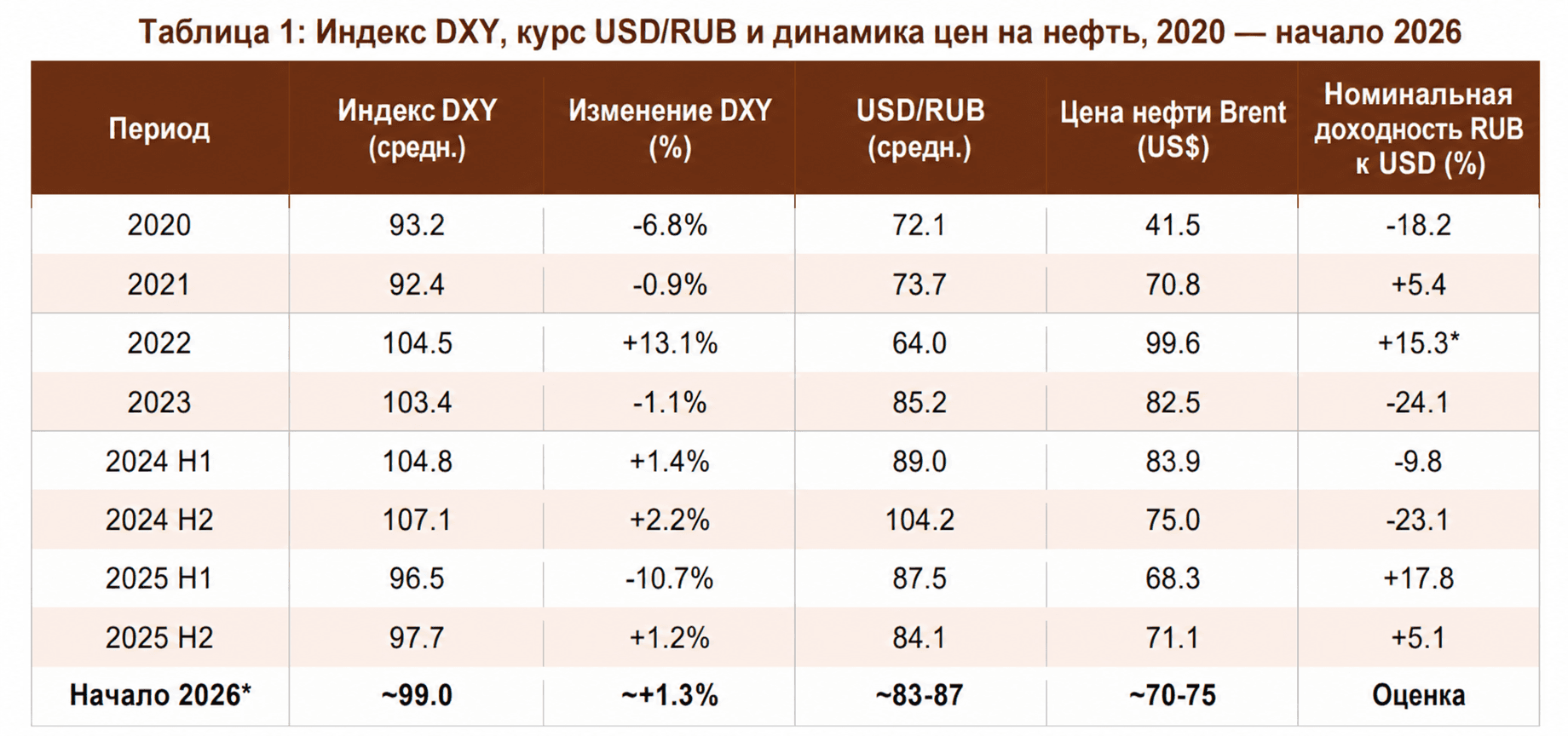
Table 1 shows how the DXY index changed compared with the ruble exchange rate and Brent oil prices over the period from 2020 to 2026. These data clearly illustrate the complex and not always linear relationships among these indicators under conditions of sanctions pressure and isolation of the Russian economy.
Sources: Federal Reserve System, ICE, EIA, Bank of Russia, Morgan Stanley Research (2025-2026).* The ruble appreciation relative to 2022 reflects capital control measures and current account surplus caused by sanctions. Nominal ruble yield is calculated against the US dollar
Based on the data, three distinct periods can be identified.
The first period (2020–2021) was marked by dollar weakness amid the pandemic. During this time, currencies of resource-exporting countries generally performed quite confidently. For Russia, this was also a relatively comfortable period.
The second period (2022–2024) involved restructuring following the start of the conflict. An interesting combination emerged here: the dollar strengthened, yet the ruble also partially recovered. This was driven by currency restrictions, a large current account surplus thanks to energy exports, and mandatory foreign currency sales by exporters.
The third period (from 2025 onward) marks a transition to a new reality. The dollar is gradually weakening structurally, and this increasingly intersects with the fact that Russia's economy and financial system have already partially moved away from dollar dependence in trade. As a result, the influence of various factors becomes more complex and requires closer examination.
2.2. Why the Dollar's Decline in 2025 Has a Different Structural Character
J.P. Morgan analysts cite four main reasons for dollar weakness in 2025. First is the slowdown in U.S. economic growth and its convergence with other developed countries. Second are concerns about the sustainability of public finances due to massive tax reforms estimated at $4.1 trillion. Third is the structural outflow of global capital from American stocks and bonds. Fourth is rising political uncertainty related to presidential statements about Federal Reserve independence. All these factors differ significantly from the causes of the dollar's fall in 2020 (when Fed monetary easing played the key role) and from typical cases of rising risk premiums in emerging markets.
What makes 2025 particularly distinctive is that the dollar is weakening simultaneously with falling oil prices. The average Brent price in 2025 has been roughly in the $68–75 per barrel range. This breaks the familiar historical inverse relationship between the dollar and commodity prices, which typically serves as a kind of natural hedge for exporting countries, including Russia.
This breakdown of the relationship is examined in detail in BIS research paper №1083 (Rees, 2023). It shows that the improvement in terms of trade that standard models typically predict for Russia is largely offset by weak commodity price dynamics.
3. Transmission Channels: A Detailed Analysis
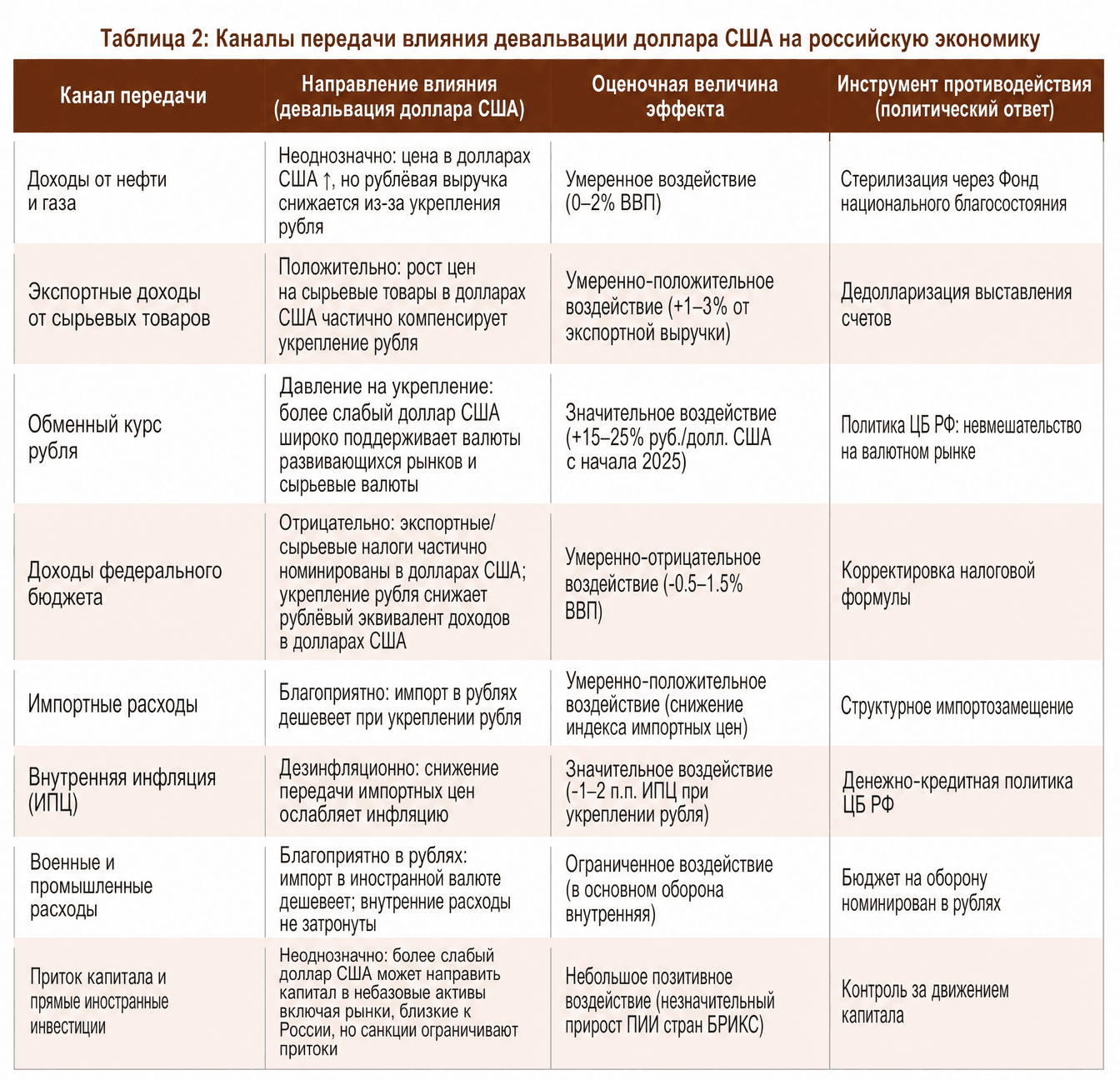
The weakening of the U.S. dollar affects the Russian economy through at least eight channels. Table 2 systematizes these channels, indicating how the effect manifests when the dollar declines, the approximate strength of impact, and what economic policy measures might be applied.
Source: Author's compilation based on reports from Bank of Russia, Federal Reserve Bank of Dallas (2023), Newsweek/Guriev (2024), Asia Times (2024), Caspian Post. Magnitude estimates are indicative under a scenario of 10-15% US dollar depreciation
3.1. The Oil Revenue Channel: Asymmetric Effects
One of the most discussed yet most complex channels of interaction in Russian conditions is oil revenues. Classical commodity currency theory holds that dollar weakness leads to higher dollar-denominated oil prices, which directly improves the Russian budget position. Historically, there has indeed been an inverse relationship between the DXY index and Brent prices. According to Rees (2023), a 10% decline in the dollar's value is typically accompanied by roughly a 4% increase in commodity prices, yielding a moderately positive effect on terms of trade.
However, in Russia's case this mechanism works noticeably weaker for at least three reasons. First, Russian oil, primarily Urals grade, almost always trades at a discount to Brent. In 2023–2025, this discount averaged $13–18 per barrel. This is due to the G7 price cap and the fact that Russian suppliers have fewer negotiating options, as they depend on a limited circle of buyers in Asia.
The second reason is that an increasing share of Russia's oil revenues is now denominated and paid not in dollars, but in other currencies such as the yuan, rupee, and dirham. This has weakened the dependence of ruble revenues on the dollar/ruble exchange rate compared to the pre-2022 period.
The third reason is that oil and gas revenues in the federal budget are calculated using a baseline "cutoff" price under the fiscal rule framework. This creates a complex interaction between changes in the dollar exchange rate, the ruble exchange rate, and the volume of budget transfers.
3.2. Ruble Strengthening and De-dollarization
For Russia's economy, the ruble exchange rate may play an even more significant role than oil prices. When the dollar weakens, it typically supports the currencies of emerging markets and commodity economies, and the ruble is no exception. Between January and December 2025, the ruble strengthened by 24% against the dollar (partly due to the dollar's overall weakening), leading to a range of economic consequences.
On one hand, ruble strengthening makes imports cheaper in ruble terms and reduces inflationary pressure. Estimates suggest that every 10% appreciation reduces consumer price inflation by 0.5–0.6 percentage points. In a situation where annual inflation exceeded 9% and the Central Bank raised the key rate to 21%—the highest level in history—this effect became a notable factor in slowing price growth. On the other hand, a stronger ruble reduces the ruble value of foreign currency export revenues and consequently lowers tax revenues from export sectors.
The situation is further complicated by the de-dollarization process. As foreign trade is increasingly conducted in rubles, yuan, and other currencies instead of dollars, the link between the USD exchange rate and Russia's key macroeconomic indicators is weakening. This means that calculations of the dollar's fluctuations on the economy based on pre-2022 data likely overestimate the actual effect.
4. Macroeconomic Indicators: Current State and Dynamics
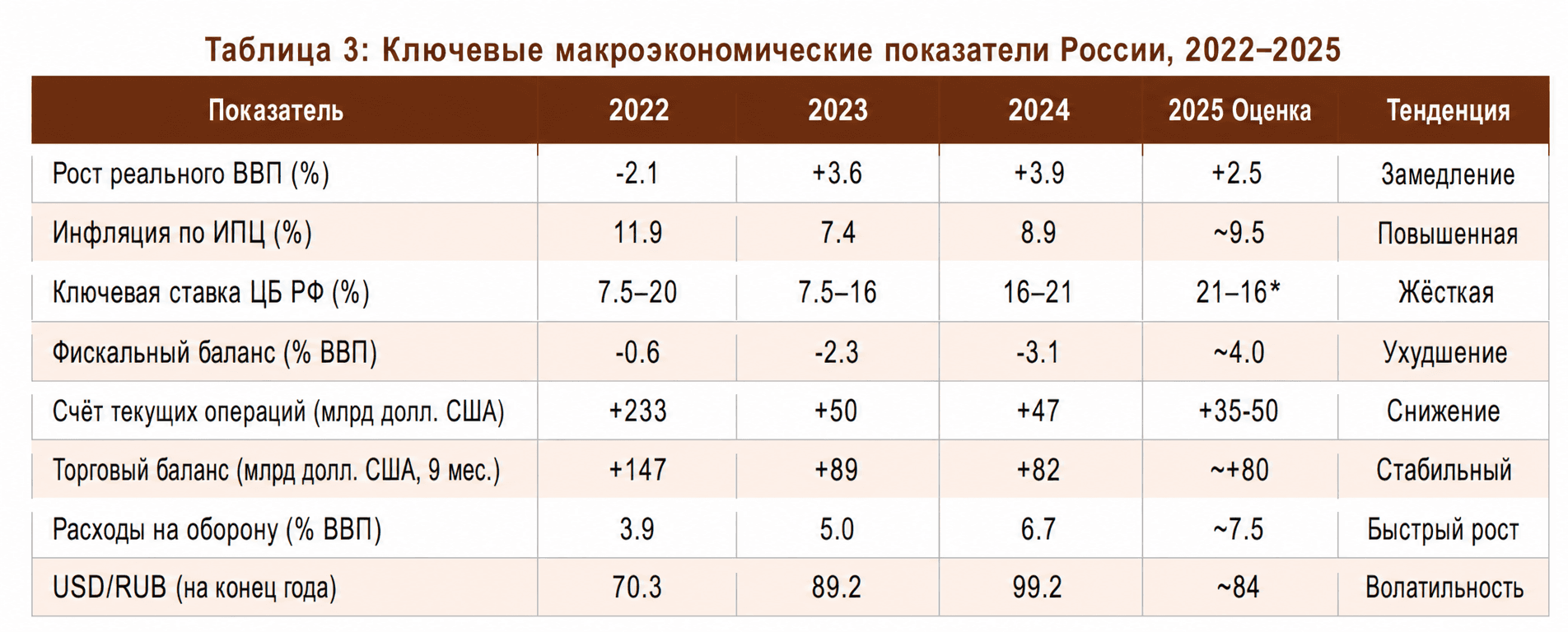
Table 3 presents Russia's key macroeconomic indicators for 2022–2025. This helps understand the overall economic backdrop against which the consequences of dollar exchange rate changes manifest.
Sources: Rosstat, Bank of Russia, IMF, Federal Reserve Bank of Dallas (2023), Visual Capitalist (2024), Asia Times (2024). * Dynamics of Central Bank of Russia interest rates. Defense spending estimates include direct and indirect costs related to military activities
Several key conclusions can be drawn from the table.
First, the relative resilience of the Russian economy—real GDP growth of 3.6% in 2023 and 3.9% in 2024—is primarily linked not to favorable external financial conditions, but to domestic factors: military fiscal stimulus, import substitution policies, and the redirection of energy exports toward Asia. Therefore, while the dollar's decline did have some effect in 2025, it is not the main source of economic growth.
Second, high inflation (8–9% and above on the CPI) against the backdrop of very tight monetary policy (the Central Bank's key rate reached 21% at the end of 2024) indicates the presence of structural supply-side problems. These include reduced imports of technology and components due to sanctions, labor market strain from mobilization, and increased defense spending that further stimulates demand amid limited production capacity. Under these conditions, ruble strengthening linked to dollar weakness does somewhat restrain inflation, but this is clearly insufficient for full stabilization.
Third, the widening fiscal deficit (from –0.6% of GDP in 2022 to approximately –4.0% of GDP in 2025) reveals the long-term consequences of rising defense spending, which has reached around 7.5% of GDP—a level comparable to the late Soviet military period. This deficit is primarily covered by the National Welfare Fund and domestic debt, making the budget's dependence on foreign currency factors indirect and difficult to forecast.
5. Fiscal and Monetary Policy
5.1. The Central Bank's Dilemma
The Central Bank is currently grappling with a fairly complex challenge that's directly tied to dollar movements.
On one hand, when the dollar weakens and the ruble strengthens, this reduces inflation through imported goods. Put simply, less "imported inflation" enters the country, helping the Central Bank move toward its price growth targets. In such situations, there's room to cut interest rates, which in turn makes life easier for both businesses and people with loans, while supporting the broader economy. This partially explains the reduction in the key rate from 21% to 16% in 2025.
But there's a flip side. A stronger ruble reduces the budget's ruble-denominated revenues from exports, which runs counter to the Finance Ministry's interests. Russian authorities have historically preferred a weaker and more stable ruble—roughly in the 80–100 rubles per dollar range. This allows them to collect more rubles from exports without stoking inflation too much through imports.
If the dollar remains weak for an extended period while the ruble strengthens to the 70–75 rubles per dollar level, this creates significant budget risks. In such a scenario, the government would likely need to take additional measures.
5.2. The Fiscal Rule and Budget Architecture
Russia's modern fiscal system is built around a budget rule designed to smooth out price swings in commodity markets. When oil prices exceed the established threshold, excess revenues flow into the National Wealth Fund. When prices fall, the fund's resources are used to cover budget expenditures. Under this framework, the impact of dollar exchange rate fluctuations on the budget becomes less direct: what matters isn't the rate itself, but its relationship to oil prices and the budget rule parameters.
A separate pressure point is the sharp increase in defense spending (estimated at over $150 billion annually). These expenditures are almost entirely in rubles and go to domestic suppliers. On one hand, this makes them largely insulated from currency fluctuations, but on the other, it increases domestic demand and amplifies inflation. As a result, even ruble strengthening, which normally reduces inflationary pressure, doesn't fully offset the inflation effect associated with rising military spending.
6. De-Dollarization as a Key Modifying Factor
One of the most notable shifts in Russia's relationship with the dollar is the rapid decline in its role in the economy—accelerated structural de-dollarization. Western financial sanctions have only intensified this process.
In foreign trade, an increasing share of Russian export transactions is being settled not in dollars but in other currencies. First and foremost is the Chinese yuan—according to Central Bank estimates for 2025, it accounts for 35–40% of export settlements. The Indian rupee, UAE dirhams, and the ruble are also being used. Because of this, the dollar/ruble exchange rate no longer has as strong an influence on the overall foreign trade picture: the yuan/ruble, rupee/ruble, and dirham/ruble rates are becoming increasingly important. Their movements may not align with global indices like the DXY.
Major changes have also occurred in the financial system. The Central Bank has almost completely abandoned dollar reserves—especially since most reserves were frozen by Western countries before the conflict began. Instead, reserves now consist primarily of gold, yuan, and other non-dollar assets. On one hand, this reduces the Central Bank's balance sheet exposure to dollar/ruble exchange rate fluctuations. On the other, it diminishes the ability to use dollar liquidity to stabilize the currency market.
As a result, the dollar's influence on the Russian economy is gradually changing in nature. As dedollarization deepens, Russia is becoming less sensitive to changes in the USD exchange rate and increasingly dependent on the currencies of partner countries. Therefore, a situation where the dollar weakens but yuan/ruble or rupee/ruble rates remain largely unchanged may bring Russia far fewer of the usual benefits from a weak dollar than standard models for emerging economies would suggest.
7. Scenario Analysis: Looking Ahead
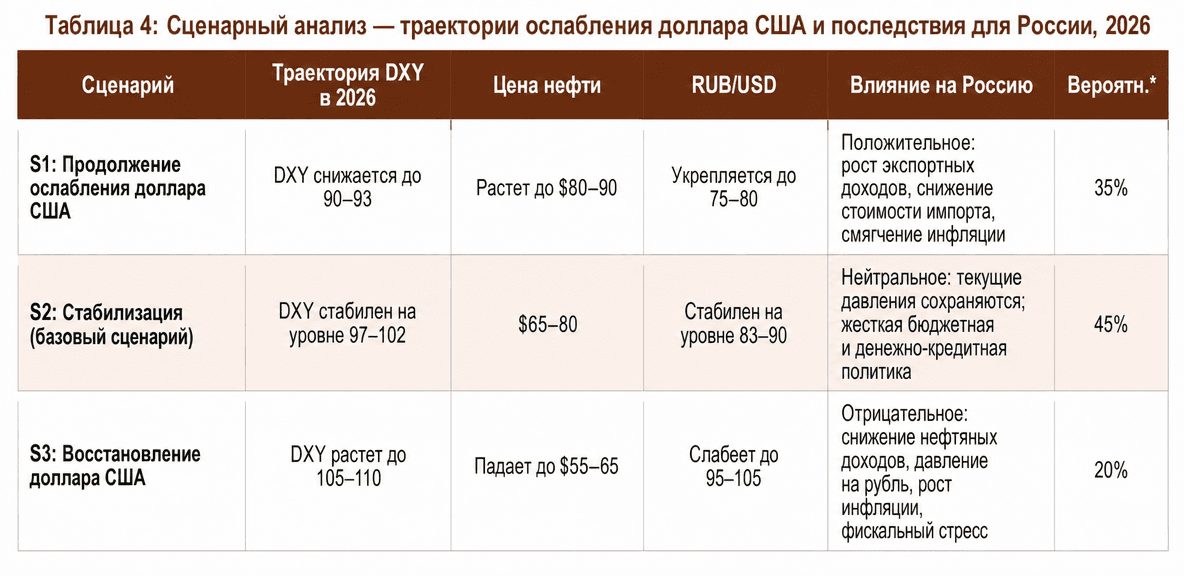
Table 4 shows three possible scenarios for how the dollar exchange rate may change through the end of 2026, along with an assessment of how each scenario might affect the Russian economy through the transmission mechanisms described above.
Sources: Author's scenarios based on data from Adams (2025), J.P. Morgan AM (2025), Bank of Russia, DXY (Financier/Statistics, 2026).* Subjective probability distributions. These are analytical scenarios, not forecasts.
The baseline scenario (S2, subjective probability around 45%) aligns with Morgan Stanley and J.P. Morgan expectations: the dollar stabilizes but remains relatively weak. For Russia, this means a continuation of the current situation. The ruble strengthens slightly, which brings down inflation, but export revenues convert less favorably into rubles. The Central Bank maintains a high key rate, though gradually lowering it. The fiscal deficit remains substantial due to large defense spending.
A more positive scenario for Russia (S1, probability around 35%) assumes further dollar weakening, with the DXY index potentially falling to 90–93 points. If the familiar inverse relationship between the dollar and commodities kicks in again, oil prices could rise. In this situation, inflation in Russia declines faster, the Central Bank has more grounds to ease monetary policy, and growth in oil and gas revenues in ruble terms creates opportunities for moderate reduction of the budget deficit.
The least favorable scenario (S3, probability around 20%) involves dollar strengthening to 105–110 points on the DXY index. This could happen due to more hawkish Fed policy or increased demand for safe-haven assets amid geopolitical instability. In this case, oil prices would likely fall and the ruble would weaken. The Russian economy would then face renewed inflation growth, intensified monetary tightening, and budget pressure from falling export revenues. Historical estimates suggest that a 10% ruble depreciation leads to inflation rising by approximately 0.5–0.6 percentage points over 6–9 months, which creates additional risks for economic policy given already elevated inflation.
8. Conclusion
This analysis yields several conclusions that differ markedly from conventional wisdom about how dollar weakening affects emerging market economies.
First, in 2025 the overall impact of a weak dollar on the Russian economy was moderately positive. It manifested primarily through reduced inflationary pressure thanks to ruble strengthening. This partially smoothed out high structural inflation and gave the Bank of Russia room to gradually ease monetary policy.
Second, the traditional positive effect associated with rising oil and gas revenues was largely weakened. This was influenced by sluggish global oil price dynamics, the persistent Urals discount to Brent, and the increasing share of settlements in currencies other than the dollar for energy exports.
Third, accelerating dedollarization has substantially altered how dollar fluctuations affect the Russian economy. Many familiar channels of weak dollar influence have become less significant or disappeared entirely. For a growing share of foreign trade, the key relationships are no longer dollar/ruble but rather the ruble's exchange rates with the currencies of major partners—the yuan, rupee, and dirham.
Fourth, the dollar's impact on the budget has become more complex and ambiguous under the fiscal rule and amid high military spending. On one hand, a stronger ruble reduces the budget's ruble-denominated revenues from exports. On the other, it lowers spending on imported equipment and components. As a result, the Finance Ministry must constantly strike a balance between budget sustainability and supporting economic activity.
Finally, the political economy dimension of the ruble exchange rate plays an important role. The psychologically significant benchmark remains the 100 rubles per dollar level. At the same time, authorities generally prefer a moderately weak ruble as a tool for supporting the budget, while the Central Bank operates within a strict inflation mandate. All this means that economic policy responses to external currency changes, including dollar fluctuations, can be active and not always predictable. Therefore, to understand how the Russian economy reacts to changes in the dollar exchange rate, it's important to consider not only standard economic models but also institutional and political constraints.
Adams, D. (2025). US Dollar Forecast: "More Intermission Than Finale." Morgan Stanley Research. New York: Morgan Stanley.
Asia Times. (2024, December). Ruble Volatility Signals Looming Economic Crisis in Russia. Hong Kong: Asia Times Publication.
Bank of Russia. (2025). Monetary Policy Report for 2025. Moscow: Bank of Russia.
Caspian Post. (2024). Ruble Exchange Rate Fluctuations and the Future of the Russian Economy. Baku: Caspian Post.
Federal Reserve Bank of Dallas. (October 2023). Russian Ruble Weakens Due to Trade Sanctions, Leading to Reduced Export Revenues. Dallas: Federal Reserve Bank of Dallas.
Financer. (2026). DXY Index Explained: A Guide to the US Dollar Index for 2026. Copenhagen: Financer.com.
Guriev, S. (2024, November). What the Ruble's Sharp Drop Means for the Russian Economy. Newsweek: New York.
J.P. Morgan Asset Management. (2025, August). Where Will the US Dollar Head in 2025? New York: J.P. Morgan.
Pravda.Ru (2025, December). The Ruble Exchange Rate Has Risen 24% Since the Beginning of the Year. Moscow.
Rees, D. M. (2023). Commodity Prices and the US Dollar. BIS Working Papers No. 1083. Basel: Bank for International Settlements.
Statista. (2026). U.S. Dollar Index (DXY/USDX) development chart from 1973-2025. Hamburg: Statista GmbH.