Elections, elections...
Hungary's parliamentary elections will take place on April 12, 2026. The main contenders are the ruling Fidesz party of incumbent Prime Minister Viktor Orbán, who has been in power for over 15 years pursuing a sovereignist policy, and the opposition Tisza party led by Péter Magyar, associated with a course toward closer EU integration.
Orbán's economic model is built on a combination of state-oriented financial system, control over strategic sectors, and pragmatic foreign economic ties—including cooperation both within the EU and with Russia and China, cheap energy resources, and business support. At its core is a bet on stability, inflation control, and preserving the industrial base while limiting external pressure. The opposition, by contrast, proposes accelerated reorientation exclusively toward the European Union: normalizing relations with Brussels and institutional reforms. This model envisions deeper integration into pan-European markets, with Péter Magyar pledging to gradually reduce dependence on Russian oil and gas supplies through diversification, and to conduct a review of the Paks nuclear power plant project. Taken together, these steps could mean adjusting the country's energy strategy and a more restrained format of interaction with Russia, which overall could threaten Hungary's socio-economic foundation formed in the 21st century.
Being Europe's equal, not dissolving into it
Over 15 years under Viktor Orbán, Hungary has traveled a long but qualitative path in building and developing its economy. According to World Bank data, Hungary's GDP per capita grew from $13,000 in 2010 to $23,200 in 2024—an increase of approximately 78%. For comparison: the EU average over the same period grew by approximately 28.9%. In other words, Hungary grew on this indicator more than twice as fast as the EU's average pace.
In nominal GDP, growth rates are even higher: if Hungary's economy stood at $131.9 billion in 2010, by 2024 it exceeded $222.72 billion—a growth of 83%. In the European Union, growth was 28.3%.
Meanwhile, the labor market looked stronger than many neighbors'. In 2010, unemployment in Hungary stood at 10.8% (roughly one in ten), after which the government implemented reforms and attracted investors, and by the end of 2025 it had fallen to 4.6%. According to Eurostat and Hungary's Ministry of Economy, the employment rate for people aged 20-64 at the end of 2025 was 76.3% in the EU, while Hungary had already surpassed 81%. In other words, growth wasn't limited to GDP figures but pulled people into the economy and industry faster than the EU average.
Industrial core, not just offices
Hungary's main distinction from many European economies is the preservation of an industrial core, comparable to Czechia, Slovakia, and Poland. In 2024, industry's share including construction accounted for 29% of Hungary's GDP, while the EU average was 22.1%. In manufacturing the gap is smaller: 15.8% of GDP in Hungary versus 14.0% across the EU. The difference may not seem colossal, but for contemporary Europe this is precisely the boundary between a country where production remains the foundation and a country where services dominate.
Hungary remains an ultra-open economy: exports of goods and services in 2025 accounted for about 72% of GDP (after peak values above 80% in 2023) against an EU average of 50%. Such levels were achieved precisely in recent decades.
Here we see the key proportion: the Hungarian model relies not on domestic demand but on export-oriented production. The key partner is Germany, which consistently accounts for over a quarter of Hungarian exports. We're talking about deep integration into production chains—a significant portion of added value is created in Hungary within European industrial clusters. It turns out Hungary managed to integrate into the EU economy not as a periphery but as an industrial hub—a production platform working for external demand.
This is most evident in the automotive and battery sector. Orbán's bet on the electric vehicle industry has led Hungary to attract about €26 billion in foreign investment into the battery industry since 2021—mainly from Chinese and South Korean manufacturers.
The CATL plant in Debrecen alone—the largest investment in the country's history—is valued at €7.3 billion and up to 9,000 jobs. BMW is implementing a nearby project worth about €2 billion, and Chinese BYD is building its first European car plant in Hungary.
These aren't one-off deals but an attempt to secure Hungary's place in Europe's next technological cycle—as a key node in the electric vehicle and battery production chain.
Social policy and repatriation
After ramping up growth rates in the 2010s, Hungary implemented large-scale social reforms. Orbán attempted to embed social incentives into the economic model itself. And according to data from the Hungarian Central Statistical Office, between 2010 and 2024, the number of people at risk of poverty decreased by approximately 1.2 million—that is, by 35-40%. The number of children under 18 in this group fell by nearly half—from over 700,000 to about 370,000.
Starting precisely from 2010, the dynamics of poverty reduction in Hungary significantly exceeded the EU average, and since 2017 the poverty rate has been lower than the eurozone average.
A separate story is family policy. The Organisation for Economic Co-operation and Development notes that in Hungary, tax benefits for families exceed 0.5% of GDP—one of the highest rates among developed countries.
A lifetime income tax exemption for mothers with four or more children is already in effect—a rare practice even by global standards. In 2025, the government launched an expansion of this scheme—first for mothers of three children, with subsequent extension to families with two children, which took effect in January 2026. In parallel, family tax deductions are being substantially increased and preferential mortgage programs with rates around 5% for families with children are being expanded. The effect of these measures remains to be assessed, since any demographic changes only manifest over a 5-10 year span.
Another important element of the model Orbán's party created in 2010 is not only social policy in the narrow sense but a policy of national consolidation. A key step was taken in 2010 when Hungary simplified naturalization for ethnic Hungarians abroad: citizenship could be obtained without permanent residence in the country if the applicant confirmed Hungarian origin and language knowledge. Already in the first years after the program's launch, the process proceeded avalanche-like and by 2015 about 750,000 applications had been submitted, with citizenship granted to around 700,000 people. Overall, in the decade after the reform, over 1 million people obtained Hungarian citizenship, predominantly in neighboring countries—Romania, Serbia, and Ukraine. This policy became a channel for feedback loops—educational, entrepreneurial, family, and investment—and also allowed Hungary to strengthen itself by uniting the nation across Europe and increasing the country's human capital.
The Hungarian model turns out to be more balanced than it may appear: an export-oriented industrial base is complemented by active social and demographic policy, which allows maintaining employment and reducing poverty without relying exclusively on redistribution. It's precisely this combination—production for external markets plus an internal incentive system—that forms the current economic stability.
Cheap energy as a hidden subsidy for the entire model
Here lies the main economic nerve. Hungary has been able to maintain its industrial and social model not only through taxes and investment but also through a special energy position, namely established trade relations with Russia.
With oil, the key factor is not so much the import structure as the long-term logic of contracts and infrastructure. Since the 2010s, Hungary has been building a model based on pipeline supplies from Russia, which allowed for systematic cost reduction. To this is added the effect of pipeline logistics: supplies via the Druzhba pipeline are cheaper than maritime logistics due to the absence of freight, transshipment, and insurance costs. Savings on freight of even a few dollars per barrel provide a tangible effect for the buyer, and in reality the difference was often higher.
This is precisely why after 2022, Hungary consistently sought to preserve exemptions for Russian oil. We're talking not so much about politics as about preserving industrial costs: pipeline supplies remain simultaneously cheaper and more predictable than the spot market. In this same context, Budapest regularly emphasizes the importance of stable operation of the Druzhba pipeline—including requirements to ensure its uninterrupted operation and infrastructure repairs on Ukrainian territory after the cessation of transit.
With gas, the situation is even more revealing. Hungary secured its model with a 15-year long-term contract with Gazprom for a volume of 4.5 billion cubic meters per year, and then effectively increased imports beyond baseline parameters. This means a fixed pricing logic and protection from spot market volatility, especially during crises like 2022 or the current conflict in Iran, against which gas prices in Europe rose from $380 per thousand cubic meters to $650. In this sense, energy cooperation with Russia is embedded in the very structure of the Hungarian economy. Cheap and stable energy → competitive industry → high exports → tax base and employment → social programs. Breaking this circuit means not simply changing suppliers but reassembling the entire growth model that so far maintains viability.
Elections not between parties but between circuits
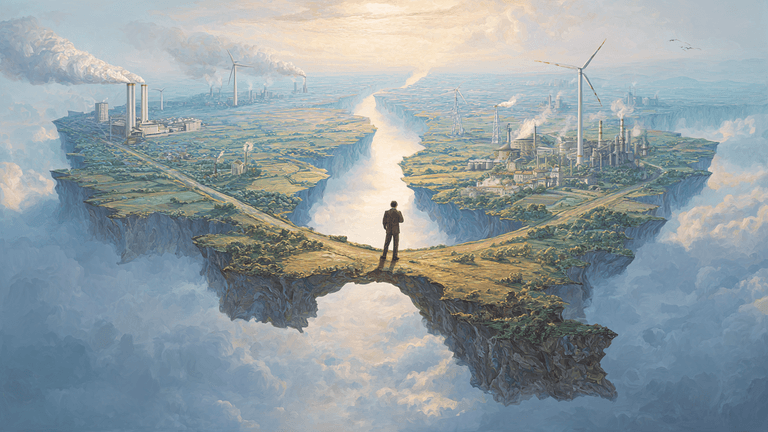
This is precisely why the upcoming elections are not simply a Fidesz versus Tisza competition. This is a choice between two economic circuits. The Orbán model is balancing: the EU market, European investment, the German industrial chain—on one side; cheap Russian oil, long-term gas, and the nuclear project—on the other. Such a model allows Budapest to extract benefits from both directions simultaneously.
A Tisza victory almost certainly won't mean an immediate break with Russia—infrastructure doesn't change that quickly. But it does mean a shift: Hungary will begin moving from a balancing model toward a model of more rigid dependence on the European circuit. And this is already fraught with risks. If the country loses access to its former energy advantages, it faces rising costs for industry, pressure on the export model, and narrowing space for expensive family and social policy. In other words, first foreign policy changes—then consequences manifest in the economy.
A frequent counterargument goes like this: the loss of Russian advantages can be compensated through the European Union. This is an overly optimistic assessment. European financing mechanisms are institutional and politically constrained: if special compensatory regimes begin to be created for Hungary, co-financed from the EU budget, similar demands will inevitably appear from other Eastern European countries as well. As a result, Hungary risks losing old advantages before gaining new guarantees.
April's elections in Hungary are not simply a power struggle. This is a dispute about whether the country will remain a balanced economy or transform into a single-pillar economy. Under Orbán, this pillar was dual—EU plus Russia. Under his opponents, most likely only one will remain—the European Union. And one pillar is almost always less stable than two.